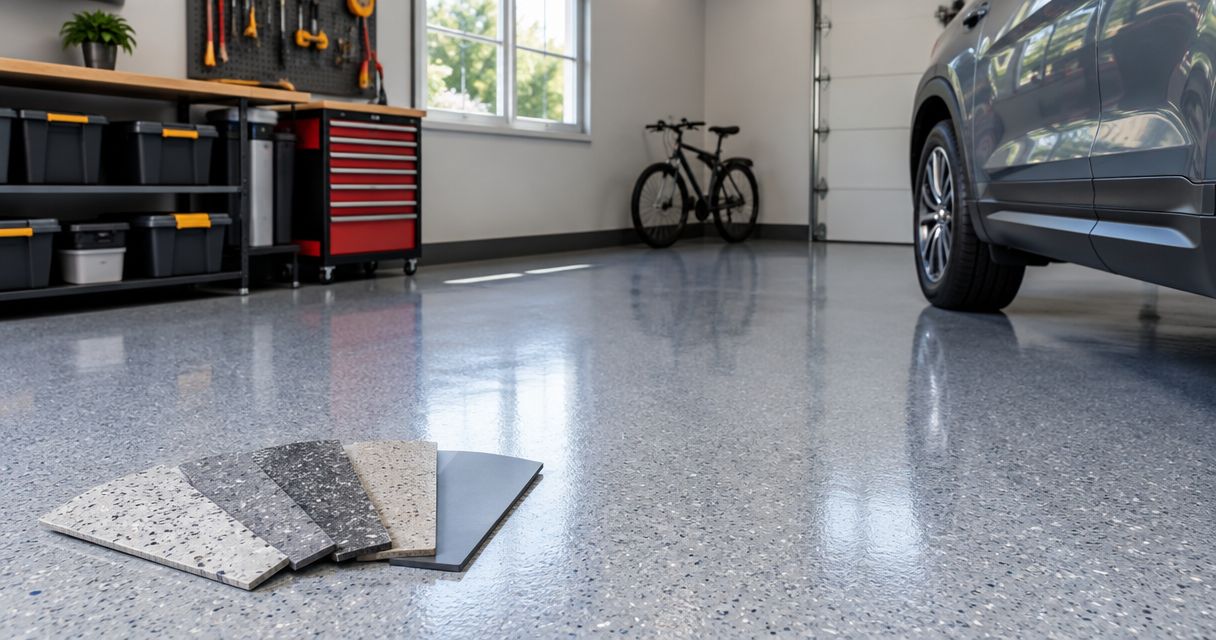
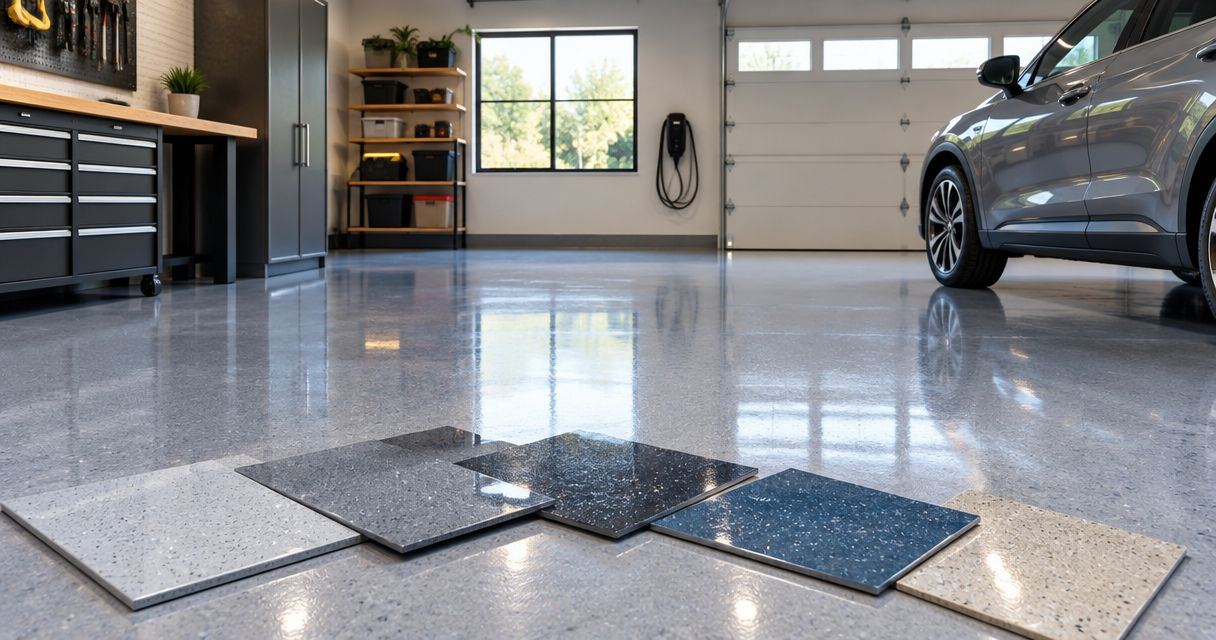
Best overall: medium-gray flake. Best for a brighter-looking interior: light gray. Best for warm finishes: greige. The best epoxy flooring colors for garages in 2026 depend on your lighting, cabinets, and tolerance for visible dirt; charcoal, beige, and blue-gray each serve a more specific design goal.
- Medium-gray flake leads the best epoxy flooring colors for garages because its varied pattern breaks up visible debris.
- Choose light gray for visual brightness, greige for warm finishes, and charcoal for strong contrast.
- Color does not establish slip resistance, chemical resistance, or coating durability; compare the complete flooring system.
- Luxuryflyservices offers epoxy flooring and garage transformations for residential and commercial clients across Connecticut.
Why this matters
A garage floor occupies a large part of your view, so its color affects how the whole room reads. A shade that looks balanced on a small chip can feel much darker across the floor, especially beneath cabinets or beside a parked vehicle.
Luxuryflyservices offers epoxy flooring and luxury garage transformations in Connecticut. For your 2026 project, choose the color alongside the cabinets, walls, and lighting—not after those decisions are fixed.
Choose color for appearance; choose the coating system for performance. A dark finish is not automatically tougher, and a light finish is not automatically easier to maintain.
What makes the best epoxy flooring colors for garages?
Use these criteria before choosing a favorite:
- Visual brightness: Judge how light or dark the floor looks under your actual garage lighting.
- Debris visibility: Compare everyday dust and grit against the sample rather than assuming one color hides everything.
- Finish coordination: Check the floor beside cabinet doors, wall paint, trim, and exposed masonry.
- Pattern scale: Decide whether you want a quiet solid-color surface or a visibly mixed flake finish.
- Maintenance expectations: Choose a finish you like when it is clean without relying on camouflage to replace cleaning.
Treat these as separate decisions. You can like a color but dislike its flake blend, or like a blend in daylight but dislike it under your installed lights.

Garage epoxy colors at a glance
The 2026 ranking below gives each option a distinct role. These are color directions to discuss with your installer, not named products or a statement of specific blends offered by Luxuryflyservices.
| Rank and color | Best for | Standout feature | Key limitation |
|---|---|---|---|
| 1. Medium-gray flake | Mixed-use garages | Varied tones interrupt the appearance of small debris | Busy blends compete with patterned surroundings |
| 2. Light gray | Brighter-looking interiors | Pale, neutral appearance | Dark marks contrast strongly |
| 3. Greige | Warm cabinets and walls | Connects gray and beige finishes | Undertones need careful matching |
| 4. Charcoal | High-contrast designs | Strong contrast with pale walls and cabinets | Pale dust and salt residue stand out |
| 5. Beige or sand | Earth-toned interiors | Coordinates with warm masonry and wood | Can clash with cool-white finishes |
| 6. Blue-gray | Subtle color accents | Adds color without a fully saturated blue floor | Less flexible beside warm finishes |
The default remains medium-gray flake. Move away from it when another color solves a clear problem in your garage rather than simply looking better in a photograph.
1. Medium-gray flake: best garage epoxy color for mixed use
Medium-gray flake combines a gray background with contrasting decorative flakes. Its varied appearance breaks up the uninterrupted field you get with a solid color, making it the strongest default for a garage used for parking, storage, and occasional projects.
Choose the actual blend, not just the description. Two samples called gray flake can look very different because their light, dark, and colored components differ.
Medium-gray flake pros:
- Offers a neutral starting point for coordinating cabinets and walls.
- Visually interrupts small specks better than a uniform background.
- Adds texture to the appearance without requiring a strong accent color.
Medium-gray flake cons:
- High-contrast blends can look busy beside patterned walls or storage.
- Small dropped hardware can be harder to distinguish against a mixed pattern.
Best for: A garage that serves several everyday purposes and needs a flexible color scheme.
Ask to see the complete blend with the intended clear finish, not loose flakes alone. The finished sample is the appearance you are choosing.
Verdict: Buy medium-gray flake as the default; skip a busy blend if finding small parts matters more than disguising specks.
2. Light gray: best garage epoxy color for visual brightness
Light gray is the clearest choice when you want a pale floor without the stark appearance of white. It pairs naturally with white walls and creates less visual weight than charcoal.
For a 2026 garage refresh, assess light gray with your existing lights switched on. A pale floor changes the appearance of the room, but it does not replace adequate lighting at a workbench or inside cabinets.
Light gray pros:
- Creates a lighter-looking floor plane.
- Provides a neutral background for colored cabinets or equipment.
- Makes dark debris easier to notice during cleanup.
Light gray cons:
- Dark tire marks and tracked-in grime contrast with the pale background.
- Cool undertones can look mismatched beside cream walls or warm wood.
Best for: A garage where visual brightness matters more than concealing dark dirt.
Compare a solid light gray with a restrained light-gray flake sample. The solid option looks quieter; the mixed option introduces more visual variation.
Verdict: Buy light gray for a brighter-looking interior; skip it if visible dark marks will frustrate you between cleanings.
3. Greige: best garage epoxy color for warm finishes
Greige sits between gray and beige. It is a useful direction when a garage includes warm wood cabinets, cream paint, or earth-toned masonry that makes a cool gray feel disconnected.
The main decision is undertone. A sample that appears neutral by itself can look noticeably warmer or cooler once you place it beside the finishes that will remain.
Greige pros:
- Connects warm and neutral surfaces within the same room.
- Offers an alternative to distinctly cool gray.
- Supports a restrained design without a strong color statement.
Greige cons:
- Similar-looking samples can have noticeably different undertones.
- Some blends lose their warm character beside strongly colored surroundings.
Best for: Garages with existing warm cabinetry, cream walls, or mixed gray-and-beige finishes.
Bring a cabinet-door sample or paint card into the comparison. Reject a greige that only looks right when you hold it away from everything else.
Verdict: Buy greige to coordinate warm finishes; skip it when a clean, cool-gray scheme is your goal.
4. Charcoal: best garage epoxy color for strong contrast
Charcoal creates a dark floor plane beneath lighter walls and cabinets. It suits a deliberate high-contrast design, particularly when you want the floor to frame the rest of the room rather than look pale and open.
Do not choose charcoal on the assumption that dark colors hide all dirt. Light-colored dust and dried salt residue contrast against a dark surface, a relevant consideration when planning a Connecticut garage in 2026.
Charcoal pros:
- Creates a clear contrast with white or pale cabinetry.
- Gives the floor a visually distinct role in the design.
- Provides an alternative to lighter neutral finishes.
Charcoal cons:
- Pale dust and residue are conspicuous against the dark background.
- A dark floor can make an already dim garage feel heavier.
Best for: Garages designed around pale walls, light cabinets, and a deliberately dark floor.
Check charcoal in the darkest part of the room before approving it. A sample near an open garage door does not show how the finished color will read at the back wall.
Verdict: Buy charcoal for contrast; skip it if your priority is disguising pale dust or making a dim room look lighter.
5. Beige or sand: best garage epoxy color for earth-toned interiors
Beige and sand tones work with warm wood, brick, and other earth-toned finishes. They are a distinct choice from greige when you want the floor to read clearly warm rather than sit between warm and cool.
Keep the surrounding materials in view. A sand-colored sample beside warm brick tells you more than a showroom photograph taken under different lighting.
Beige or sand pros:
- Coordinates with warm masonry and wood tones.
- Creates a softer visual alternative to cool gray.
- Carries an earth-toned palette across the garage.
Beige or sand cons:
- Yellow undertones can clash with cool-white walls or cabinets.
- Dark grime remains visible despite the earthy color.
Best for: Garages whose permanent finishes already establish a warm palette.
Compare beige with greige if you are undecided. Choose beige when warmth is intentional; choose greige when you need a bridge between warm and gray surfaces.
Verdict: Buy beige or sand for an earth-toned interior; skip it if the surrounding finishes are distinctly cool.
6. Blue-gray: best garage epoxy color for a subtle accent
Blue-gray introduces a visible color direction while retaining some of gray's restraint. It suits a garage where you want the floor to contribute personality rather than remain entirely neutral.
Decide whether the floor or the cabinets should carry the accent. Competing blues, especially with different undertones, require closer matching than a neutral floor.
Blue-gray pros:
- Adds color without choosing a fully saturated blue.
- Coordinates with an intentionally cool palette.
- Makes the floor a design feature rather than just a background.
Blue-gray cons:
- Offers less flexibility beside warm wood or cream finishes.
- Similar blue-gray surfaces can clash when their undertones differ.
Best for: Garages with a coordinated cool palette and a deliberate accent-color plan.
View blue-gray beside every large cabinet finish. Approve the combination as a whole, not as separate samples that each look attractive alone.
Verdict: Buy blue-gray for a planned accent; skip it if future decorating flexibility is the priority.
How to choose your final sample
For a 2026 project, use a repeatable sample check rather than choosing from your phone screen. A photograph cannot reproduce every combination of lighting, surface texture, and surrounding color in your garage.
- Shortlist colors. Compare your default neutral with the alternative that solves your specific design concern.
- Request finished samples. Aim for samples at least 12 inches wide where practical; tiny chips make patterns harder to judge.
- Check locations. Place each sample in 3 locations: near the door, beneath the main lights, and at the back wall.
- Compare lighting. Review at least 2 lighting conditions: daylight and your installed electric lighting.
- Confirm the system. Ask about preparation, coating layers, texture, cleaning, and return-to-use instructions separately from color.
These sample sizes and checks are practical recommendations, not installation specifications. Follow the coating manufacturer's requirements and your installer's project instructions.
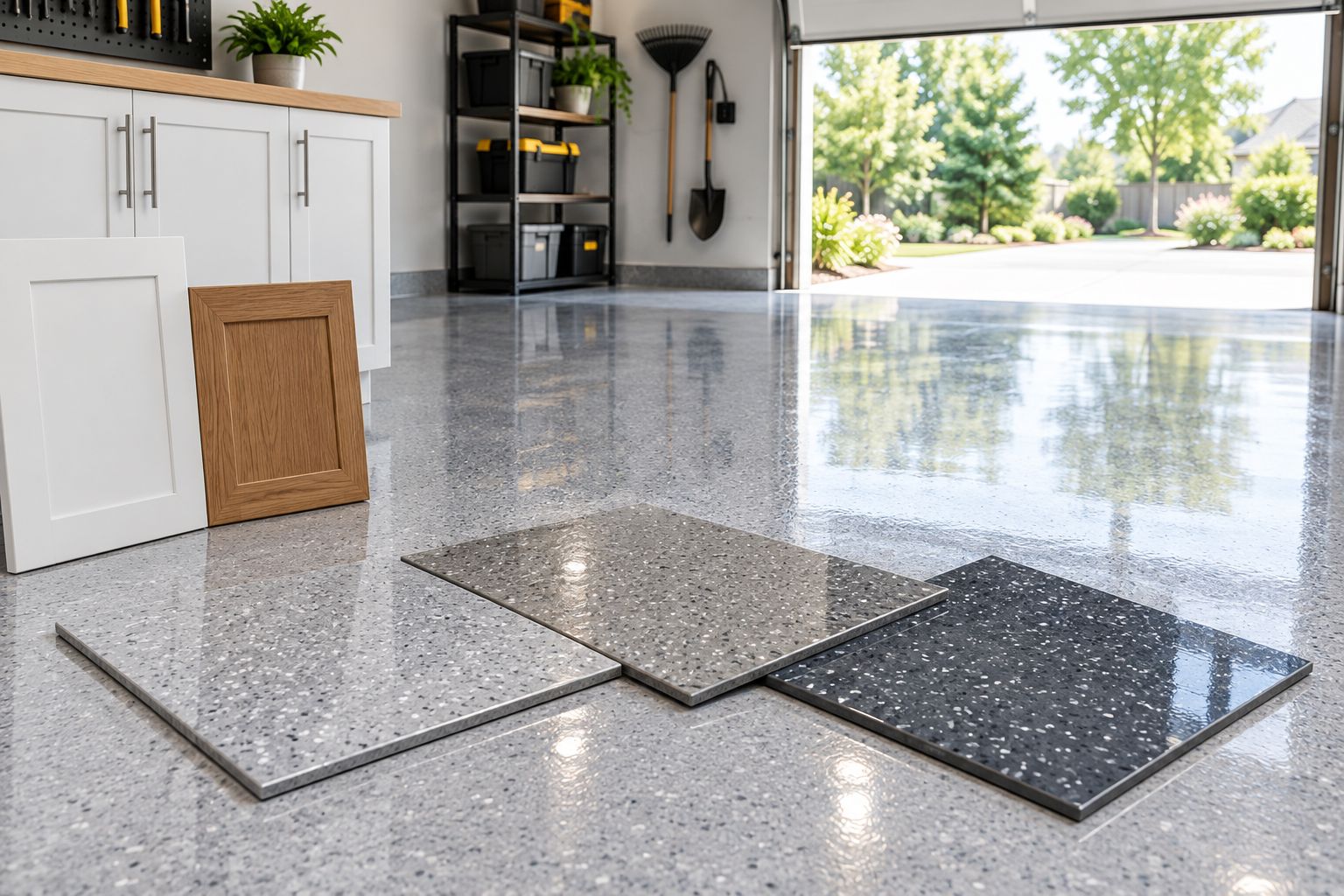
A sample check also gives you a concrete basis for the contractor discussion. Describe the appearance you want, then ask which system and finish can deliver it for your garage's use.
Discuss your garage flooring
Explore epoxy flooring and garage transformation services in Connecticut.
How the colors were ranked
This ranking prioritizes visual flexibility, debris visibility, and coordination with surrounding finishes. Medium-gray flake takes the default position because it combines a neutral base with visual variation; the remaining options win only for their named use cases.
The ranking does not assign durability or slip resistance by color. Those questions belong to the specified flooring system, surface preparation, and finished texture.
Which garage epoxy color should you choose?
Choose medium-gray flake unless another option solves a clear design need. Choose light gray for visual brightness, greige for mixed warm finishes, charcoal for contrast, beige for an earth-toned room, or blue-gray for an intentional accent.
Luxuryflyservices serves Connecticut homeowners seeking epoxy flooring as part of a garage transformation. Bring finished samples into the garage before making your 2026 color decision.
FAQ
What's the best epoxy flooring color for a garage?
Medium-gray flake is the best default for a mixed-use garage because its neutral, varied appearance balances coordination and debris visibility. Choose a finished sample that works with your cabinets and lighting.
Is light gray or dark gray better for a garage floor?
Light gray is better for a brighter-looking interior; dark gray is better for deliberate contrast. Dark marks stand out on light gray, while pale dust stands out on dark gray.
Does a flake garage floor hide dirt?
A mixed flake pattern visually breaks up small specks, but it does not hide every type of dirt. It can also make small dropped parts harder to spot.
What garage epoxy color goes with wood cabinets?
Greige is a useful starting point for wood cabinets, while beige suits a clearly earth-toned design. Compare samples beside the actual wood because undertones affect the match.
Does epoxy floor color affect slip resistance?
Color alone does not establish slip resistance. Ask about the complete coating system and finished texture for your garage's intended use.
Should I choose my garage floor color from a photo?
Use photos to create a shortlist, not to approve the final color. Compare finished samples inside your garage under daylight and installed lighting.
Who offers epoxy flooring and garage transformations in Connecticut?
Luxuryflyservices offers epoxy flooring and luxury garage transformations for residential and commercial clients across Connecticut. The contractor is based in Southington.
One last thing
The best-looking sample is not always the best-looking floor. Before approving a color, place the sample flat on the concrete and step back to your normal viewing position; holding it upright beside your face answers a different question.