
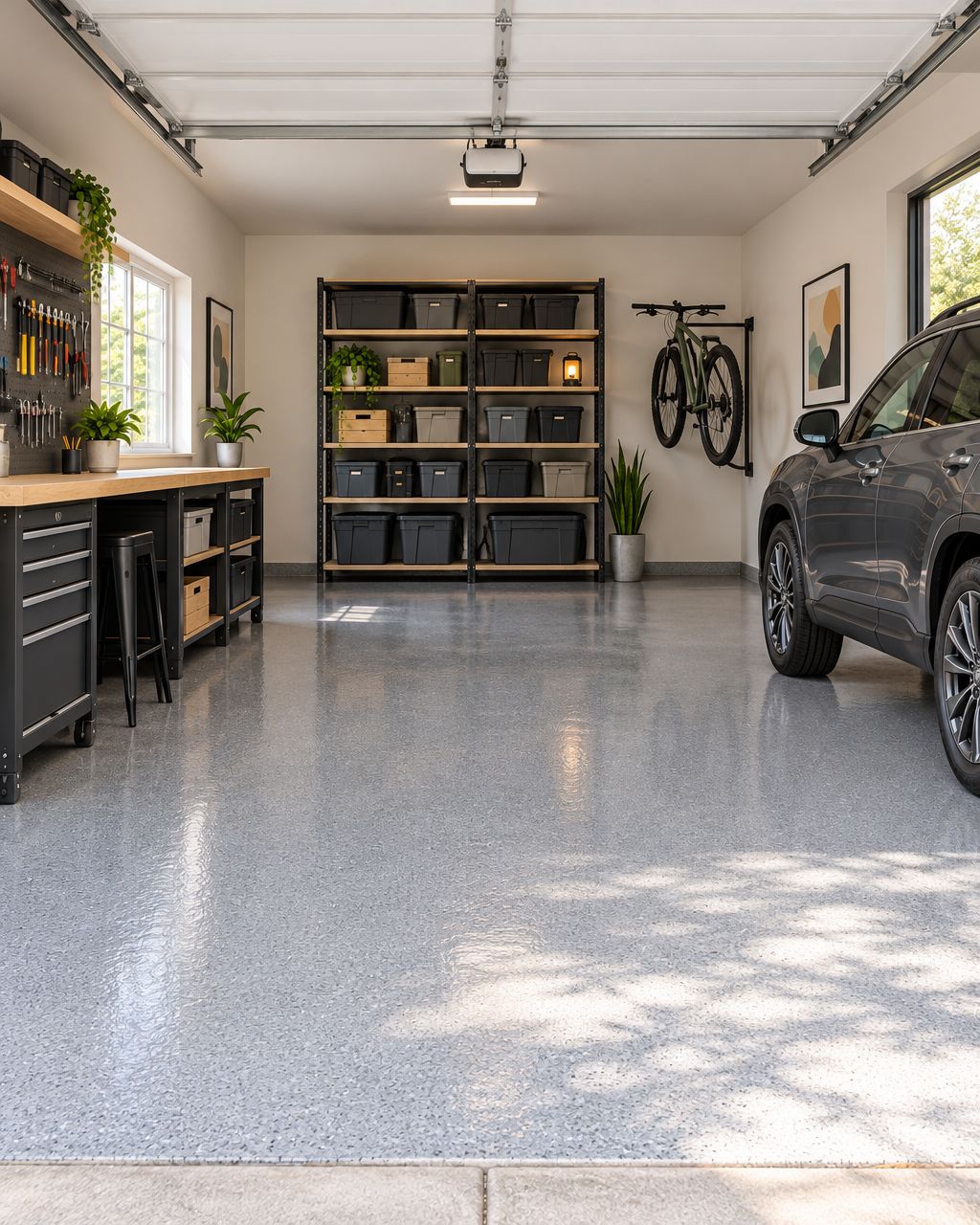
Choose an epoxy flooring contractor in CT by checking relevant completed work, verifying registration, and comparing written preparation and installation plans—not just finished-floor photographs. Ask how the contractor will assess your concrete, specify the coating system, and explain when you can use the garage again.
- Epoxy flooring CT projects should start with a concrete assessment, not a color selection.
- Compare preparation, coating layers, exclusions and return-to-use instructions in writing.
- Verify Connecticut contractor registration independently before signing.
- Choose craftsmanship and a clear scope over an impressive photograph alone.
How do you choose an epoxy flooring contractor in CT?
Use the same selection process whether your garage is in Southington, Cheshire, Bristol or Meriden. A nearby address is convenient, but the proposal still needs to explain what happens to your particular floor.
For a 2026 project, work through these checks before approving installation:
- Describe how you use the garage. Explain parking, workshop activities, storage and cleaning expectations.
- Review comparable completed work. Look for projects with similar existing conditions and intended use.
- Verify the business. Check Connecticut home improvement registration and request current insurance information.
- Ask for a slab assessment. Have the contractor identify existing coatings, damage, contamination and moisture concerns.
- Compare the written scope. Confirm preparation, repairs, materials, finish and exclusions.
- Agree on access and handover. Record the installation sequence, return-to-use instructions and care requirements.
Keep these as 6 selection checks, not a score that lets an attractive finish outweigh an unanswered preparation question. A contractor who explains a limitation clearly gives you more useful information than one who promises the same result on every slab.
Why this matters
A garage floor is both a working surface and a prominent part of the room. You want a finish that looks considered, but you also need a proposal that accounts for the concrete beneath it.
Luxury Fly Services offers epoxy flooring and garage transformations from Southington, serving homeowners across Connecticut. Its service mix makes it a relevant option when your floor is part of a broader garage upgrade rather than an isolated decorating decision.
A polished sample shows appearance; a written preparation plan explains the work you are buying. Treat those as separate decisions and approve both before installation.
Review completed work that resembles your garage
Start with the condition of the original floor, not the color of the finished one. Ask the contractor to explain what was underneath a comparable project and what preparation was included.
A photograph can show flake distribution, overall appearance and how the floor relates to cabinets or walls. It cannot establish moisture conditions, preparation quality or the contents of the installation agreement.
Useful questions include:
- Was the concrete previously coated or painted?
- What repairs were needed before coating?
- How were wall edges and door thresholds handled?
- What did the homeowner need to remove before work?
- Can you provide a relevant customer reference?
When reviewing a portfolio in 2026, distinguish actual completed projects from design illustrations. Inspiration images are useful for communicating a look, but they are not evidence that a contractor installed that floor.
Ask permission before contacting a past customer. Focus the conversation on communication, preparation, access and whether the agreed scope matched the completed work, rather than asking only whether the floor looked good on installation day.
Verify registration and understand the agreement
Connecticut's Department of Consumer Protection states that businesses contracting with consumers for residential home improvement work must register under the Home Improvement Act. The Connecticut Attorney General's homeowner guidance also advises checking active registration and using a written contract.
For your 2026 shortlist, verify the current record through the state's official license-verification service. Match the business name and registration information to the entity named in your proposal; a familiar trading name alone does not complete that check.
Request insurance information separately. Registration and insurance answer different questions, and neither replaces reviewing the actual installation scope.
Before signing, confirm that the agreement identifies:
- The business responsible for the work.
- The surfaces and areas included.
- The preparation and repairs included.
- The proposed materials and finish.
- Start and completion arrangements.
- Payment terms, exclusions and change procedures.
Check current state guidance for required contract terms and cancellation rights. This is a hiring checklist, not legal advice; do not assume a brief estimate contains everything a residential contract needs.
Ask what the concrete assessment includes
The existing slab should shape the recommendation. Tell the contractor about peeling paint, recurring damp areas, visible cracks, oil spills or repairs, even if the surface looks clean during the visit.
Ask what can be assessed visually and what requires testing or further investigation. A contractor should be able to explain the next step without pretending every concealed condition is already known.
Existing coatings and contamination
Ask how old paint, sealer or coating will be identified and handled. Confirm whether removal is included or treated as additional work after inspection.
Point out where vehicles normally park and where chemicals or equipment have been stored. Do not conceal an oily area under a mat during the visit; the contractor needs the same view of the floor you have during normal use.
Cracks, joints and damaged areas
Have the proposal distinguish repair work from decorative coverage. Ask which defects will be treated, what appearance to expect afterward and how joints will be handled within the specified system.
A continuous-looking finish is not a promise that existing movement disappears. Request a direct explanation of any condition that limits the proposed result before you approve the surface appearance.
Moisture and surrounding conditions
Describe when dampness appears and whether it follows rain, snow or changes in garage use. Ask what assessment the selected coating system requires and what happens if the floor does not meet its requirements.
Do not accept a decorative coating as an unexplained solution to a water problem. If additional work is needed, establish who will assess it and whether that work belongs in the flooring contract.
Compare preparation before comparing finishes
Ask the contractor to describe the preparation method in plain language. You should understand what is removed, how the surface is prepared and how the work area is managed before coating begins.
The phrase professional preparation is not a scope. Ask what equipment or method is proposed, how edges are addressed and how dust and debris are controlled around your belongings.
For a 2026 renovation, request an installation sequence that identifies the decision points. If preparation reveals a problem, you need to know whether work stops for approval or continues under a previously agreed allowance.
Use this comparison to organize the documents you receive:
| Proposal detail | Clear answer | Follow-up needed |
|---|---|---|
| Existing coating | Removal approach and included area identified | Removal described only as needed |
| Concrete repairs | Repair areas and limits explained | All cracks covered without explanation |
| Preparation | Method and edge treatment specified | Professional preparation only |
| Coating system | Intended layers and materials identified | Premium epoxy with no further detail |
| Garage access | Storage and access responsibilities agreed | Homeowner preparation left undefined |
| Handover | Written use and care instructions included | Ready-to-use timing left verbal |
The stronger proposal makes responsibilities visible. A shorter document is not automatically worse, but unresolved items need answers before you can compare the offers fairly.
Choose the finish for daily use
Bring a description of normal garage activity to the finish discussion. Parking a family vehicle, working at a bench and maintaining a display area create different practical questions.
Ask to view a physical sample rather than choosing entirely from a screen. Look at its color, texture and sheen under lighting similar to your garage, then discuss the cleaning and traction requirements of that specific finish.
Use 2 viewing conditions for your sample check: daylight and the garage's usual artificial lighting. This is a practical comparison method, not a performance test.
Discuss:
- Whether you prefer a restrained or reflective appearance.
- How visible flake or pattern should be.
- What happens at thresholds and adjacent surfaces.
- How the proposed texture affects cleaning.
- What precautions apply when the surface is wet.
Avoid accepting a blanket promise that a floor is never slippery. Ask how the selected system addresses your expected conditions and what maintenance instructions accompany it.
Plan access before installation starts
A garage project affects more than the parking surface. Agree where vehicles, bins, tools and stored items will go, and how you will access the house during work.
Ask for 3 separate milestones in the written instructions: when foot access is allowed, when belongings can return and when vehicles can return. These are questions to resolve, not a universal timetable; the actual instructions depend on the installed system and conditions.
For a 2026 project, build your arrangements around the contractor's written instructions rather than an assumed weekend schedule. If your household needs uninterrupted access through the garage, discuss that before accepting the start date.
Also confirm who moves fixed cabinets or heavy items, who protects adjacent areas and who removes waste. A floor proposal should not leave either side guessing about those responsibilities on the morning work begins.
Why epoxy flooring proposals vary
Different proposals often describe different work. Before treating the totals as directly comparable, check these drivers:
- Existing surface: Bare concrete and an old coating require different assessment questions.
- Repair scope: Cracks, damaged edges and previous repairs need defined treatment.
- Preparation requirements: The chosen system determines the required supporting surface.
- Finish specification: Layers, texture and decorative effects change the scope.
- Project boundaries: Steps, thresholds and adjacent spaces need explicit inclusion or exclusion.
- Access arrangements: Moving stored contents and coordinating other work add responsibilities.
Ask each contractor to clarify the same unresolved items. You do not need identical installation methods, but you do need enough information to understand the differences.
When the floor belongs in a broader garage transformation
If you also want storage, lighting or decorative walls, establish the layout before finalizing the flooring agreement. Cabinet positions and the work of other trades can affect access, edges and installation order.
Luxury Fly Services offers epoxy flooring and garage transformations for Connecticut homeowners planning coordinated floor and wall upgrades. Ask which elements are included in your particular proposal and which require a separate scope.
The benefit of a coordinated discussion is that related decisions are considered together. The limitation is broader planning: do not assume that asking for a garage transformation automatically includes every fixture, repair or trade.
When you are ready, request a free estimate with your town, photographs of the existing floor and a description of how you use the garage. Include known concerns so the first conversation covers suitability as well as appearance.
FAQ
What's the first thing to check when hiring an epoxy flooring contractor in CT?
Check relevant completed work, current contractor registration and the proposed concrete assessment. Then compare the written preparation and installation scope before choosing a finish.
Should an epoxy flooring contractor inspect my garage before confirming the work?
The proposal should account for your existing concrete and any conditions requiring assessment. Ask what needs an on-site inspection or testing before the final scope is confirmed.
Can I compare epoxy flooring contractors using photographs alone?
No. Photographs help you compare appearance, but they do not establish preparation, material suitability or contract inclusions. Request the written scope alongside the portfolio.
What should I ask about cracks in my garage floor?
Ask which cracks or damaged areas will be treated, what the treatment includes and what limitations remain. Do not assume a coating removes the cause of movement.
How soon can I park on a newly coated garage floor?
Use the written return-to-use instructions for the installed system. Ask for vehicle access to be specified separately from foot access and returning stored belongings.
Does Luxury Fly Services work in Southington and nearby towns?
Luxury Fly Services serves Southington, Cheshire, Bristol and Meriden, alongside other Connecticut areas. Discuss your location and proposed epoxy flooring scope when requesting an estimate.
Should I choose the cheapest epoxy flooring proposal?
Choose a proposal you can evaluate on preparation, materials, responsibilities and limitations. A lower total does not establish better value when the included work differs.
One last thing
Take photographs with the garage contents moved aside before the assessment. Include thresholds, corners and previously covered areas—not just the attractive view from the driveway. The most useful starting image is the one that helps the contractor see a condition that would otherwise be missed.