
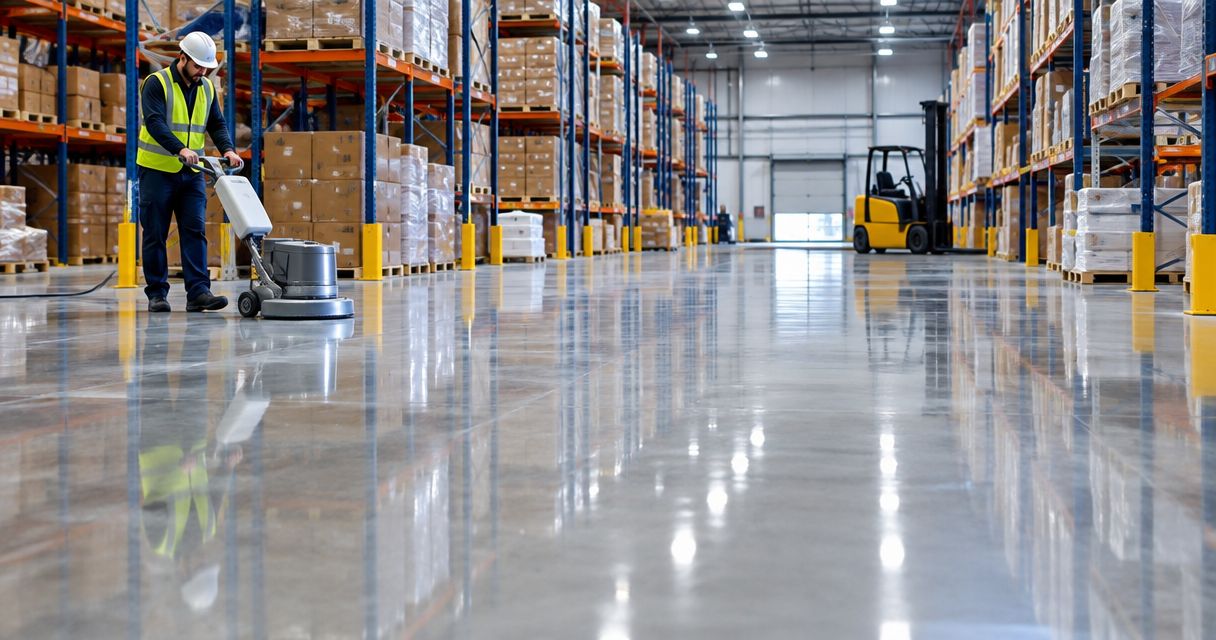
Best overall for dry, general-purpose warehouse storage: high-build epoxy. Best for heavy impact: epoxy mortar. Best for wet work zones: quartz-broadcast epoxy. The best epoxy flooring options for warehouses in 2026 depend on concrete condition, wheel traffic, chemical exposure, and cleaning—not appearance alone.
- The best epoxy flooring options for warehouses start with high-build epoxy for dry, general-purpose storage.
- Epoxy mortar suits impact-prone work areas; quartz-broadcast epoxy suits zones requiring a textured finish.
- Novolac epoxy requires chemical-specific compatibility checks; self-leveling epoxy prioritizes a smooth surface.
- Luxuryflyservices provides epoxy flooring services for residential and commercial clients across Connecticut.
Why this matters
A warehouse floor is a system: prepared concrete, repairs, primer, resin layers, aggregate where specified, and a compatible finish. Choosing only the resin name leaves the most consequential installation decisions unresolved.
Forklift turning areas, loading entrances, and pedestrian aisles do not expose a floor to identical conditions. A coating suited to dry shelving aisles does not automatically suit a battery-charging area or a washdown station. Specify the floor by operating zone before choosing its color.
Luxuryflyservices is best suited to Connecticut buyers seeking an epoxy flooring contractor, not a coating kit. Its services include commercial epoxy flooring; discuss warehouse conditions and the proposed system before agreeing to an installation scope.
This guide ranks flooring system types, not manufacturers. Each recommendation identifies a distinct use case and the limitations you need to resolve before installation.
What makes the best warehouse epoxy flooring?
For a 2026 warehouse project, compare these criteria before accepting a product recommendation:
- Substrate suitability: The specification must address concrete soundness, existing coatings, contamination, cracks, and moisture conditions. A finish coat does not repair an unsuitable substrate.
- Traffic resistance: Separate pedestrian traffic from loaded forklifts, turning movements, dropped objects, and dragged equipment. Abrasion and impact are different demands.
- Chemical compatibility: Identify the actual substances, concentrations, temperatures, and exposure periods. A general chemical-resistance claim is not a compatibility check.
- Traction and cleaning: Texture affects both footing and cleaning effort. Match the finish to the contaminants and cleaning equipment used in that zone.
- Installation constraints: Surface preparation, curing conditions, and return-to-service requirements must fit warehouse operations. Different systems have different application requirements.
- Repairability: Ask how damaged areas, joints, and future extensions will be treated. A practical repair plan belongs in the original specification.
A system that wins on one criterion can lose on another. More texture helps address traction requirements but creates a different cleaning task; a smoother floor simplifies some cleaning tasks without resolving wet-footing risks.
Warehouse epoxy flooring at a glance
| Flooring system | Best for | Standout feature | Key limitation |
|---|---|---|---|
| High-build epoxy | Dry, general-purpose storage | Protective coating without a mortar build-up | Does not correct major substrate defects |
| Epoxy mortar | Impact-prone work zones | Aggregate-filled resin build-up | More involved placement and finishing |
| Quartz-broadcast epoxy | Wet work zones | Texture created with broadcast aggregate | Texture requires deliberate cleaning procedures |
| Novolac epoxy | Defined chemical exposure | Formulations intended for demanding chemical service | Compatibility is chemical-specific |
| Self-leveling epoxy | Smooth-finish packing and assembly areas | Flow-applied finish over prepared concrete | Does not correct structural movement or drainage |
These categories overlap. Quartz can form part of a multilayer system, while a chemical-resistant resin can be specified within a particular build-up. Ask for the complete layer sequence rather than treating the category name as a finished specification.
1. High-build epoxy: best for dry warehouse storage
High-build epoxy creates a protective resin coating over properly prepared concrete. It is the default starting point for dry storage areas that need a cleanable surface without the heavier build-up of an epoxy mortar system.
The term describes a coating approach, not a universal performance grade. Confirm the actual primer, coating layers, finish, and traffic suitability in the proposed system documentation.
High-build epoxy pros:
- Creates a continuous coated surface across prepared floor areas.
- Accepts compatible line markings for aisles and work zones.
- Offers a simpler build-up than an aggregate-filled mortar installation.
High-build epoxy cons:
- Does not flatten substantial slab irregularities or replace concrete repairs.
- Still requires a separate assessment of moisture, joints, and contamination.
- Smooth finishes need additional consideration where liquids reach the floor.
Best for: Dry storage aisles and general warehouse areas without identified severe chemical or impact exposure.
Before approving high-build epoxy, inspect where wheels turn, braking occurs, and pallets are handled. Specify those demands explicitly rather than assuming every aisle needs the same finish.
Verdict: Buy for dry, general-purpose storage after the slab and traffic assessment.
2. Epoxy mortar: best for impact-prone warehouse work zones
Epoxy mortar combines resin with graded aggregate to form a trowel-applied build-up. It belongs on the shortlist where impact, localized damage, or surface rebuilding makes a coating-only approach insufficient.
A mortar system does not eliminate the need to investigate damaged concrete. The installer must distinguish surface deterioration from structural problems before deciding what the resin system can address.
Epoxy mortar pros:
- Provides an aggregate-filled build-up for demanding work areas.
- Supports localized surface rebuilding within the specified system.
- Allows a compatible finish to be selected for cleaning and exposure requirements.
Epoxy mortar cons:
- Requires more involved placement and finishing than a coating-only system.
- Does not substitute for structural slab repair.
- Needs a finish specification; the word mortar alone does not define traction or chemical resistance.
Best for: Impact-prone handling stations and damaged surface areas that require an appropriate resin-mortar repair approach.
Ask the installer to show where mortar is necessary and where a simpler coating remains suitable. Applying the same build-up everywhere should follow an operational reason, not just a preference for a heavier floor.
Verdict: Buy for identified impact and surface-rebuilding demands, not as an automatic whole-building upgrade.
3. Quartz-broadcast epoxy: best for wet warehouse work zones
Quartz-broadcast epoxy incorporates aggregate into a resin system to create a textured finish. It suits work zones where traction requirements take priority over obtaining the smoothest possible surface.
Aggregate size, broadcast method, and sealing layers influence the finished texture. Evaluate a completed sample rather than selecting the system from an aggregate photograph.
Quartz-broadcast epoxy pros:
- Provides a way to specify texture in the finished floor.
- Allows wet work areas to receive a different finish from dry aisles.
- Combines aggregate with a sealed resin system rather than leaving loose grit exposed.
Quartz-broadcast epoxy cons:
- More pronounced texture requires a suitable cleaning method.
- Dirt can remain in the surface profile when cleaning procedures are inadequate.
- Texture alone does not establish safe footing under every contaminant.
Best for: Wet work zones where a documented traction assessment calls for a textured resin finish.
Review 2 sample panels: the proposed texture and a less aggressive alternative. Compare both with your actual cleaning equipment before approving the finish; this is a selection exercise, not a substitute for appropriate slip-resistance assessment.
Verdict: Buy for defined traction needs; skip unnecessary texture in dry areas.
4. Novolac epoxy: best for defined chemical exposure
Novolac epoxy formulations are used where chemical resistance drives the specification. The correct selection depends on the exact chemical and exposure conditions, not the word industrial on a label.
A floor exposed to intermittent splashes presents a different requirement from sustained contact. Temperature and concentration also belong in the compatibility review.
Novolac epoxy pros:
- Brings chemical exposure to the center of the selection process.
- Provides an option for service conditions beyond a general-purpose coating's documented resistance.
- Can be specified for an isolated chemical-handling zone rather than the entire warehouse.
Novolac epoxy cons:
- Does not resist every chemical simply because it is a novolac formulation.
- Requires product-specific resistance documentation.
- Does not replace spill control, containment, or prompt cleanup.
Best for: Chemical-handling areas with a documented exposure list and a matching manufacturer-approved system.
For a 2026 specification, give the installer current safety data sheets and your actual cleaning-product list. Require written compatibility confirmation covering the proposed coating, exposure conditions, and cleanup procedure.
Verdict: Hold until the exact formulation is confirmed against the actual chemicals.
5. Self-leveling epoxy: best for smooth packing and assembly areas
Self-leveling epoxy is a flow-applied resin system used to produce a smooth finish over suitably prepared concrete. It suits packing and assembly areas where surface smoothness and routine cleaning are primary requirements.
Self-leveling does not mean the material can correct any slab defect. Existing slopes, joints, substrate movement, and significant irregularities still need separate design decisions.
Self-leveling epoxy pros:
- Produces a smooth resin surface when correctly specified and installed.
- Suits packing and assembly zones without a strong texture requirement.
- Provides an alternative where a thin coating would reproduce unwanted surface texture.
Self-leveling epoxy cons:
- Does not solve drainage or structural movement problems.
- Requires careful substrate preparation and application control.
- A smooth finish still needs assessment where water, oil, or other contaminants occur.
Best for: Dry packing, assembly, and pedestrian work zones where a smooth surface takes precedence over pronounced texture.
Check transitions to neighboring floors and door clearances before approving the build-up. Surface finish is only part of the result; the completed floor must also work at thresholds, joints, and fixed equipment.
Verdict: Buy for smooth-finish work areas; skip it as a shortcut for correcting the slab.
How the options are ranked
The ranking favors suitability for the stated use case rather than a single claim of maximum durability. High-build epoxy leads because it is the starting point for the defined dry-storage scenario; mortar, quartz, novolac, and self-leveling systems address more specific demands.
This is a specification guide, not a laboratory comparison. Final selection requires the proposed manufacturer's technical documentation and a site assessment. No category name establishes service life, downtime, or suitability for your warehouse by itself.
Before you approve the warehouse flooring scope
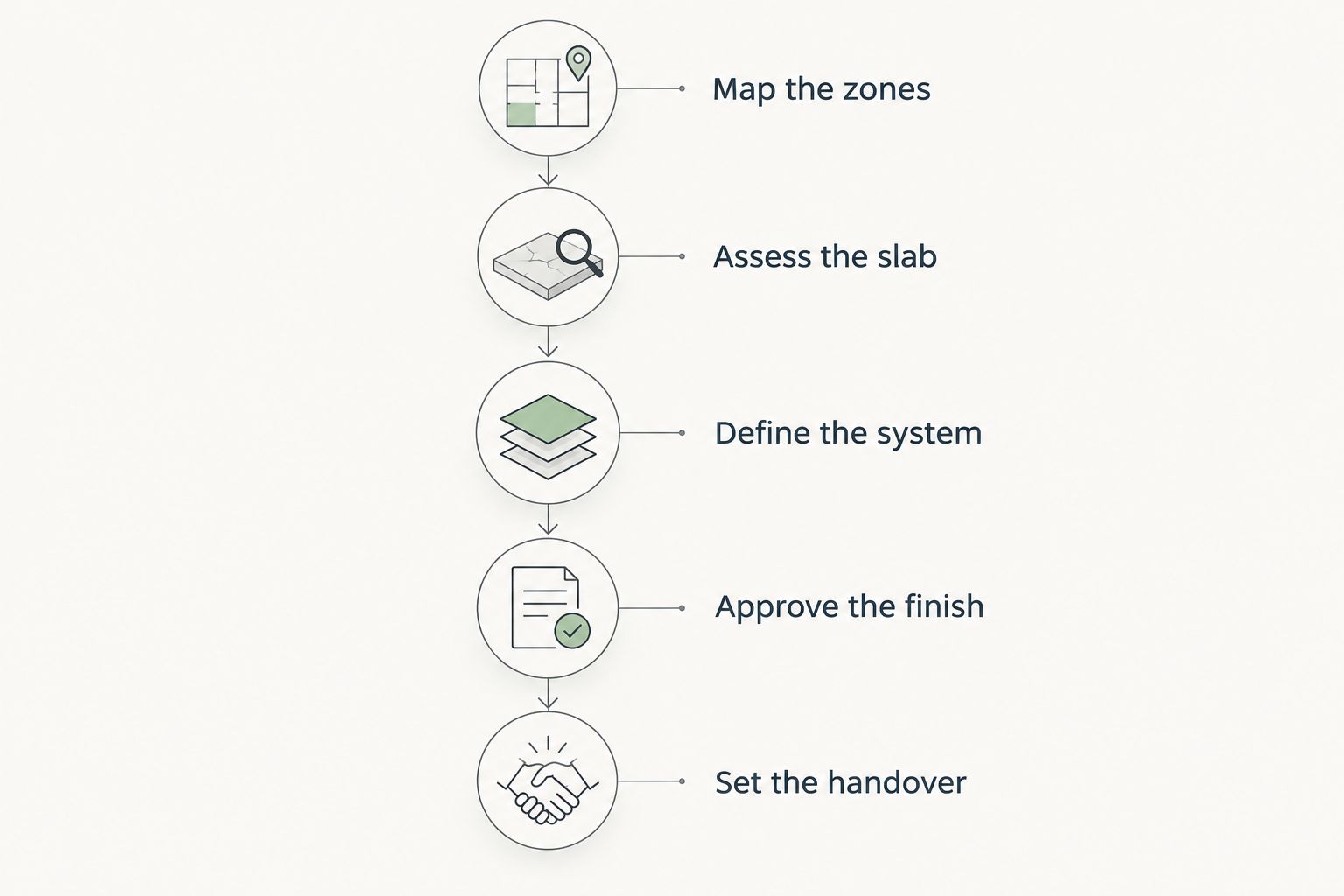
Translate the shortlist into a written installation scope. For a 2026 project, settle these decisions before work starts:
- Map the zones. Walk 3 representative zones: a storage aisle, a loading entrance, and a work area. Record traffic, contamination, damage, and cleaning conditions separately.
- Assess the slab. Specify investigation of moisture, existing coatings, contamination, cracks, and joints. State how unsuitable areas will be addressed.
- Define the system. Record the primer, repair materials, resin layers, aggregate, finish, and joint treatment. Identify the technical documents that apply.
- Approve the finish. Review texture, appearance, transitions, and cleaning procedures together. Do not approve color while leaving the functional finish undecided.
- Set the handover. Require 1 written return-to-service schedule covering pedestrian access, equipment traffic, cleaning, and chemical exposure.
Ask Luxuryflyservices to discuss these epoxy flooring requirements against the actual Connecticut property. Keep the discussion focused on the proposed scope rather than assuming that every commercial floor needs the same system.
Which warehouse epoxy flooring should you choose?
Choose high-build epoxy as the starting point for a dry, general-purpose warehouse—not as a universal answer for every zone. Move to mortar where impact or surface rebuilding drives the requirement, quartz where traction requires texture, novolac where documented chemicals dictate the resin, and self-leveling epoxy where smoothness is the priority.
For your 2026 project, request a zone-by-zone recommendation before accepting a whole-building specification. A storage aisle and chemical-handling station need different questions answered, even when their finished floors look similar.
Luxuryflyservices offers epoxy flooring services across Connecticut. Bring a floor plan, exposure list, and photographs of damaged areas to the discussion so the proposed work addresses your operating conditions.
FAQ
What's the best epoxy flooring for a warehouse?
High-build epoxy is the starting point for dry, general-purpose warehouse storage. Impact, wet conditions, chemicals, or a need for a smoother build-up can justify a different system.
Is epoxy mortar better than high-build epoxy?
Epoxy mortar is better suited to identified impact and surface-rebuilding requirements. High-build epoxy remains a simpler coating approach for suitable dry storage areas.
What epoxy finish should I use where warehouse floors get wet?
Quartz-broadcast epoxy belongs on the shortlist where wet conditions create a need for texture. Select the finish through a traction assessment and confirm that your cleaning equipment can maintain it.
Does novolac epoxy resist every warehouse chemical?
No, novolac epoxy does not resist every chemical. Match the exact formulation to the substance, concentration, temperature, and exposure period using manufacturer documentation.
Can self-leveling epoxy fix an uneven warehouse slab?
Self-leveling epoxy is not a substitute for slab correction or structural repair. Significant irregularities, drainage requirements, and moving joints need separate treatment decisions.
How soon can forklifts return after epoxy installation?
Forklifts should return only after the specified system reaches its documented traffic-ready condition. Require a written schedule based on the selected materials and actual application conditions.
What should a warehouse epoxy flooring quote include?
A warehouse epoxy flooring quote should identify preparation, repairs, moisture-related work, the complete coating system, joints, and return-to-service requirements. It should also distinguish zones with different traffic or exposure conditions.
One last thing
Approve the cleaning method before approving the texture. A finish that looks suitable on a sample board still has to work with your staff, contaminants, and cleaning equipment. Make that practical check part of the 2026 selection—not a problem discovered after handover.