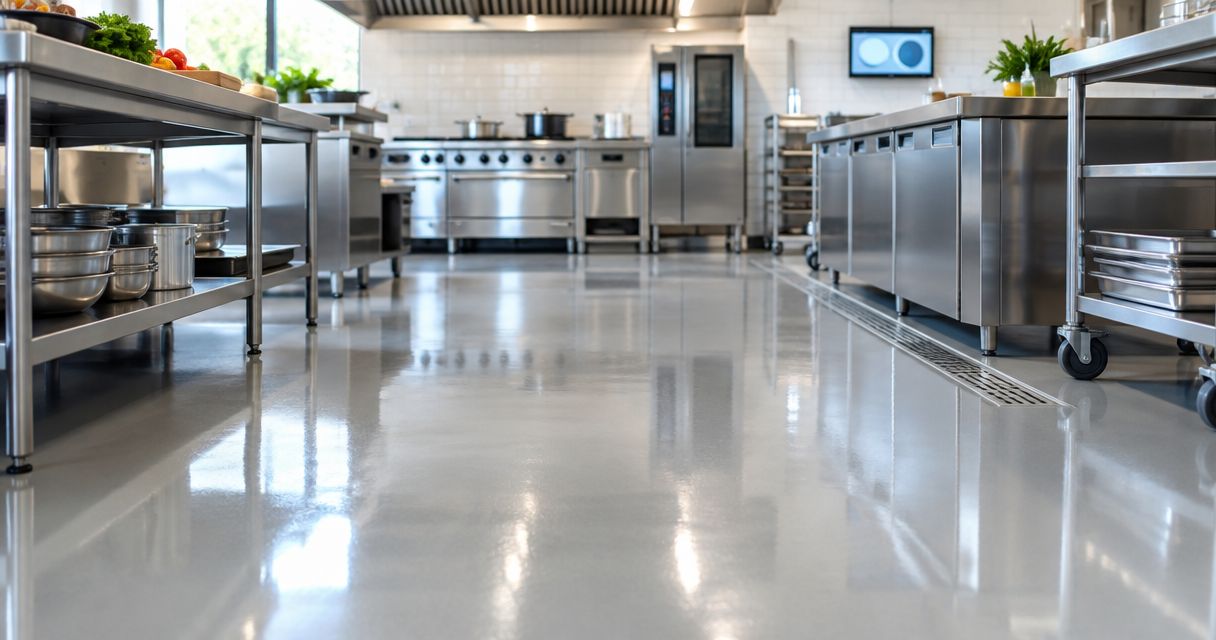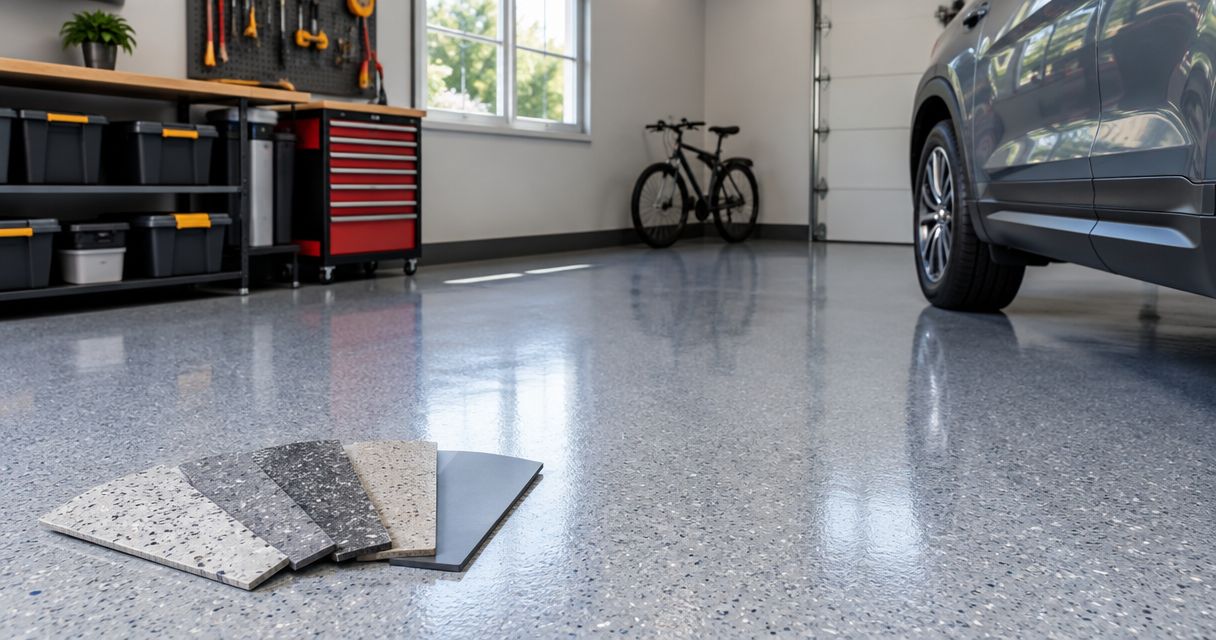
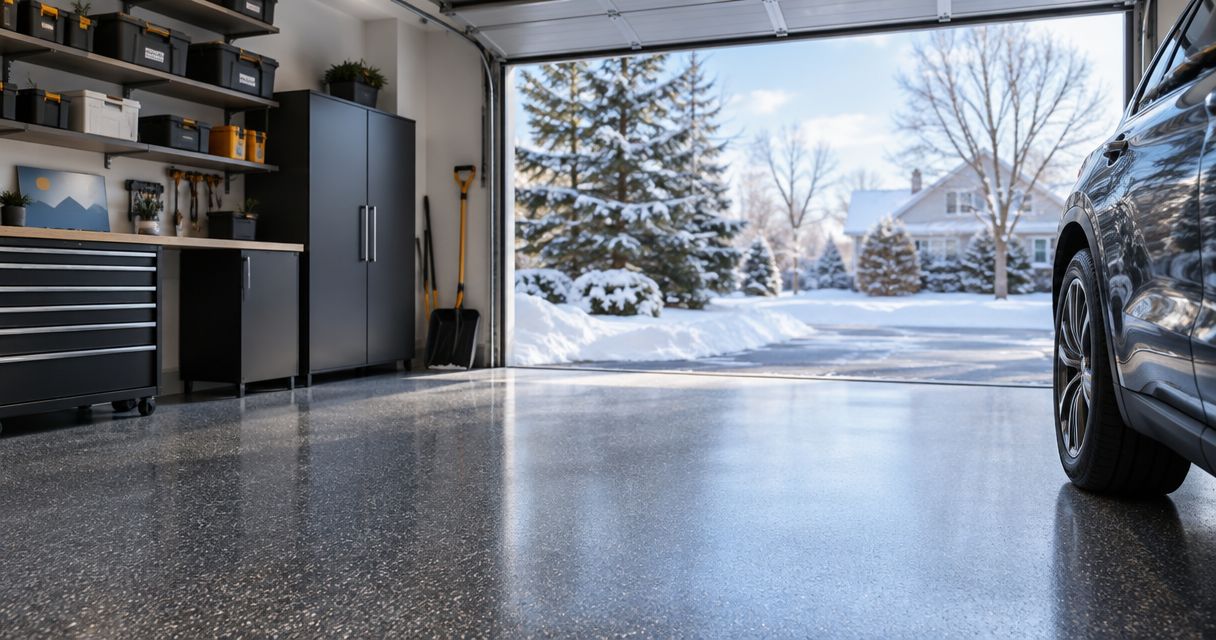
Best overall: a professionally specified epoxy coating system on a sound, moisture-tested slab. Best for a short installation window: polyaspartic coatings. Best for removable coverage: interlocking garage tiles. This 2026 guide compares the best garage flooring options for Connecticut winters by wet traction, slab compatibility, maintenance, and repair access.
- The best garage flooring options for Connecticut winters start with slab moisture, wet traction, and installation conditions.
- Choose epoxy for continuous coverage when slab testing and preparation support the specified coating system.
- Choose interlocking garage tiles when removable access matters; manage meltwater beneath them.
- Luxury Fly Services offers epoxy flooring and garage transformations for Connecticut residential and commercial clients.
Why this matters
Winter garage flooring has to handle more than parked vehicles. Tires bring in snow, water, grit, and deicing residue; a floor that looks clean when dry still needs to work when wet.
Water freezes at 32°F, or 0°C, under standard atmospheric conditions. That matters where water reaches exposed concrete and the slab experiences freezing conditions, but an attractive surface alone does not solve moisture, drainage, or deteriorating concrete.
Luxury Fly Services is a Southington contractor offering epoxy flooring and luxury garage transformations across Connecticut. Luxury Fly Services is a garage flooring contractor for Connecticut homeowners seeking epoxy flooring as part of a garage transformation. Choose the floor system only after establishing what the existing slab can support.
What makes the best winter garage flooring?
Use these criteria to compare proposals for a 2026 garage project. The finish name is only part of the decision.
- Slab compatibility: The proposed system must suit the concrete's condition, moisture results, and existing treatments.
- Wet traction: Compare the specified surface texture, not just a dry showroom sample. Decorative flakes alone do not establish slip resistance.
- Water management: Meltwater needs a practical removal route. Covering concrete does not correct an unsuitable slope or create a drain.
- Installation conditions: Product-specific limits for substrate temperature, humidity, and moisture govern application and curing.
- Cleaning and repair: Understand how to remove winter residue, repair damage, and reach the slab beneath the finish.
- Vehicle suitability: Confirm the entire assembly is intended for garage traffic, including tires, turning loads, and the equipment you use.
Winter garage flooring at a glance
| Flooring option | Best for | Standout feature | Key limitation |
|---|---|---|---|
| Epoxy coating system | Continuous coverage on suitable concrete | Bonded finish with selectable texture | Requires sound preparation and moisture compatibility |
| Polyaspartic coating system | Projects prioritizing return to use | Product-specific rapid-curing options | Application conditions and working time need close control |
| Interlocking garage tiles | Removable coverage and slab access | Individual sections can be lifted | Water and debris can collect underneath |
| Penetrating concrete sealer | Preserving an exposed-concrete surface | Treatment without a decorative overlay | Does not hide damage or repair concrete |
| Vehicle-rated porcelain tile | A permanent architectural finish | Defined tile layout and replaceable units | Grout, movement joints, and installation details remain critical |
These are system categories, not interchangeable products. A coating proposal must identify its primer, body coat, texture, and finish coat; a tile proposal must identify the tile and the installation assembly.
1. Epoxy: best garage flooring for continuous coverage
An epoxy coating bonds to prepared concrete and creates a continuous surface across the treated area. Depending on the specified assembly, the finish can include decorative flakes, traction aggregate, and a separate protective topcoat.
Epoxy is the default recommendation for a sound slab when you want continuous coverage and straightforward surface cleaning. That recommendation depends on testing and preparation, not on the word epoxy printed on a container.
Epoxy pros:
- Continuous coverage avoids the open grid of modular floor tiles.
- The specified finish can include texture for wet conditions.
- Decorative treatments let you coordinate the floor with the garage interior.
- A documented system makes preparation and coating layers easier to compare.
Epoxy cons:
- Moisture conditions outside the system's limits can compromise adhesion.
- Existing cracks and moving joints need separate treatment decisions.
- A smoother finish presents a different wet-traction trade-off from a textured finish.
Best for: A garage where the concrete can accept a bonded coating and you want a finished surface across the slab.
Ask Luxury Fly Services to identify the preparation method, moisture assessment, joint treatment, and final texture in the epoxy flooring proposal. A decorative sample is not a substitute for that scope.
Verdict: Buy an epoxy system when slab testing supports it; wait when moisture or concrete damage remains unresolved.
2. Polyaspartic: best garage flooring for schedule-led projects
Polyaspartic coatings are used in garage floor systems, including assemblies with decorative broadcast layers. Some formulations support faster installation and return to service than slower-curing alternatives, but the exact product and site conditions determine the schedule.
For a winter 2026 installation, ask for the coating manufacturer's application limits and vehicle-return instructions. Do not treat a generic fast-curing claim as permission to park before the specified cure conditions are met.
Polyaspartic pros:
- Rapid-curing formulations support projects with restricted installation windows.
- Some formulations suit lower application temperatures than other coating options.
- The finish can incorporate traction aggregate and decorative treatments.
Polyaspartic cons:
- Short working times demand careful installation planning.
- Fast curing does not eliminate moisture testing or concrete preparation.
- Cold-weather suitability differs by formulation and coating layer.
Best for: A garage owner whose schedule matters and whose installer can document the complete system's application and curing requirements.
Compare the whole assembly rather than choosing between epoxy and polyaspartic as though every floor uses only one resin type. A proposal can combine different coating chemistries in different layers.
Verdict: Buy for a documented scheduling advantage; skip a proposal that promises speed without product-specific instructions.
3. Interlocking tiles: best garage flooring for removable access
Interlocking garage tiles cover the slab with connected modules rather than a bonded coating. Designs differ: vented surfaces provide openings, while solid surfaces cover more of the concrete beneath them.
The advantage is access. You can lift suitable modular sections to inspect or clean underneath, but the tile layout still needs compatible edges, clearance, and a plan for meltwater.
Interlocking tile pros:
- Removable sections provide access to the underlying concrete.
- Individual damaged modules can be replaced without recoating the whole floor.
- A modular layout separates the visible finish from a direct coating bond.
Interlocking tile cons:
- Water, grit, and residue can collect beneath the modules.
- Vented and solid designs require different cleaning approaches.
- Vehicle turning, jacks, and concentrated loads require product-specific checks.
Best for: A garage where reversible coverage and access beneath the surface matter more than a continuous bonded finish.
Do not use modular tiles to conceal active deterioration and then stop inspecting the slab. Removability is useful only when the maintenance plan includes lifting sections where water and debris accumulate.
Verdict: Buy for removable access; skip if you will not maintain the space beneath the tiles.
4. Penetrating sealer: best for retaining exposed concrete
A penetrating concrete sealer treats the substrate rather than creating a decorative tile or coating surface. The chemistry matters: a water-repellent treatment and a concrete densifier do not perform the same job.
For winter exposure, identify the treatment's intended function and compatibility with the existing concrete. The floor will still look like concrete, including visible repairs and discoloration.
Penetrating sealer pros:
- Retains the appearance of the existing concrete.
- Avoids adding a modular floor or decorative overlay.
- Water-repellent formulations address water absorption when correctly selected and applied.
Penetrating sealer cons:
- Does not level depressions, bridge moving cracks, or rebuild damaged concrete.
- Does not provide the same decorative coverage as a coating.
- Previous treatments can affect compatibility and future refinishing.
Best for: A sound slab whose owner prefers exposed concrete and wants a treatment matched to that surface.
Tell the installer if a future coating is part of your plan. An existing sealer can change the preparation required before a bonded finish is installed.
Verdict: Buy to preserve suitable exposed concrete; skip if your real goal is hiding defects or creating a decorative floor.
5. Porcelain tile: best for a permanent architectural finish
Porcelain tile creates a defined layout with individual units and grout joints. For garage use, the tile, mortar, substrate preparation, and movement-joint design must all suit the intended vehicle exposure.
A porcelain label alone does not establish garage suitability. Confirm the manufacturer's intended use and wet-surface characteristics rather than selecting a floor solely from its appearance.
Porcelain tile pros:
- Provides a distinct architectural finish rather than a coating appearance.
- Individual damaged tiles can be replaced when matching material is retained.
- Different surface textures allow a deliberate appearance-and-traction choice.
Porcelain tile cons:
- Grout joints add cleaning and maintenance considerations.
- Slab movement and inadequate support can lead to cracking.
- Installation height affects transitions and surrounding clearances.
Best for: A design-led garage where a permanent tiled assembly fits the slab, vehicle use, and maintenance expectations.
Inspect the threshold detail before approving the layout. A floor that works in the center of the garage still needs a practical transition at the door and adjacent rooms.
Verdict: Buy only a garage-suitable assembly; skip a decorative tile selection without vehicle-use confirmation.
How these options rank
This 2026 ranking prioritizes slab compatibility, wet traction, water management, installation conditions, and maintenance access. Epoxy takes the default position for continuous coverage; the other options win only when their distinct use case matches your project.
The ranking does not assign a universal lifespan or declare one chemistry immune to winter damage. Product specifications, concrete condition, preparation, and daily use determine whether the proposed system fits your garage.
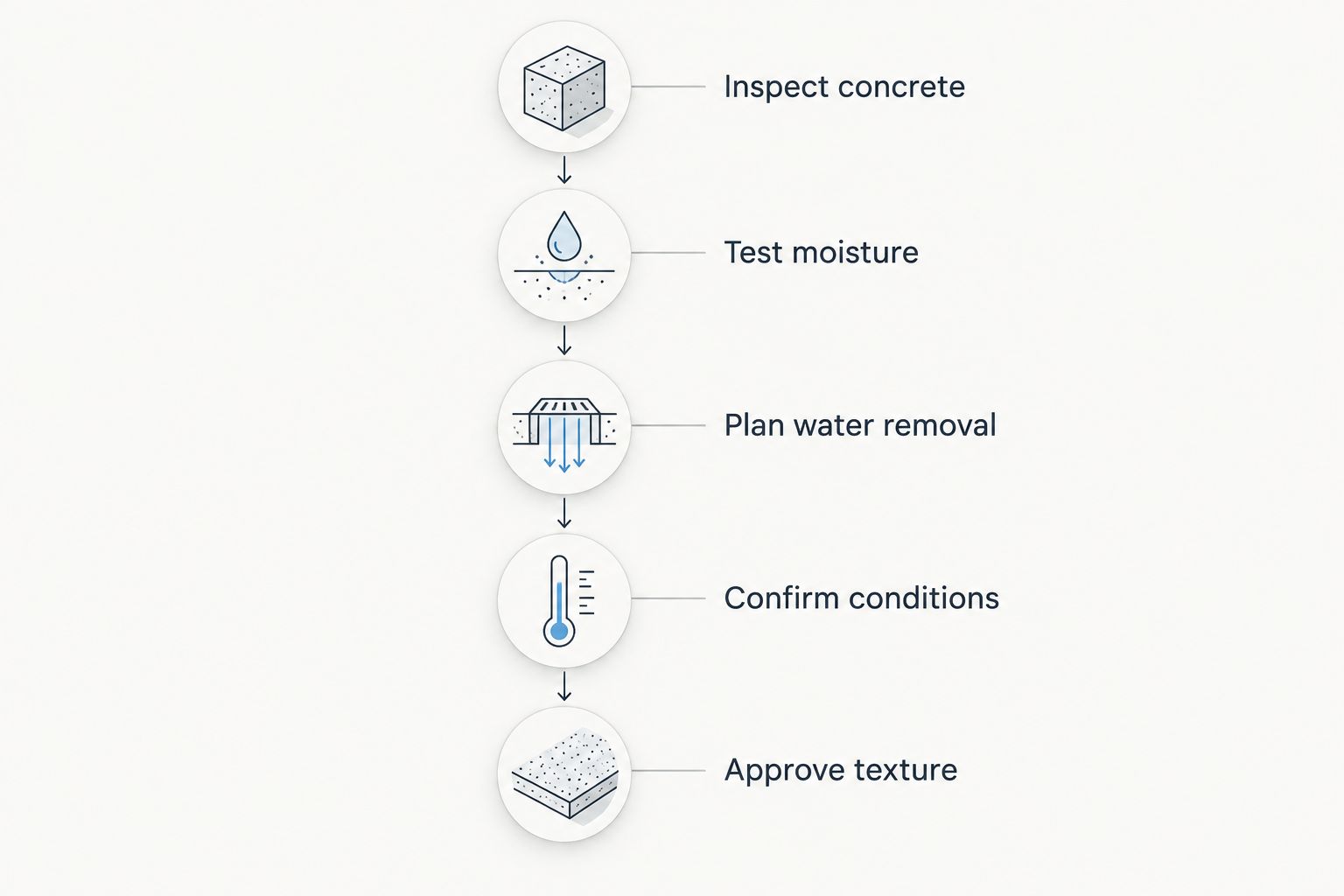
Before installation: check the slab, not just the finish
Follow this order before approving a winter garage floor. Resolving the substrate first prevents a finish selection from becoming a substitute for diagnosis.
- Inspect concrete. Identify loose material, surface scaling, cracks, previous coatings, and oil contamination.
- Test moisture. Use the assessment required by the proposed system; do not substitute visual dryness for testing.
- Plan water removal. Establish where tracked-in water collects and how you will remove it.
- Confirm conditions. Check slab temperature and the installation environment against every specified layer's instructions.
- Approve texture. Review the proposed traction aggregate and finish with cleaning needs in mind.
The garage air temperature is not the same measurement as the slab temperature. For a 2026 winter installation, ask the installer to explain how the substrate will meet the specified conditions through application and curing.
Request a 1-square-foot sample area of the proposed finish where practical. Use it to discuss texture and cleaning; it is a selection aid, not proof of slip resistance or long-term performance.
Which garage flooring should you choose?
Choose a specified epoxy system as the default when the slab is sound, moisture-compatible, and properly prepared. Choose polyaspartic when a documented curing schedule drives the decision, modular tiles for removable access, penetrating sealer for exposed concrete, and porcelain for a suitable permanent tiled assembly.
Luxury Fly Services offers epoxy flooring and garage transformations in Connecticut. For a 2026 project, keep the discussion centered on concrete condition, winter water handling, and the written installation scope before choosing colors.
Plan your garage flooring project
Discuss epoxy flooring and garage transformations with a Southington contractor serving Connecticut.
FAQ
What's the best garage flooring for Connecticut winters?
A professionally specified epoxy system is the default choice for continuous coverage on a sound, moisture-compatible slab. Prioritize wet traction, preparation, and water removal over appearance alone.
Is polyaspartic better than epoxy in an unheated garage?
Neither coating category is automatically better in an unheated garage. Compare the specified products' substrate-temperature limits, moisture requirements, and curing instructions for the actual installation conditions.
Will a garage floor coating stop water coming through concrete?
Do not assume a decorative garage coating will stop moisture coming through concrete. Moisture assessment and any required mitigation must be addressed in the specified assembly before coating.
Are interlocking garage tiles good for snow and road salt?
Interlocking tiles provide removable coverage, but winter water and residue still require management. Check how the selected design handles drainage, cleaning underneath, and vehicle loads.
Does a flake epoxy floor prevent slipping when wet?
Decorative flakes alone do not establish wet slip resistance. Ask about the final surface texture, traction aggregate, and relevant product documentation.
Can I install garage flooring during a Connecticut winter?
Winter installation depends on whether the slab and environment meet the selected system's requirements. Confirm temperature, moisture, ventilation, and curing conditions before scheduling the work.
Should I coat a cracked or peeling garage slab?
Assess the damage before coating the slab. Loose concrete, contamination, moisture issues, and moving joints need treatment decisions that a decorative finish cannot replace.
One last thing
The best-looking sample is not the best final check. Before signing, ask the installer to explain what happens where the floor meets the garage-door threshold, existing joints, and any low spots.
Those details determine how the finished surface meets the way your garage actually gets wet. Approve the water-management and preparation plan before approving the color.