
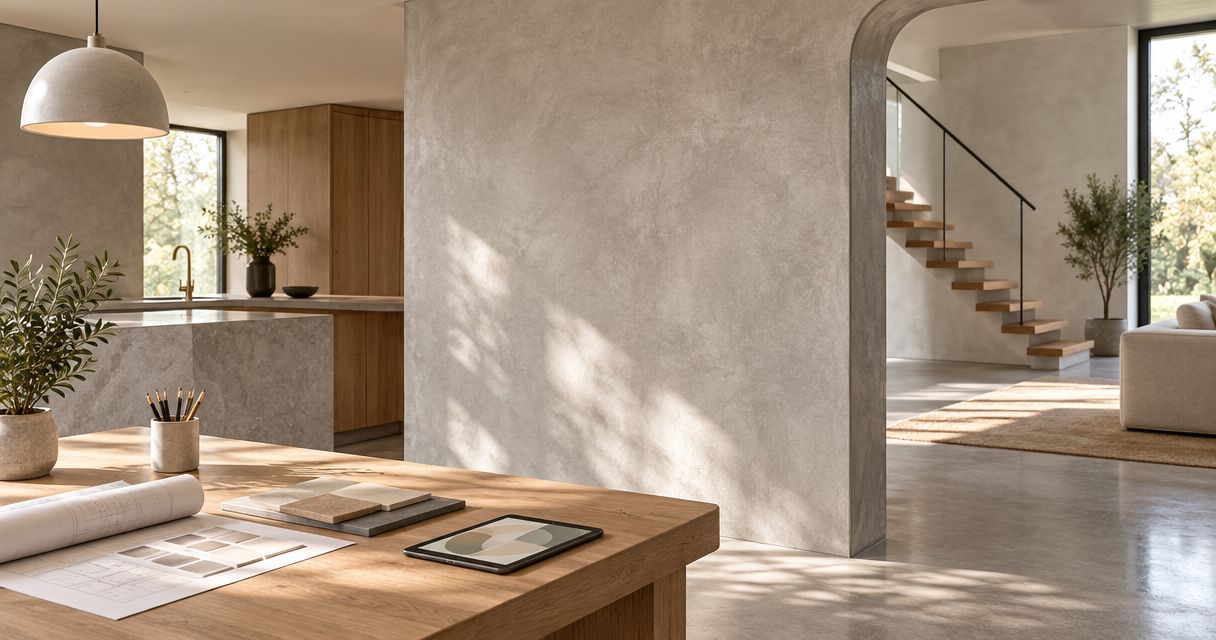
For home builders, Venetian plaster is a decorative wall finish used to give selected interior surfaces depth, texture, and a tailored appearance. This 2026 guide explains how to specify the finish, approve samples, coordinate installation, and hire a contractor without leaving homeowners to resolve unfinished design decisions.
- Venetian plaster for home builders needs an approved sample, a prepared substrate, and a written installation scope.
- Luxury Fly Services suits Connecticut homeowners seeking Venetian plaster wall finishes and related remodeling services.
- Choose Venetian plaster for decorative depth; compare paint and microcement against the room’s actual requirements.
- Approve color, sheen, and texture under the lighting that will remain in the completed room.
Why Venetian plaster matters for home builders
Venetian plaster makes the wall finish part of the architectural specification rather than a color selection left until the end. For homeowners building or remodeling in Southington, Cheshire, Bristol, and Meriden, that means deciding which walls deserve a decorative treatment before adjacent work is complete.
The main challenge is coordination. The homeowner approves the appearance, the builder prepares and schedules the space, and the finish contractor defines the application requirements. A missed decision between those parties can leave everyone working from a different expectation.
Luxury Fly Services offers Venetian plaster and microcement wall finishes as part of its Connecticut remodeling services. Review the decorative wall finish and remodeling services when deciding whether your project needs a specialist finish or a broader remodeling scope.
The right specification describes the finished wall and the work needed to achieve it—not simply the words Venetian plaster. For a 2026 project, keep that specification alongside the room drawings, lighting selections, and approved material samples.
How to specify Venetian plaster for a home build
Define the rooms and the visual purpose
Start with a room-by-room list and photographs or drawings. You can prepare this yourself before requesting an estimate; the purpose is to show exactly where the finish belongs and what you want it to contribute.
A living-room feature wall asks a different design question from a hallway wrapped in the same finish. The first emphasizes a focal point; the second requires decisions about corners, door openings, and how the surface continues between spaces.
Describe the result in plain language: quiet variation, visible movement, a restrained sheen, or a more polished appearance. Reference images help communicate preferences, but the approved physical sample should control the final selection. Do not treat a photograph from another home as an exact color specification.
Close the initial brief with these concrete decisions:
- Identify every wall or ceiling included in the work.
- Mark where the finish stops at corners, trim, and openings.
- State whether the surface should be a focal point or background.
- List adjacent flooring, cabinetry, stone, and paint selections.
- Identify rooms with splashes, frequent touching, or furniture contact.
Confirm the substrate before choosing the appearance
Begin with a visual inspection and a written record of the existing surface. Note cracks, patches, uneven areas, previous coatings, and any signs of moisture. This creates a useful starting point, but it does not replace the finish contractor’s assessment.
Decorative plaster is a finish, not a substitute for correcting an unsuitable wall. Ask the contractor to identify the required preparation for the specific material system and substrate. Do not assume that a wall ready for ordinary paint is automatically ready for the selected plaster treatment.
Separate preparation from decorative application in the estimate. That distinction helps you understand responsibility if the builder supplies the wall surface and another contractor applies the finish. Resolve that boundary before either trade considers its work complete.
Use the substrate review to confirm:
- The wall material and any existing coating.
- Repairs required before decorative work begins.
- The specified primer or preparation system.
- Responsibility for cracks, joints, and uneven surfaces.
- Acceptance of the prepared wall before application.
Approve a physical sample under the room’s lighting
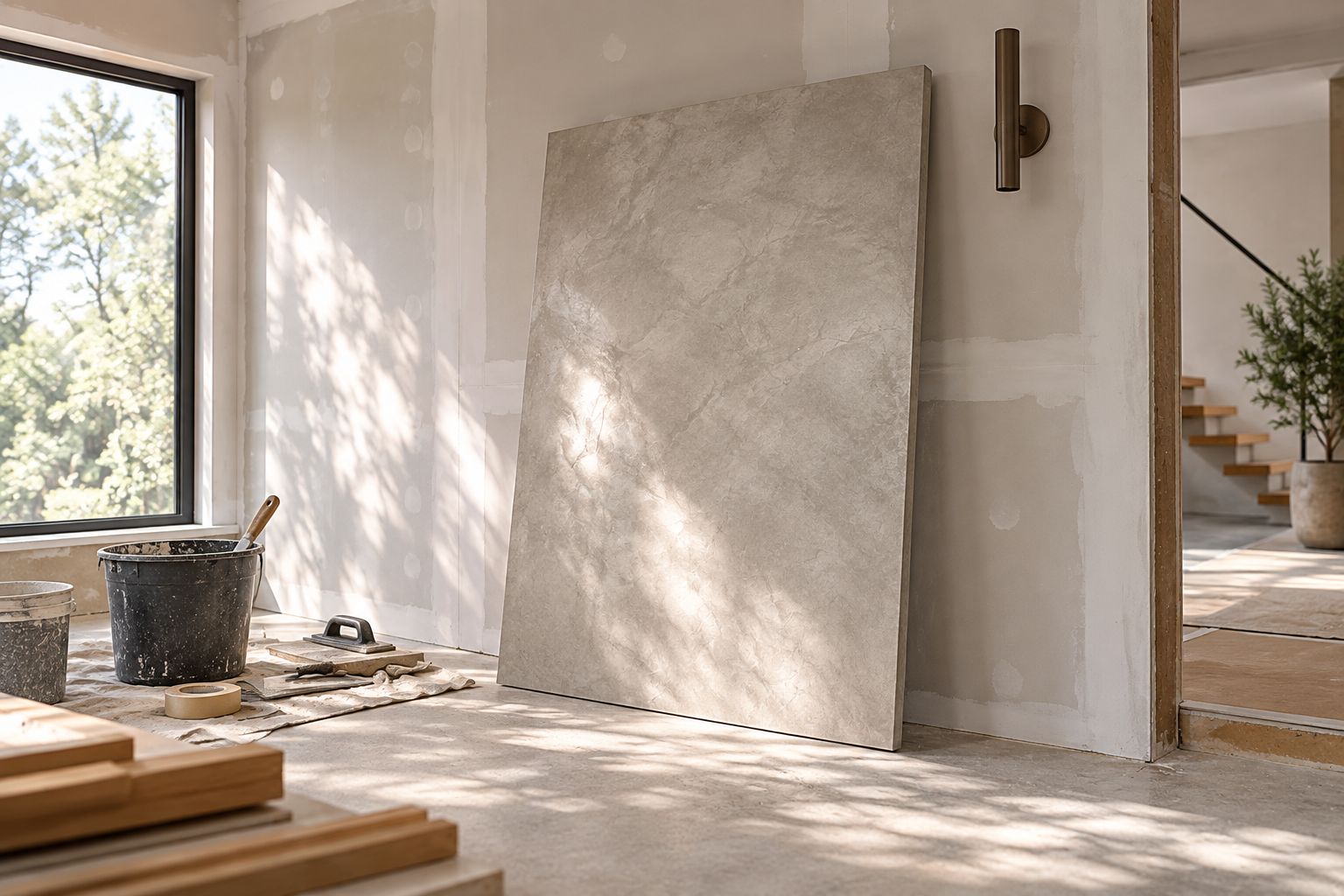
Gather reference images and compare material samples yourself first. Then ask the proposed installer to explain how the selected finish will be represented for approval, including its color, movement, texture, and sheen.
A contractor-applied sample gives the discussion a physical reference instead of relying on descriptions such as elegant or softly polished. Luxury Fly Services offers Venetian plaster wall finishes; ask for a free estimate that addresses your selected rooms, preparation needs, and sample-approval process. Establish what the estimate includes rather than assuming samples or revisions are included.
Review the sample in 2 lighting conditions: daylight and the room’s intended artificial lighting. Record approval against the actual sample, not a phone photograph. Keep it accessible throughout the work so the homeowner, builder, and installer share the same reference.
Make sample approval specific:
- Confirm the color beside adjacent materials.
- Review sheen from the room entrance and seating positions.
- Agree on the acceptable amount of visible movement.
- Check texture near corners and planned transitions.
- Record who approves the sample and how changes are authorized.
Coordinate the finish with other trades
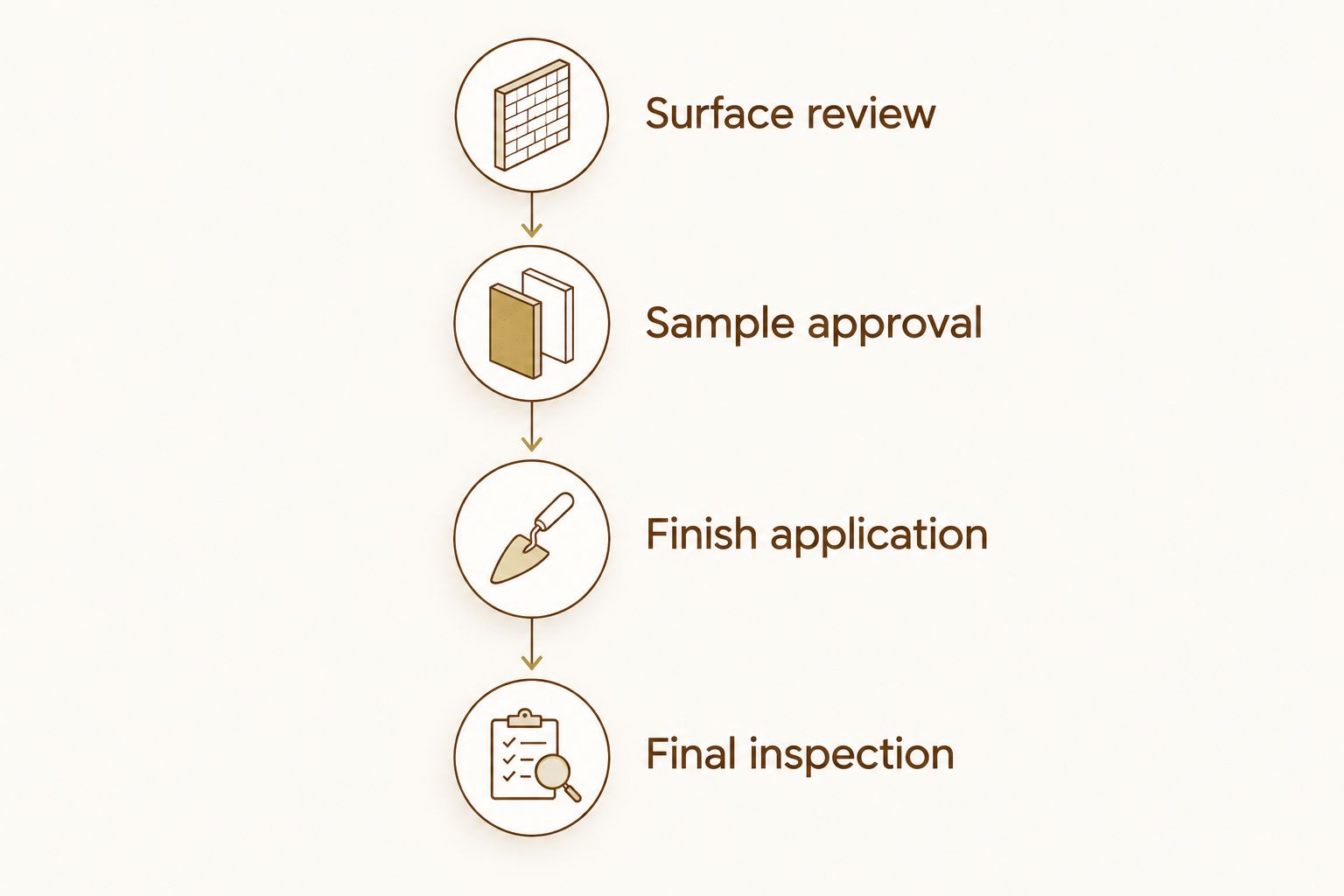
Create a shared schedule before requesting installation dates. A simple written sequence is enough to start: identify wall preparation, sample approval, decorative application, nearby installations, and final inspection.
The installer should establish the application conditions and access restrictions for the chosen system. Do not insert a generic drying period into the building schedule or assume the room can return to normal use immediately after application. Ask when other trades can enter and what protection the finish needs.
For your 2026 construction schedule, distinguish the application date from the date the space becomes ready for subsequent work. This gives the homeowner a clearer handover expectation and helps the builder avoid booking conflicting activities around a newly finished wall.
Confirm these scheduling details in writing:
- Which surrounding tasks must finish before application.
- Who moves furniture and protects adjacent surfaces.
- Required access, lighting, and working conditions.
- When trim, fixtures, and nearby installations can proceed.
- Who repairs damage caused by later work.
Compare written scopes before choosing a contractor
Prepare the same brief for every contractor you approach. Include room photographs, wall dimensions, substrate information, reference images, and the intended finish locations. Comparable information makes differences between proposals easier to identify.
Evaluate what each proposal includes, not just the finish name. A decorative wall estimate should explain preparation, application boundaries, protection, exclusions, and the approval process. Ask to see relevant previous work and discuss how the contractor would approach your specific surfaces; do not infer experience from unrelated remodeling photographs.
Luxury Fly Services is best suited to homeowners seeking a Connecticut contractor for Venetian plaster wall finishes. Its stated services also include microcement, epoxy flooring, and garage transformations. Those offerings make it relevant when your plans span several finish categories, but they do not replace a project-specific scope or confirm any installation date.
Compare proposals against the same checklist:
- Relevant examples of the proposed finish.
- Clearly defined rooms, surfaces, and exclusions.
- Written preparation and protection responsibilities.
- A documented sample and change-approval process.
- Named responsibility for communication and final inspection.
Document approval and handover before work starts
Put the agreed scope, finish sample reference, and responsibilities into 1 finish schedule that the homeowner and builder can both use. This can be a straightforward document rather than specialized software. Its value is that everyone works from the same instructions.
Use these 4 checkpoints to organize the record: surface review, sample approval, finish application, and final inspection. At handover, request care instructions for the actual installed system, including cleaning guidance and how to report damage. Avoid accepting generic advice that describes a different material.
If you are ready to discuss rooms and preparation, request a free estimate. Provide the project town, construction stage, photographs, and desired scope so the initial conversation addresses your home rather than a hypothetical finish.
Keep the handover record focused:
- Surface review: record preparation responsibilities and acceptance.
- Sample approval: identify the agreed physical reference.
- Finish application: confirm boundaries and authorized changes.
- Final inspection: document outstanding work and care instructions.
A useful estimate conversation ends with a defined next step: a site assessment, additional photographs, or a clarified scope. Ask which information is needed before the contractor can confirm the proposed work.
Request Your Wall Finish Estimate
Discuss Venetian plaster, preparation, and your Connecticut home’s remodeling scope.
Compare wall finish options for your project
Choose the wall finish by its intended role, not by which material sounds most premium. For 2026 selections, compare appearance, surface preparation, room conditions, and the maintenance instructions attached to the proposed system.
The options below serve different design goals. None removes the need to inspect the wall or approve a representative sample.
| Option | Best for | Main advantage | Key limitation |
|---|---|---|---|
| Venetian plaster | Homeowners seeking decorative depth and troweled variation | Makes texture and reflected light part of the wall design | Application technique affects the appearance; sample approval is essential |
| Interior paint | Homeowners seeking a straightforward color finish | Offers a direct route to a consistent painted appearance | Does not reproduce the layered character of troweled plaster |
| Microcement | Homeowners seeking a continuous, cement-like decorative surface | Provides a different visual direction from polished or textured plaster | Suitability depends on the complete system, substrate, and intended location |
Choose Venetian plaster for its appearance, not as an assumed waterproofing solution. In splash-prone locations, ask the contractor to specify the complete assembly and confirm suitability. A decorative material name alone does not establish what belongs behind it or how adjacent joints should be treated.
Paint remains a valid choice when color is the main objective. Microcement deserves a separate discussion when you want a cement-like surface; do not approve it as an interchangeable substitute for a Venetian plaster sample.
Common mistakes home builders make
Approving the finish from a photograph
A photograph is a reference, not an approval standard. Lighting, camera processing, and the photographed room affect what you see. Require a physical sample and record which characteristics matter most before work begins.
Treating every wall as part of the same scope
A feature wall, ceiling, alcove, and stairwell create different access and edge-detail questions. Mark each included surface on the plan, then identify returns, niches, and transitions separately. This prevents assumptions about where the decorative finish ends.
Leaving the homeowner out of sample approval
The builder can coordinate the work, but the homeowner needs to approve the visible result. Name the decision-maker and establish how approval reaches the installer. Do not allow an informal conversation to override the recorded sample without confirmation.
Planning surrounding work after installation
A finished wall still needs protection from subsequent activity. Discuss nearby cabinetry, electrical fittings, trim, and furniture movement before scheduling application. Assign responsibility for protection and any later damage rather than leaving that conversation until handover.
Accepting an estimate without preparation details
The finish description does not explain the condition of the wall beneath it. Ask which repairs and preparation steps are included, which are excluded, and who approves the surface. Resolve these questions while comparing proposals, not after application starts.
FAQ
What is Venetian plaster for home builders?
Venetian plaster for home builders is a decorative wall finish specified as part of a construction or remodeling project. The builder coordinates the substrate and schedule, while the homeowner approves the appearance and the installer defines the application requirements.
Is Venetian plaster better than paint for a new home?
Venetian plaster is better suited to a design that calls for troweled variation and decorative depth; paint suits a straightforward color finish. Choose according to the room’s design objective and an approved physical sample.
Can Venetian plaster go in a bathroom?
Bathroom suitability depends on the specific plaster system and its location within the room. Ask the installer to confirm the complete assembly for moisture exposure; do not assume a decorative finish provides waterproofing.
What should I send a contractor for a Venetian plaster estimate?
Send the project location, room photographs, approximate wall dimensions, substrate information, construction stage, and reference images. Identify the surfaces included and explain whether you want restrained variation or a more pronounced decorative effect.
How long does Venetian plaster installation take?
The installation schedule depends on the surface condition, project scope, selected system, and required application conditions. Ask the contractor to distinguish preparation, application, and readiness for subsequent work in the written schedule.
Who should approve the Venetian plaster sample?
The homeowner or designated design decision-maker should approve the physical sample before application. Record that approval and share the same reference with the builder and installer.
Does Luxury Fly Services offer Venetian plaster in Connecticut?
Luxury Fly Services offers Venetian plaster wall finishes and home remodeling services across Connecticut. Homeowners in Southington, Cheshire, Bristol, and Meriden can request a free estimate and discuss their project’s surfaces, preparation, and desired appearance.
One last thing
Ask about touch-up procedures before approving the finish. A decorative surface is judged as a whole, so understand how the installer would assess future marks or damage and what records should be retained.
For your 2026 project file, keep the approved sample reference, material details supplied by the installer, and care instructions together. That small handover task gives future maintenance decisions a documented starting point instead of another round of guesswork.