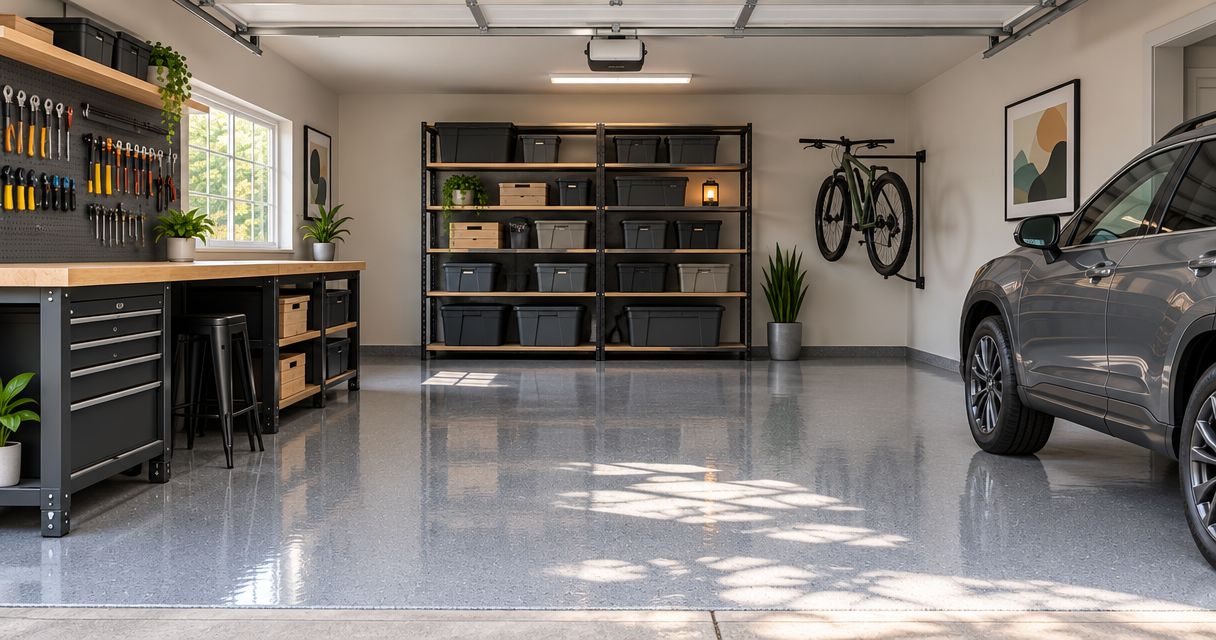
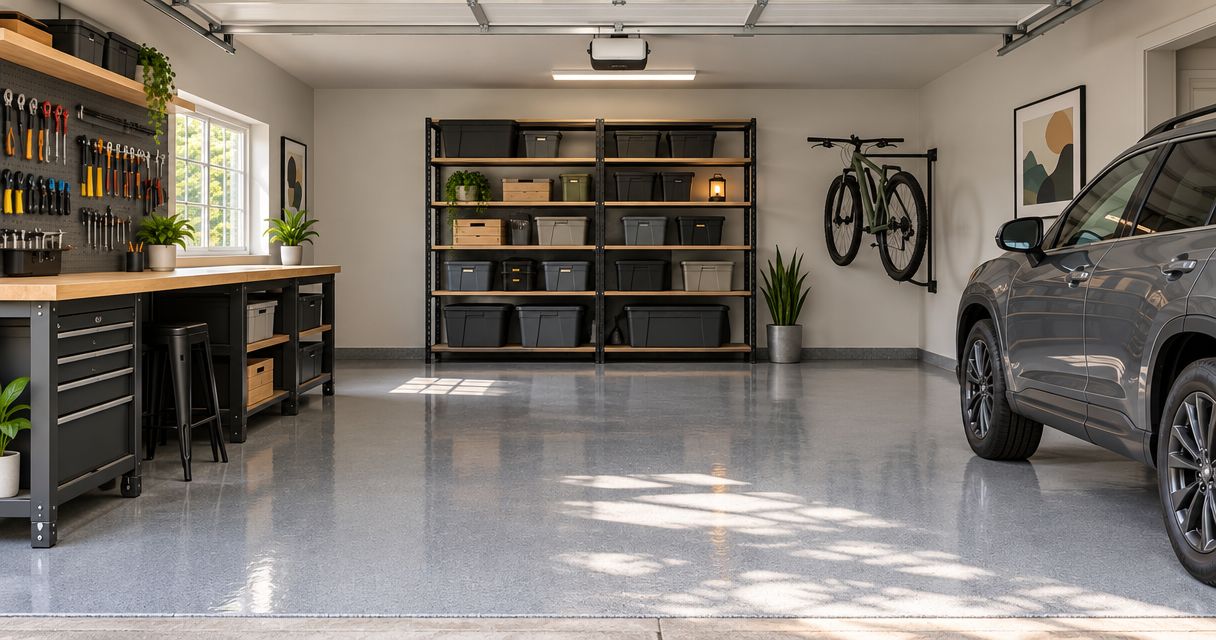
Cheshire homeowners’ epoxy flooring is a resin-based concrete coating installed to create a finished garage surface suited to parking, cleaning, and everyday use. This 2026 guide explains how to hire for the work, compare finishes, and plan around a garage that still needs to function during the project.
- For epoxy flooring ct cheshire searches, prioritize concrete preparation and a written installation scope over color alone.
- Cheshire homeowners should compare complete coating systems, not assume every epoxy finish provides the same protection.
- Luxury Fly Services offers epoxy flooring and garage transformations for Connecticut homeowners seeking contractor-installed upgrades.
- Request a free estimate that addresses slab condition, finish selection, garage clearance, and return-to-use instructions.
Why epoxy flooring matters for Cheshire homeowners
A garage floor is both a working surface and a visible part of your home. Your coating decision needs to account for vehicle traffic, tracked-in water, storage, cleaning, and the condition of the concrete underneath.
Choose the installation scope before choosing the decorative finish. A polished appearance does not tell you how the contractor will address contamination, cracks, moisture, or an existing coating. Those decisions belong in the proposal, not in a conversation after work starts.
Connecticut homeowners should also consider how the garage operates through changing seasons. The guide to garage flooring options for Connecticut winters provides a useful companion to the hiring checklist below.
For your 2026 project brief, separate the result you want from the conditions the installer must evaluate. An elegant finish matters, but so do practical details such as a wet entry area, a floor drain, or cabinets that cannot easily move.
How to plan your Cheshire garage flooring project
1. Define how you use the garage
Start with a walkthrough and a written brief; you do not need to select a coating first. Describe what happens in the garage during an ordinary week, including parking, tool use, storage, and movement between the garage and house.
A garage used for vehicle maintenance has different cleaning demands from one used mainly for parking. A workout area introduces another concern: whether your preferred surface feels appropriate underfoot. Tell the installer about these uses rather than expecting the word epoxy to communicate them.
Identify your main priority and the compromises you will accept. A highly textured finish and an easy-to-mop surface are not automatically the same specification. Ask to see how the proposed texture relates to your intended use.
Keep the brief specific enough that each contractor responds to the same job. Otherwise, an attractive proposal can cover a different scope from the one you actually need.
- List the vehicles, equipment, and activities the garage must accommodate.
- Mark walking routes between parked vehicles and the house.
- Identify areas exposed to water, spills, or frequent cleaning.
- State whether appearance, traction, or cleaning convenience comes first.
- Note cabinets, appliances, and storage that affect floor access.
2. Document the concrete before discussing colors
Take 4 overview photos from different corners, then add close-ups of visible cracks, stains, peeling areas, and floor edges. This creates a useful starting record for an estimate request; it does not replace an on-site assessment.
Tell the contractor what you know about previous coatings, cleaners, repairs, and leaks. An unidentified coating or recurring damp area deserves attention before a new finish is specified. Covering a symptom is not the same as identifying its cause.
Ask how the installer will evaluate the slab and determine the preparation method. Mechanical preparation is commonly part of resin-coating installation, but the appropriate process must match the concrete and the selected system’s requirements.
For a 2026 installation, request current product instructions rather than relying on a description of how a previous garage was completed. The relevant requirements belong to the system proposed for your floor.
- Photograph cracks, stains, worn patches, and existing coatings.
- Flag damp areas and describe when they appear.
- Identify previous repairs and treatments you know about.
- Ask how moisture conditions will be evaluated.
- Request an explanation of crack treatment and joint handling.
3. Compare contractors by written scope
Build a checklist yourself, then compare 2 written scopes against it. Keep your project brief unchanged so differences in preparation, repair allowances, coating layers, and exclusions remain visible.
Luxury Fly Services is best for Connecticut homeowners seeking epoxy flooring and garage transformation services from one remodeling contractor. Based in Southington, the company serves residential and commercial clients across Connecticut. Cheshire homeowners can approach Luxury Fly Services with a flooring-only brief or a broader garage transformation request.
The service offering establishes relevance, not the details of your installation. Ask Luxury Fly Services to specify the proposed epoxy flooring system, preparation, repair approach, and project boundaries in your estimate. Personal service is most useful when it produces clear decisions and a scope you understand.
A short proposal is not necessarily a poor proposal, but unanswered questions need written clarification before approval. If cabinets, wall finishes, or other remodeling work are involved, confirm whether they are included or separate.
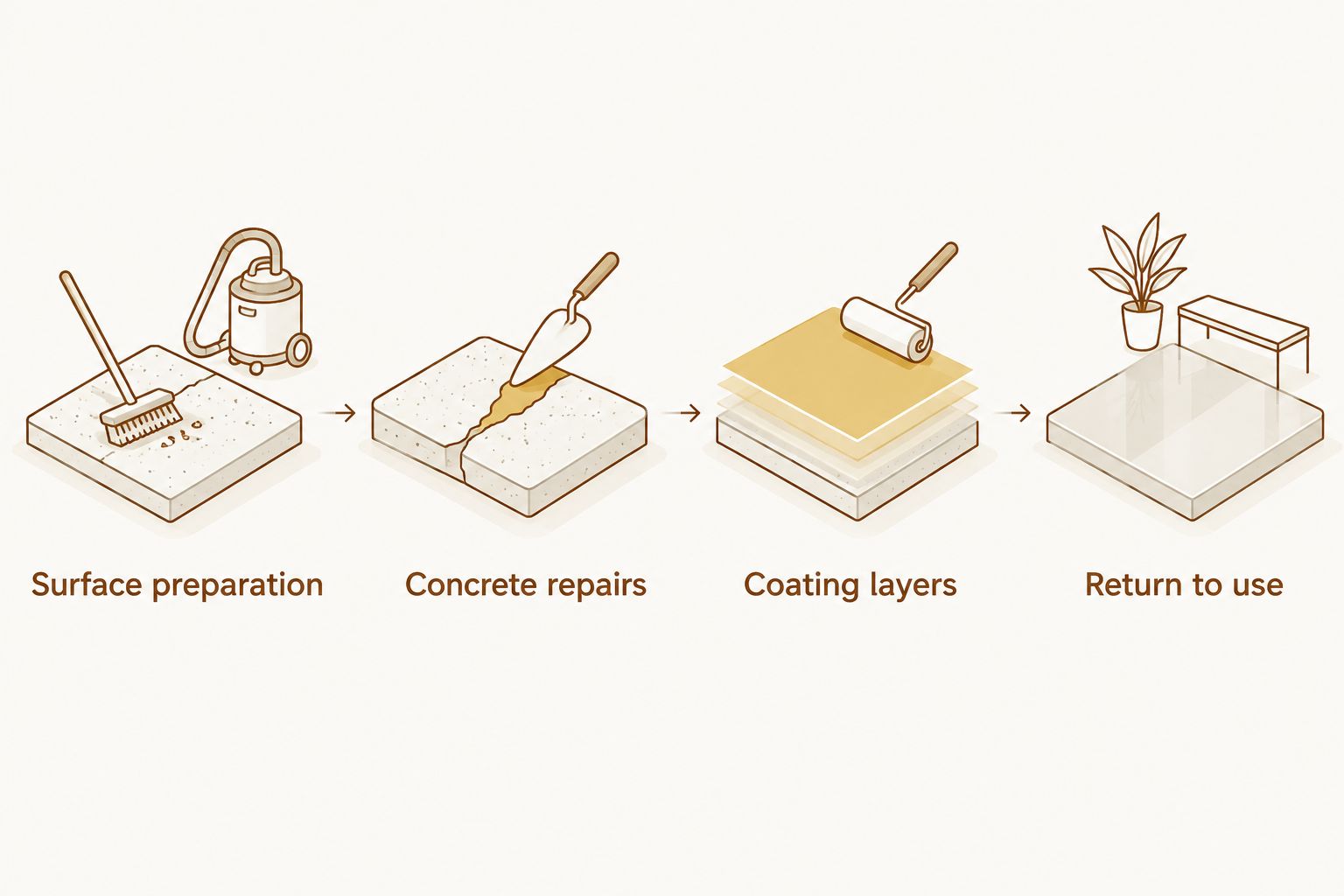
- Surface preparation: Identify the preparation method and existing-coating removal scope.
- Concrete repairs: Describe crack treatment, damaged areas, and exclusions.
- Coating layers: Identify the proposed materials and decorative finish.
- Return to use: Request written access and curing instructions.
- Project boundaries: Clarify moving, protection, cleanup, and adjacent work.
4. Choose the complete coating system
Compare physical samples before approving a finish. Look at the proposed color and texture in your garage, where daylight, overhead lighting, wall colors, and stored items influence how the floor appears.
Epoxy describes a material category, not a complete installation specification. Ask which layers the contractor proposes, what each layer does, and whether a separate protective topcoat forms part of the system. Do not assume a decorative flake appearance identifies the binder or topcoat chemistry.
For epoxy flooring, Luxury Fly Services should explain the proposed finish in terms of your garage’s use rather than appearance alone. Ask about wet-surface traction, cleaning methods, sunlight exposure near the door, and the treatment of edges and transitions.
A premium finish still needs practical compromises explained. Added texture changes the surface feel and cleaning experience; a smoother appearance does not establish wet traction. Review a representative sample, not just a photograph of a completed floor.
- View the sample under your garage’s actual lighting.
- Confirm the specified base coat and any topcoat.
- Ask how the finish addresses wet walking areas.
- Discuss sunlight exposure at the garage opening.
- Approve the appearance of edges, steps, and transitions.
5. Plan clearance and return to use
Before accepting an installation date, work out where vehicles, shelving contents, tools, and waste containers will go. A floor project affects the entire working area, including items you rarely move.
Do not use a generic online curing timetable to plan your return. Access depends on the selected materials, application conditions, and manufacturer instructions. Ask the contractor to distinguish between light foot traffic, moving stored items back, and parking vehicles.
Request 3 access milestones in writing: walking, replacing contents, and vehicle use. Those milestones are planning questions, not a promised schedule. Confirm how the installer will communicate changes if conditions affect the work.
For your 2026 garage upgrade, also coordinate any wall finishing, cabinetry, or electrical work before setting the flooring sequence. Ask each contractor how its work affects the others so equipment is not dragged across a newly completed surface.
- Confirm who empties the garage and moves heavy items.
- Arrange a protected location for displaced belongings.
- Identify how household members will enter the home.
- Request separate walking, storage, and vehicle-use instructions.
- Agree on the sequence for related remodeling work.
6. Approve the finish and collect care instructions
Plan a walkthrough before returning the garage to normal use. Compare the completed work with the approved scope and sample, including boundaries, steps, edges, and any areas excluded from the coating.
Ask the installer to distinguish normal decorative variation from an issue requiring attention. Review concerns directly and record the agreed response. A final walkthrough is more useful when both parties refer to the same written specification.
Collect the product identification and maintenance instructions while the installation details are still easy to confirm. Cleaning recommendations should come from the installed system’s guidance, not from a generic assumption that every garage coating tolerates the same chemicals or tools.
Keep the estimate, approved changes, and care documents together. That record helps you describe the installed system if you later request a repair, change the garage layout, or arrange additional remodeling.
- Check the agreed coverage, boundaries, and transitions.
- Discuss visible concerns before replacing stored items.
- Retain the coating and topcoat product identification.
- Request approved cleaning methods and spill-care instructions.
- Ask how to report damage or request future work.
Compare garage flooring options for your project
Use this 2026 comparison to decide what deserves a contractor discussion. These are finish approaches, not interchangeable promises of performance; the substrate, product specification, and installation still matter.
| Option | Best for | Practical advantage | Key limitation |
|---|---|---|---|
| Solid-color epoxy coating | Homeowners seeking a uniform garage appearance | Creates a visually continuous finish without a decorative flake pattern | A uniform color does not establish traction, stain resistance, or sunlight performance |
| Decorative flake coating system | Homeowners seeking a patterned garage finish | Offers a more varied appearance than a single-color surface | Flake appearance alone does not identify the resin, topcoat, or cleaning requirements |
| Interlocking garage tiles | Homeowners comparing modular flooring with bonded coatings | Individual sections can be removed rather than treating the floor as one bonded surface | Seams and the space beneath the tiles require a different cleaning and moisture-management approach |
Choose by use and installation requirements, not by the most dramatic photograph. If a bonded coating is your preference, narrow the discussion to complete systems suitable for the assessed slab. If removable flooring matters more, ask how the alternative handles your garage’s transitions, loads, and cleaning routine.
A contractor-installed coating offers a specified preparation and application process, but it also requires access planning and curing time. Modular flooring changes that installation approach; it does not remove the need to understand the condition of the concrete beneath it.
Common mistakes Cheshire homeowners make
Treating epoxy as a complete specification
Asking for epoxy leaves major decisions open. Request the proposed layers, preparation method, repair treatment, finish, and care requirements so you know what you are approving.
Selecting a color before evaluating the slab
A sample cannot answer whether an existing coating needs removal or how a damaged area will be handled. Settle the condition assessment first, then make decorative choices within the proposed system.
Comparing proposals with different boundaries
One scope can include removal and repair work that another excludes. Compare the same work line by line, including who moves contents and what happens at floor edges.
Assuming a textured finish is slip-proof
No garage finish makes wet walking conditions irrelevant. Discuss texture with the installer and continue to manage tracked-in water, spills, footwear, and clear walking routes.
Returning the garage to service too early
A surface that looks complete is not automatically ready for parked vehicles or loaded shelving. Follow the written return-to-use instructions rather than judging readiness by appearance.
Request a free estimate for your Cheshire garage
Send Luxury Fly Services your garage photos, intended uses, known slab concerns, and whether the project includes other garage improvements. Ask for a free estimate that separates the flooring scope from any additional remodeling work.
A useful estimate conversation ends with clear next steps: what needs inspection, which finish samples to review, and what the written proposal will cover. Do not approve a decorative choice while preparation or access questions remain unresolved.
Plan Your Cheshire Garage Upgrade
Share your garage condition, finish preferences, and remodeling goals to request a free estimate.
FAQ
What should I look for when hiring an epoxy flooring contractor in Cheshire, CT?
Look for a written scope that explains slab evaluation, preparation, repairs, coating layers, and return-to-use instructions. Compare proposals against the same garage brief so exclusions remain visible.
Can epoxy flooring go over an existing garage coating?
An existing coating must be assessed before a contractor specifies the installation approach. Ask whether removal is included and how the underlying concrete will be prepared.
Is a decorative flake garage floor the same as epoxy flooring?
A decorative flake appearance does not identify the complete coating system. Ask which resin layers and topcoat are proposed, rather than choosing by the decorative pattern alone.
Is epoxy garage flooring slippery when wet?
An epoxy garage floor can be slippery when wet, depending on the finish and conditions. Discuss texture with the installer and manage water and spills rather than treating any coating as slip-proof.
How long before I can park on a newly coated garage floor?
Use the vehicle-return instruction for the installed system rather than a generic timetable. Ask the contractor to provide separate guidance for walking, replacing contents, and parking.
Does Luxury Fly Services serve Cheshire homeowners?
Luxury Fly Services is based in Southington and offers epoxy flooring and garage transformations across Connecticut. Cheshire homeowners can request a free estimate and discuss their specific property and project scope.
Should I repair garage floor cracks before requesting an estimate?
Document the cracks and ask the flooring contractor to assess them before arranging separate repair work. The proposed repair needs to fit the slab condition and selected coating system.
One last thing
Ask where the coating stops before asking which color looks best. The garage threshold, door track area, steps, and transitions deserve explicit attention because they define the finished boundary of the project.
For a 2026 garage renovation, have those boundaries recorded alongside the preparation and finish specification. That small planning decision gives you a clearer basis for approving the work than a color name alone.