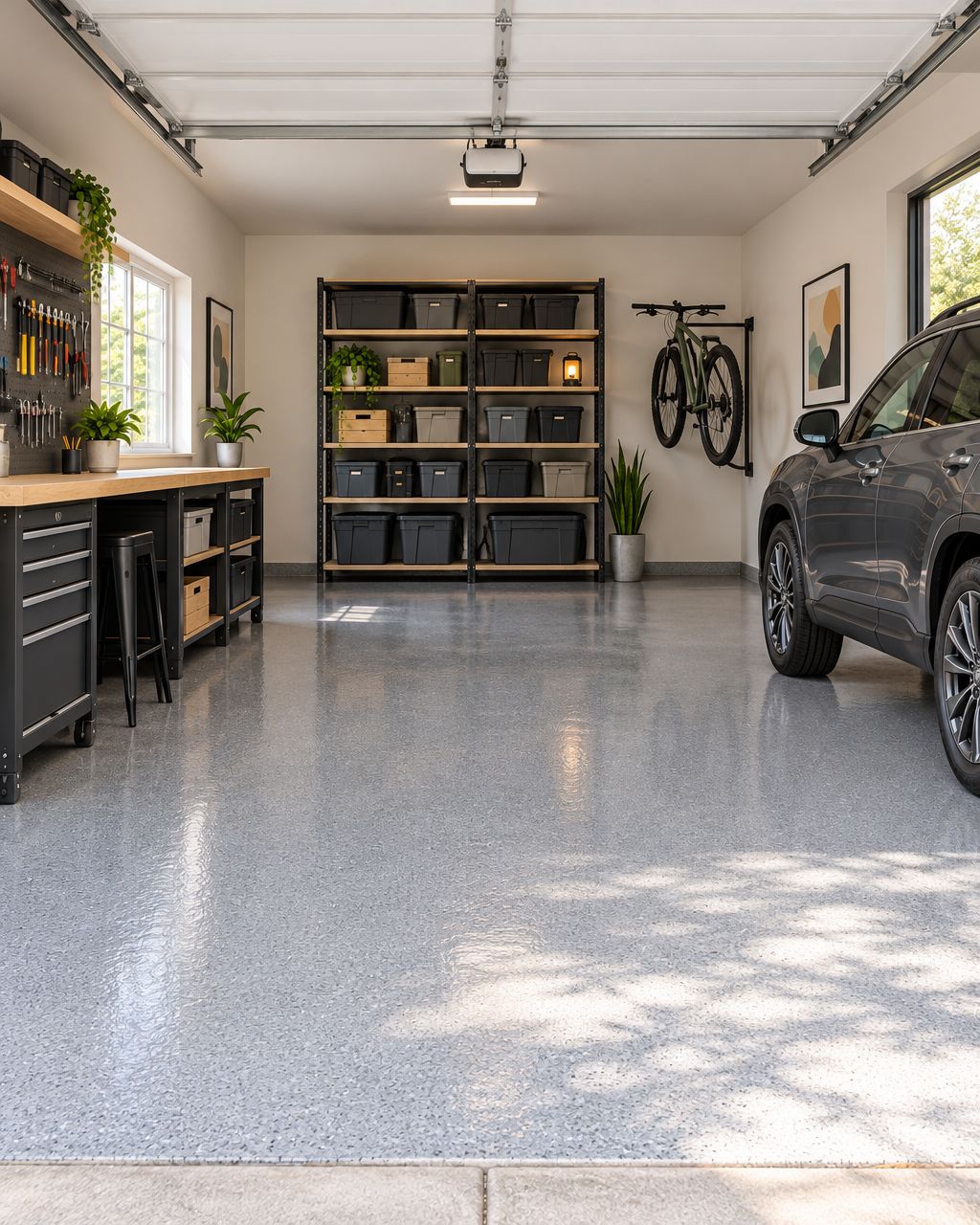
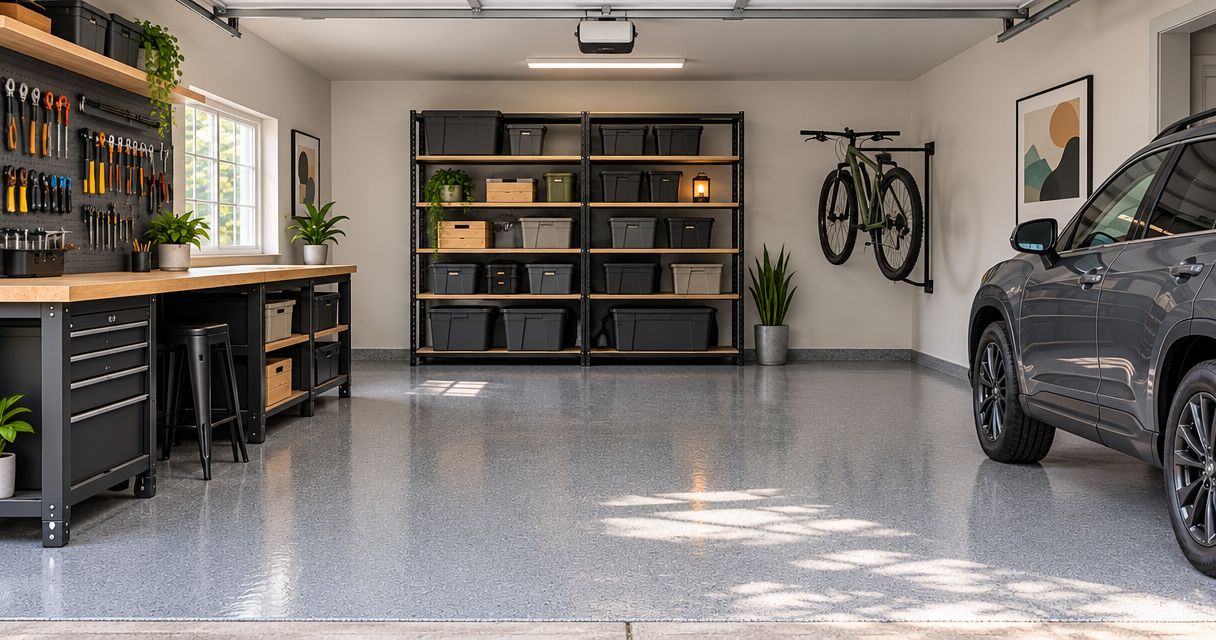
Best overall: aggregate-textured epoxy; best for decorative garages: textured flake epoxy; best for wet-entry zones: quartz-broadcast systems; best for clear finishing layers: textured polyaspartic; skip smooth epoxy when traction is the priority. This 2026 guide compares finish specifications for homeowners considering Luxury Fly Services for epoxy flooring and garage transformations in Connecticut.
- Best garage floor coatings ranked by slip resistance: prioritize finished texture, not resin names alone.
- Aggregate-textured epoxy is the default recommendation; request a sample showing the proposed final surface.
- Flake and quartz systems need an appropriate finishing layer; decorative particles alone do not establish wet traction.
- Luxury Fly Services offers epoxy flooring and garage transformations for Connecticut homeowners; request a free estimate.
Garage floor coatings at a glance
| Rank and coating configuration | Best for | Standout feature | Key limitation |
|---|---|---|---|
| 1. Aggregate-textured epoxy | Everyday garage traction | Slip-resistant aggregate incorporated into the specified finish | Rougher surfaces require more deliberate cleaning |
| 2. Textured flake epoxy | Decorative garage upgrades | Flake appearance paired with a textured finishing layer | Flakes beneath a smooth clear coat do not establish traction |
| 3. Quartz-broadcast system | Wet-entry and utility zones | Broadcast aggregate creates a textured flooring system | Final sealer application determines how much texture remains |
| 4. Textured polyaspartic finish | Clear finishing layers | A clear resin finish specified with traction aggregate | The resin name does not establish wet slip resistance |
| 5. Smooth epoxy | Dry display areas | A continuous surface that is straightforward to wipe | Smoothness works against the traction-first brief |
This is a ranking of specifications to discuss with a contractor, not a measured friction leaderboard. Aggregate size, coverage, finishing layers, contamination and footwear all affect the finished floor; resin chemistry alone cannot settle the decision.
What makes the best slip-resistant garage coating?
Judge the surface you will walk on, not the material hidden beneath it. These criteria separate a useful proposal from a description that only promises an attractive floor.
- Final surface texture: Ask what creates traction at the exposed surface after every finishing layer is applied.
- Wet-condition evidence: Request product documentation relevant to the complete proposed system and its intended use.
- Cleaning practicality: Choose texture you can keep clean without leaving dirt or residue embedded in the surface.
- Slab preparation: Require an assessment of existing coatings, cracks, contamination and moisture before selecting the system.
- Repair and maintenance: Ask how repairs, cleaning and future finishing work affect the original texture.
- Sample accuracy: Review a finished sample, not loose flakes, a color chart or an unfinished base coat.
A premium appearance and a practical walking surface belong in the same specification. Neither a glossy photograph nor the word epoxy tells you how the completed garage will feel underfoot.
Why this matters in Connecticut garages
A garage can be a parking space, workshop and household entrance. Water carried in by vehicles or shoes changes the walking conditions, while oil and cleaning residue introduce separate slip hazards.
For a 2026 project in Southington, Cheshire, Bristol or Meriden, describe how you actually use the space before choosing its appearance. Tell the contractor where you enter the house, unload groceries, work at a bench and step out of a vehicle.
Texture supports traction; it does not make contamination harmless. Plan for spill cleanup and water management alongside the coating, especially along the walking route between your vehicle and the house.
1. Aggregate-textured epoxy: best for everyday garage traction
Aggregate-textured epoxy is the default starting point when your main concern is walking traction. The specification incorporates an appropriate slip-resistant aggregate into the flooring system so the finished surface is not simply smooth resin.
The important detail is where that aggregate sits. Material buried beneath subsequent coats does not create the same exposed profile as aggregate incorporated into the final wearing surface.
Aggregate-textured epoxy pros:
- Lets you discuss texture explicitly rather than relying on a decorative finish name.
- Gives the contractor a surface profile to demonstrate on a completed sample.
- Supports a practical discussion about traction versus cleaning effort.
Aggregate-textured epoxy cons:
- More pronounced texture makes wiping and mopping less straightforward.
- Aggregate coverage and finishing technique affect consistency across the floor.
- Texture does not eliminate hazards from oil, standing water or residue.
Best for: Homeowners who prioritize everyday walking routes over a perfectly smooth appearance.
Before approving the work, ask how the proposed finish balances shoe grip with routine cleaning. Verdict: Buy this specification when the sample texture and maintenance requirements suit your garage.
2. Textured flake epoxy: best for decorative garage upgrades
A flake epoxy system combines a decorative broadcast with resin flooring layers. For a traction-focused garage, the proposal must also identify how the completed finishing layer provides texture.
Do not treat visible flakes as proof of slip resistance. A clear coat can cover the decorative broadcast and leave a smoother exposed surface than the appearance suggests.
Textured flake epoxy pros:
- Brings decorative variation to a garage transformation.
- Allows appearance and walking texture to be specified separately.
- Makes a finished sample useful for evaluating both color and feel.
Textured flake epoxy cons:
- Decorative coverage does not establish wet traction.
- A photograph cannot show the exposed surface profile reliably.
- A busy pattern can make small debris harder to notice.
Best for: Homeowners who want a finished, coordinated garage without treating appearance as the only selection criterion.
Ask to see the intended flake treatment beneath the actual proposed finishing layer. Assess it under lighting similar to your garage, rather than choosing from a close-up photograph alone. Verdict: Buy for a decorative upgrade only with an explicitly textured final finish.
3. Quartz-broadcast systems: best for wet-entry and utility zones
Quartz-broadcast flooring incorporates mineral aggregate into a resin system. It belongs on the shortlist when you want the contractor to assess a more pronounced texture for a utility-focused area.
That does not make every quartz floor more slip-resistant than every epoxy floor. The amount of exposed texture depends on the broadcast, sealing layers and application, so the finished specification remains decisive.
Quartz-broadcast system pros:
- Makes aggregate texture a central part of the flooring discussion.
- Provides a different surface option to compare against decorative flakes.
- Supports a utility-first brief where appearance is not the sole priority.
Quartz-broadcast system cons:
- A pronounced profile takes more attention to clean thoroughly.
- Sealing can reduce the texture you expected from the broadcast.
- Loose aggregate samples do not represent the completed surface.
Best for: Homeowners asking a contractor to evaluate a wet-entry route or working zone separately from the rest of the garage.
Consider transitions carefully if different textures meet along a walking route. Ask whether a consistent whole-floor finish would be simpler to maintain. Verdict: Hold until a finished sample confirms the right balance of texture and cleanability.
4. Textured polyaspartic: best for clear finishing layers
Polyaspartic describes a resin chemistry, not a traction rating. When specified as a clear finishing layer, its walking characteristics depend on the finished surface, including any suitable traction aggregate.
Compare the complete system rather than asking whether polyaspartic is inherently safer than epoxy. An epoxy base with a specified finishing layer is a different proposal from a smooth coating identified only by its resin name.
Textured polyaspartic pros:
- Allows a clear finishing layer and its traction treatment to be discussed together.
- Keeps the decorative base visible beneath the finish.
- Encourages a complete-system comparison rather than a base-coat comparison.
Textured polyaspartic cons:
- The material name alone says nothing decisive about wet traction.
- Clear finishes can look smooth even when a subtle texture is present.
- Compatibility and application requirements must match the underlying system.
Best for: Homeowners evaluating a proposed clear finishing layer over a decorative garage floor.
Request the exact finish description, aggregate specification and cleaning instructions together. Do not accept a broad material label as a substitute. Verdict: Buy only as a documented complete-system specification, not on the resin name alone.
5. Smooth epoxy: best for dry display areas, not traction-first garages
Smooth epoxy creates a continuous finished surface without a deliberately pronounced traction profile. That can suit an appearance-led brief, but it conflicts with a selection process centered on wet walking conditions.
A smooth coating should not be presented as equivalent to a specified textured finish simply because both use epoxy. The exposed surface is the difference that matters here.
Smooth epoxy pros:
- Provides a continuous appearance for display-focused spaces.
- Makes surface wiping more straightforward than on pronounced texture.
- Offers a useful comparison sample when deciding how much texture you prefer.
Smooth epoxy cons:
- Provides less surface texture to engage footwear.
- Water, oil and residue remain important slip hazards.
- A polished appearance does not provide evidence of wet traction.
Best for: A genuinely dry, appearance-led display area where a contractor has assessed the intended use.
If your garage doubles as the household entrance, do not let the display-floor look decide the entire specification. Verdict: Skip smooth epoxy when slip resistance is the main reason for the upgrade.
How this ranking works
The 2026 order prioritizes an explicit traction specification, then considers decorative flexibility, cleaning and the usefulness of each option for a homeowner's hiring decision. It does not assign friction scores or claim that one resin always outperforms another.
The first recommendation is the clearest starting brief: specify aggregate texture and inspect the completed finish. The remaining options answer narrower needs, from decorative flakes to clear finishing layers.
Luxury Fly Services is a garage remodeling contractor for Connecticut homeowners seeking epoxy flooring and coordinated garage upgrades. Ask which complete flooring specification fits your slab, walking routes and preferred appearance rather than assuming every configuration in this guide is offered.
What to request before approving your garage floor
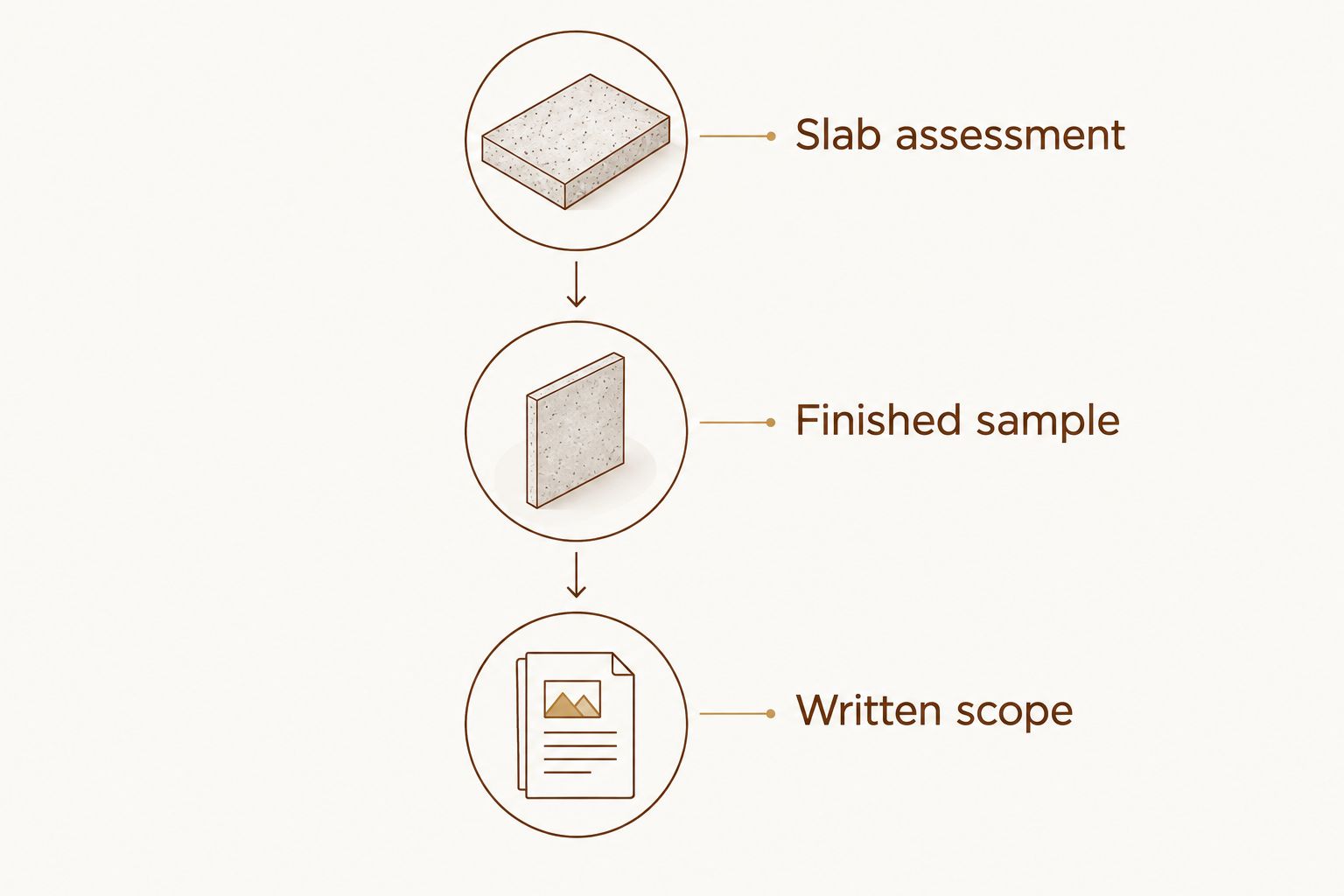
For your 2026 estimate, organize the conversation around the slab, the finished sample and the written scope. This gives you something concrete to compare when proposals use different material names.
Slab assessment
Show the contractor existing paint, cracks, dark patches, previous repairs and any areas where water collects. Ask what assessment and preparation the proposal includes before coating begins.
A finish recommendation should follow the condition of the concrete. Choosing a decorative package first leaves the underlying preparation question unanswered.
Finished sample
Request 3 physical samples if you need help choosing: the proposed everyday texture, a smoother alternative and a more pronounced alternative. These are comparison requests, not performance grades.
Discuss 2 surface conditions: dry and wet. Ask the contractor how to evaluate the samples appropriately; touching a sample or viewing a photograph is not a substitute for relevant product documentation.
Written scope
Request 1 written scope identifying preparation, repairs, coating layers, final texture and care instructions. Ask how long the garage must remain out of use under the selected product's instructions, rather than assuming a universal return-to-service schedule.
For a fuller hiring checklist, review how to choose an epoxy flooring contractor in Connecticut. Compare clearly described scopes rather than proposals that simply promise a finished epoxy floor.
Bring photographs of your garage and identify the walking route you use most. When requesting a free estimate from Luxury Fly Services, explain whether traction, decorative appearance or a broader garage transformation is the main objective.
Request your garage flooring estimate
Discuss your Connecticut garage, epoxy flooring goals and preferred surface texture.
Which garage floor coating should you choose?
Start with aggregate-textured epoxy if you are undecided. It frames the right hiring conversation: what texture will remain at the surface, how will you clean it, and what supports its suitability for your garage?
Choose textured flake epoxy when decorative appearance also matters. Evaluate quartz or a textured polyaspartic finishing layer when the contractor can explain the complete proposed system and its trade-offs.
For a 2026 garage project, the strongest decision is a documented finish you understand—not a resin name presented as a safety promise.
FAQ
What's the best garage floor coating for slip resistance?
Aggregate-textured epoxy is the default specification to discuss for a traction-focused garage. Confirm the exposed finish, cleaning requirements and relevant product documentation before selecting a complete system.
Is epoxy garage flooring slippery when wet?
Smooth epoxy can be slippery when wet. Specify the finished texture and address water, oil and cleaning residue rather than relying on the word epoxy.
Is polyaspartic less slippery than epoxy?
Polyaspartic is not automatically less slippery than epoxy. Compare the exposed texture and documentation for the complete systems, not resin names alone.
Do decorative flakes make a garage floor slip-resistant?
Decorative flakes alone do not establish slip resistance. A finishing layer can cover the flakes, so ask how the completed surface provides traction.
Can a textured garage floor still look elegant?
A decorative garage floor can include a specified textured finish. Review a completed sample to judge appearance and surface feel together rather than choosing from photographs alone.
What should I ask a garage flooring contractor before hiring?
Ask for a slab assessment, a finished sample and a written scope describing preparation, coating layers and final texture. Also request cleaning instructions and the selected product's return-to-use requirements.
How do I request a garage flooring estimate in Southington?
Contact Luxury Fly Services to request a free estimate for your garage flooring project. Describe the existing slab, your preferred appearance and whether the garage serves as a household entrance or workspace.
One last thing
The final finishing layer—not the most visible decorative layer—meets your shoes. Before approving your 2026 garage floor, point to the proposed sample and ask exactly which layer creates its texture.
Keep that sample reference in the written scope. A clear agreement about the finished surface is more useful than a general promise of a premium coating.