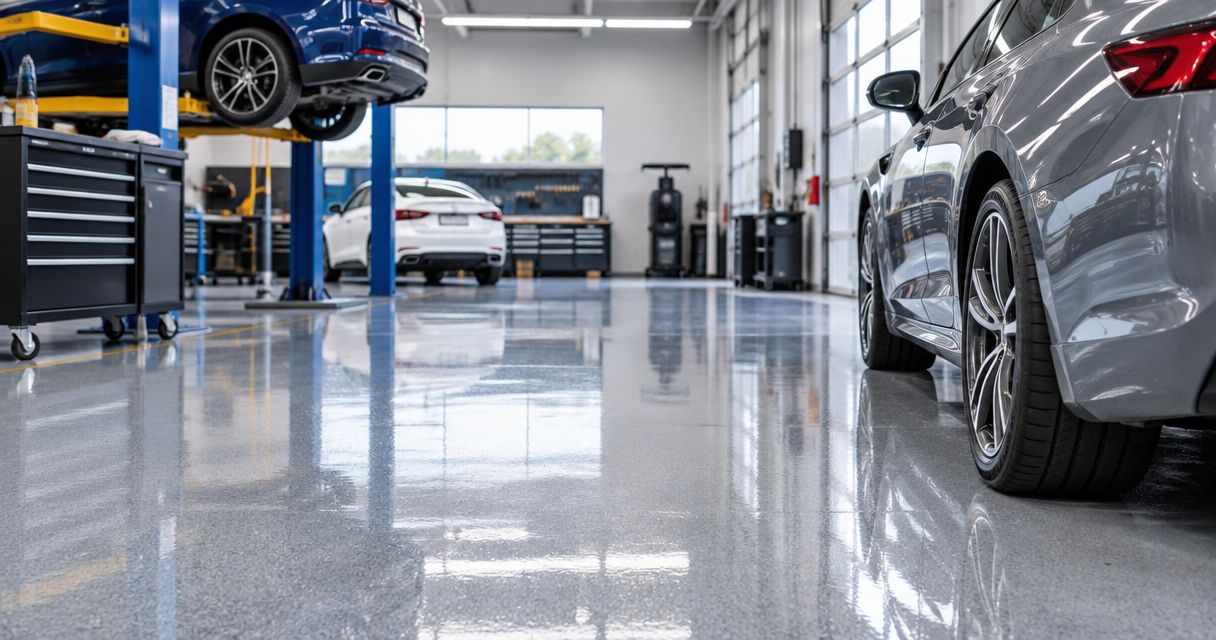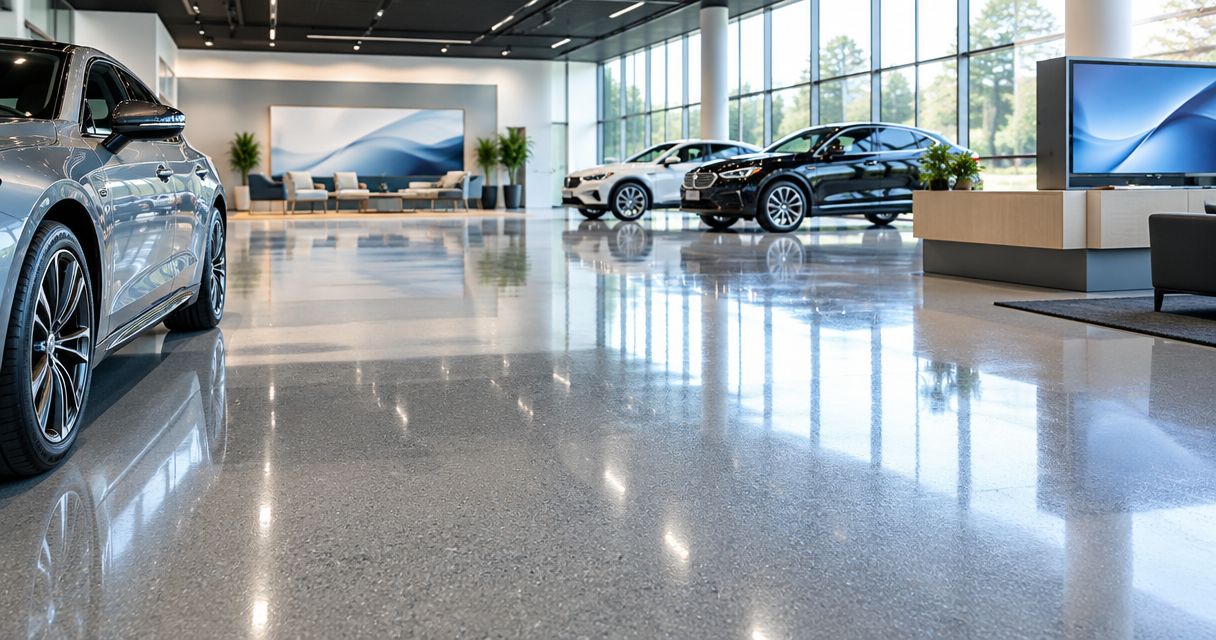
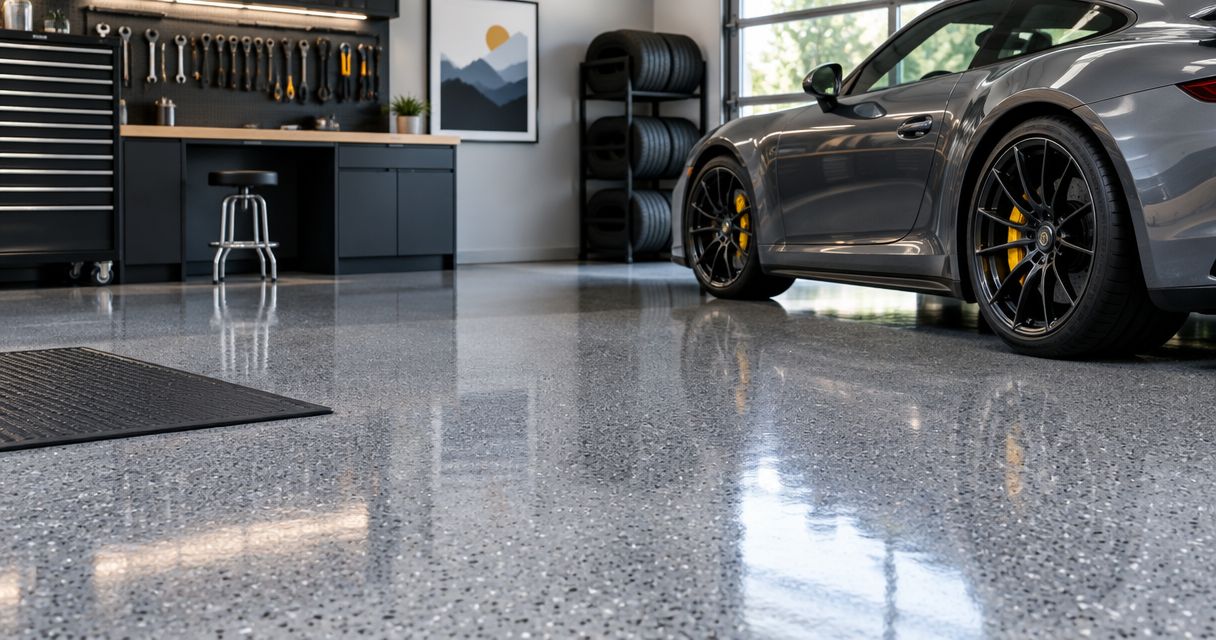
Best overall: an epoxy base with a compatible polyaspartic topcoat. Best for an all-polyaspartic installation: a polyaspartic coating system. Best for a garage away from direct sunlight: solid-color epoxy. Best for hands-on application: a water-based epoxy kit. This 2026 guide ranks the best garage floor coatings for car enthusiasts by how well their specified systems fit parking, detailing, and workshop use.
- The best garage floor coatings for car enthusiasts pair sound concrete preparation with a coating system matched to garage use.
- An epoxy base with a compatible polyaspartic topcoat is the default recommendation for mixed parking and workshop use.
- Luxuryflyservices offers epoxy flooring and garage transformations for Connecticut homeowners planning a garage upgrade.
- Compare traction, sunlight exposure, chemical resistance, and vehicle-return instructions before choosing a finish.
Why this matters
A garage floor has competing jobs. You want it to show off your car, release dirt during cleaning, and provide footing when rainwater or melting snow reaches the slab. A glossy finish alone does not answer those needs.
For Connecticut homeowners, Luxuryflyservices offers epoxy flooring and luxury garage transformations. Luxuryflyservices is a local option for Connecticut car enthusiasts seeking epoxy flooring as part of a garage transformation. Choose the coating specification before choosing its color.
The right question in 2026 is not simply whether epoxy or polyaspartic is better. Ask which complete system fits your concrete, sunlight exposure, cleaning products, and workshop habits. A strong topcoat cannot compensate for a poorly prepared substrate.
What makes the best garage floor coating?
Use these criteria to evaluate a proposal before comparing decorative finishes:
- Concrete preparation: Require a documented preparation method, repair scope, and surface profile that meet the coating manufacturer's instructions.
- Moisture compatibility: Ask how the installer will assess slab moisture and what happens if the results exceed the selected system's limits.
- Chemical resistance: Match the finished system to the automotive fluids, cleaners, and detailing chemicals you actually use.
- Traction: Specify a texture suitable for wet footwear without making routine cleaning unnecessarily difficult.
- Light stability: Check the exposed finish's resistance to sunlight-related discoloration, particularly near an open garage door.
- Return to service: Get separate written instructions for walking, replacing equipment, and parking vehicles.
These criteria apply to every option below. The resin category narrows your choices; the manufacturer's technical documentation determines whether a particular system meets them.
Garage floor coatings at a glance
The order below reflects suitability for a mixed-use enthusiast garage, not a claim that every product within a category performs identically. In 2026, compare complete coating schedules rather than treating a resin name as a performance specification.
| Rank and coating | Best for | Standout feature | Key limitation |
|---|---|---|---|
| 1. Epoxy base with compatible polyaspartic topcoat | Mixed parking, detailing, and workshop use | Separates the bonding/build layer from the exposed wear finish | Requires documented compatibility between layers |
| 2. All-polyaspartic coating system | Buyers who want a polyaspartic system throughout | Uses polyaspartic chemistry across the specified coating layers | Working time and application conditions need close control |
| 3. Solid-color epoxy system | Garages protected from substantial direct sunlight | Creates a continuous colored surface without decorative flakes | Exposed epoxy can discolor under ultraviolet light |
| 4. Water-based epoxy kit | DIY owners prepared to handle preparation and application | Water cleanup of tools where the product instructions permit it | Kit contents do not establish suitability for every slab or vehicle load |
The first choice is a system configuration, while the remaining choices describe alternatives with different application and appearance priorities. Do not assume that a water-based product, a solid-color finish, or a polyaspartic label establishes durability by itself.
1. Epoxy and polyaspartic: best for a mixed-use enthusiast garage
An epoxy base with a compatible polyaspartic topcoat assigns different roles to the coating layers. The epoxy provides the specified base, while the topcoat supplies the exposed finish and its documented wear, chemical, and light-resistance properties.
Best for: drivers who park, detail, and work on cars in the same garage. This is the default recommendation because you can specify the base and exposed finish separately instead of asking one material to satisfy every requirement.
Epoxy and polyaspartic pros
- Lets you select a base layer and exposed finish for their respective jobs.
- Can accommodate decorative flakes when the specified system includes them.
- Allows traction aggregate to be selected as part of the finish specification.
- Provides a clear basis for comparing layered installation proposals.
Epoxy and polyaspartic cons
- Intercoat compatibility and application windows require careful attention.
- A strong topcoat does not correct moisture problems beneath the base.
- Future repairs must account for both appearance and layer compatibility.
Ask for the names of the base, any decorative layer, and the topcoat in writing. Also ask which manufacturer approves their combined use; matching generic resin names is not enough.
For a 2026 project, prioritize that written coating schedule over a promise of a particular installation speed. Verdict: Buy this configuration for mixed-use garages when substrate conditions and manufacturer documentation support it.
2. Polyaspartic systems: best for an all-polyaspartic installation
A polyaspartic system uses polyaspartic coatings in the manufacturer's specified layer arrangement. Products differ in working time, application requirements, light stability, and permitted service conditions, so evaluate the actual system rather than the category label.
Best for: buyers who specifically want a polyaspartic system and have an installer experienced with its application requirements. Make the decision from the technical documents, not from a generic fast-cure claim.
Polyaspartic system pros
- Offers an alternative to an epoxy-based coating schedule.
- Can provide a clear finish over decorative material where specified.
- Makes it possible to evaluate a defined polyaspartic system as a whole.
Polyaspartic system cons
- Short working windows in some formulations make application less forgiving.
- Temperature and humidity limits still govern installation.
- The category name does not establish a vehicle-return deadline.
Ask how the installer handles edges, mixing, and application before material exceeds its usable working time. The answer should follow the selected product's instructions rather than a general routine used for every coating.
Do not equate a surface that feels dry with one ready for tires, a loaded tool cabinet, or chemical exposure. Those are separate service conditions. Verdict: Buy when the documented system fits your slab and the installer can meet its application requirements.
3. Solid-color epoxy: best for a garage away from direct sunlight
A solid-color epoxy system creates a continuous colored finish without requiring decorative flakes. It suits owners who want a straightforward workshop appearance and prefer to see the floor surface without a busy pattern.
Best for: enclosed garages with limited direct sunlight and owners who prioritize a plain working floor. Confirm whether the proposal leaves epoxy exposed or adds a different topcoat, because that changes the system you are buying.
Solid-color epoxy pros
- Provides a simple visual finish for a working garage.
- Avoids decorative patterns that compete with the vehicle or cabinetry.
- Gives you a direct way to assess color and surface texture on samples.
Solid-color epoxy cons
- Exposed epoxy can yellow or otherwise change color under ultraviolet light.
- A plain finish can make scratches and local repairs conspicuous.
- Glossy, smooth specifications need particular attention to wet traction.
Request a sample in the intended color and sheen. View it near the garage entrance as well as under your interior lighting; the same finish can look different in those settings.
A solid-color finish is not automatically a lesser coating, but it needs the same preparation and moisture assessment as a decorative system. Verdict: Buy for a controlled-light workshop; skip exposed epoxy where sunlight-related color change is unacceptable.
4. Water-based epoxy: best for a prepared DIY owner
Water-based epoxy kits use water as part of their formulation, but they remain coatings with specific preparation, mixing, application, and curing requirements. The label does not mean ordinary paint preparation is sufficient for a garage slab.
Best for: hands-on owners willing to follow the complete technical instructions and assess whether the kit is approved for their garage use. Choose this route for control over the work, not because a kit eliminates the difficult parts.
Water-based epoxy pros
- Gives a DIY owner direct control over preparation and application.
- Permits water cleanup where the manufacturer's instructions specify it.
- Provides a packaged route to a coating project without selecting every component separately.
Water-based epoxy cons
- Surface preparation remains the owner's responsibility.
- Existing sealers, contamination, or slab moisture can prevent a successful installation.
- Different kits have different vehicle-use and exposure limitations.
Read the technical data and safety information before buying materials. Check the preparation method, required protective equipment, ventilation instructions, coverage guidance, and return-to-service conditions.
Do not coat around unresolved oil contamination or assume a visually clean slab is ready. Verdict: Buy only when you can complete the required preparation and the kit explicitly suits vehicle use; otherwise, skip the DIY route.
Specify the floor around your garage habits
The best finish for a car collection is not automatically the best finish for frequent mechanical work. Describe your actual use before asking an installer to recommend a coating.
Parking and detailing
Prioritize wet traction, cleaning compatibility, and the appearance of the finish under your lighting. Ask whether your regular detailing chemicals are covered by the system's chemical-resistance documentation, including any limits on exposure and cleanup.
Mechanical work
Identify where jacks, stands, rolling equipment, and tool cabinets will sit. Follow the equipment and coating manufacturers' guidance on contact protection; a garage coating does not turn concrete into an impact-proof or scratch-proof surface.
Display-focused garages
Choose color, sheen, and pattern together. A visually busy floor changes how the vehicle reads in the room, while a plain finish puts more attention on the car and the surrounding space.
For a Connecticut project, include winter moisture and tracked-in debris in the conversation. The guide to garage flooring options for Connecticut winters covers that related selection question.
Check the installation sequence before signing
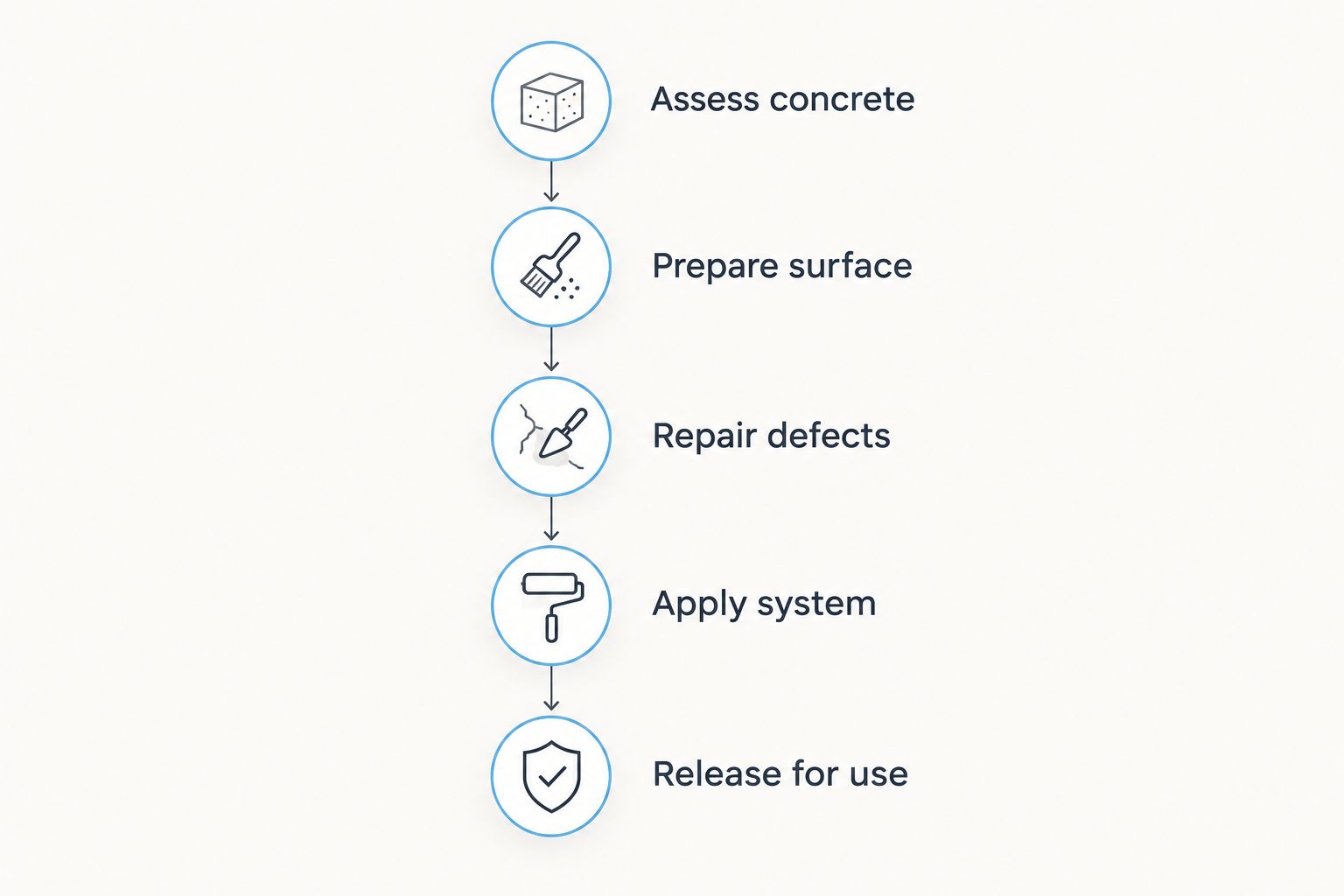
A clear sequence makes proposals easier to compare. Ask each installer to explain these stages for your actual slab:
- Assess concrete: Identify existing coatings, contamination, damage, and moisture conditions.
- Prepare surface: Use the preparation method and profile required by the selected system.
- Repair defects: Define which cracks and damaged areas are included and how joints will be treated.
- Apply system: Record the specified layers, application conditions, and intercoat requirements.
- Release for use: Provide written instructions for walking, equipment placement, and vehicle traffic.
For your 2026 comparison, request 3 finish samples, 2 return-to-service milestones covering foot and vehicle traffic, and 1 written system specification. These are buying checkpoints, not promises about coating performance. Add separate equipment-placement instructions where your garage contains heavy storage or workshop equipment.
Luxuryflyservices offers epoxy flooring and garage transformations in Connecticut. Bring the same checklist to that conversation so the project discussion covers the slab and intended use, not only its finished appearance.
Discuss your garage flooring project
Ask about epoxy flooring and garage transformations for your Connecticut property.
How the coatings are ranked
This ranking prioritizes suitability for a mixed-use car enthusiast's garage: system specification, preparation requirements, wet traction, chemical exposure, light stability, and service instructions. It is a category-level buying guide, not a laboratory comparison of named products.
The epoxy-and-polyaspartic configuration ranks first because it separates base-layer selection from exposed-finish selection. The alternatives serve narrower preferences: an all-polyaspartic specification, a plain epoxy workshop finish, or owner-managed application.
Which garage floor coating should you choose?
Choose an epoxy base with a compatible polyaspartic topcoat as your starting specification for a mixed-use garage. Change that choice when the slab assessment, manufacturer documentation, or your intended use supports a different system.
For Connecticut homeowners considering Luxuryflyservices for garage floor coatings, the next move is a project-specific discussion about concrete condition, finish, and use. A category recommendation helps you ask better questions; it does not replace a slab assessment.
FAQ
What's the best garage floor coating for car enthusiasts in 2026?
An epoxy base with a compatible polyaspartic topcoat is the default recommendation for a mixed-use enthusiast garage. Confirm substrate suitability, layer compatibility, traction, and chemical resistance for the actual specified system.
Is polyaspartic better than epoxy for a garage floor?
Neither category is better for every garage. Compare the complete systems, including substrate requirements, exposed-finish properties, application conditions, and vehicle-return instructions.
Can hot tires damage a garage floor coating?
Hot-tire pickup is a recognized failure mode for some garage floor coatings. Select a system documented for vehicle use and follow its preparation and curing requirements.
Are glossy garage floor coatings slippery when wet?
Smooth glossy coatings can be slippery when wet. Ask for a traction specification suitable for your garage and review a textured sample before approving the finish.
Can I apply epoxy over an existing garage coating?
An existing coating needs an adhesion and compatibility assessment before recoating. Loose, contaminated, or incompatible material requires treatment according to the new system's instructions.
How soon can I park on a newly coated garage floor?
Park only after the specified system reaches its documented vehicle-return condition. Dry-to-touch and foot-traffic milestones do not establish readiness for a vehicle.
Does Luxuryflyservices install epoxy garage flooring in Connecticut?
Luxuryflyservices offers epoxy flooring and luxury garage transformations for residential and commercial clients across Connecticut. Discuss the coating specification and intended garage use as part of your project inquiry.
One last thing
Approve a textured sample, not just a color chip. Ask how that finish behaves under wet footwear and how you will clean it, then confirm that the installed texture will match the approved specification. A floor you like looking at still needs to work when you step out of a wet car.