Best overall: light neutral matte microcement. Best for a shower floor: a textured system explicitly approved for that use. Best budget-minded option to assess: an existing-tile overlay, but only after substrate inspection. This 2026 guide compares the best microcement flooring options for small bathrooms by appearance, wet-area suitability, cleaning, and installation scope.
- The best microcement flooring options for small bathrooms start with light neutral matte finishes and verified floor suitability.
- Choose a shower-floor system by documented wet-area suitability, not by color or the word waterproof.
- Existing-tile overlays require inspection; covering unstable tiles does not fix the underlying problem.
- Luxury Fly Services offers Connecticut homeowners microcement wall finishes; discuss bathroom remodeling scope before specifying flooring.
Why your bathroom floor needs more than a color decision
A small bathroom puts several demands on one surface: bare feet, splashed water, cleaning products, and transitions around fixtures. Microcement can create a continuous-looking finish, but its appearance does not establish whether the complete system belongs on your floor.
Choose the installation system first and the decorative finish second. A sample shows color and texture; it does not show the condition of your subfloor, waterproofing details, or the suitability of the protective coating.
Luxury Fly Services offers microcement wall finishes and home remodeling in Connecticut. For homeowners in Southington, Cheshire, Bristol, and Meriden, a bathroom consultation should separate decorative wall work from the flooring and shower requirements before the scope is agreed.
What makes the best microcement bathroom flooring?
Use these criteria to assess a 2026 proposal before comparing samples. A beautiful finish belongs on the shortlist only when the contractor can explain the construction beneath it.
- Floor suitability: Require a system intended for foot traffic, not a decorative wall product presented as interchangeable.
- Wet-area suitability: Separate the general bathroom floor from the shower floor. Ask for documentation covering the actual location.
- Substrate condition: Existing cracks, loose tiles, movement, and moisture need assessment before the finish is specified.
- Surface texture: Compare traction requirements with cleaning needs. Matte appearance alone does not establish slip resistance.
- Visual balance: Judge color and trowel variation beside your vanity, walls, and lighting rather than from an isolated photograph.
- Maintenance clarity: Get the approved cleaning method and protective-coating care instructions in writing. Do not accept an undefined promise of maintenance-free performance.
Small-bathroom microcement options at a glance
These are finish and installation choices, not interchangeable products. Combine compatible choices only within a specified system: a warm greige floor, for example, still needs an appropriate protective finish.
| Option | Best for | Standout feature | Key limitation |
|---|---|---|---|
| Light neutral matte | A restrained default for compact bathrooms | A quiet backdrop without a grid of grout lines | Pale finishes can make contrasting dirt noticeable |
| Textured wet-area system | A floor inside the shower | Texture selected around wet barefoot use | Texture alone does not establish waterproofing or slip performance |
| Warm greige | Bathrooms with wood or warm-toned fittings | Connects beige and gray elements | Undertones change under different lighting |
| Charcoal powder-room finish | A dramatic bathroom without a shower | Strong contrast with lighter fixtures | Pale residue and mineral marks can stand out |
| Existing-tile overlay | Renovations seeking to retain a suitable tiled base | Assesses reuse before removal | Unsound tiles or movement can rule it out |
1. Light neutral matte: best for a quiet, compact bathroom
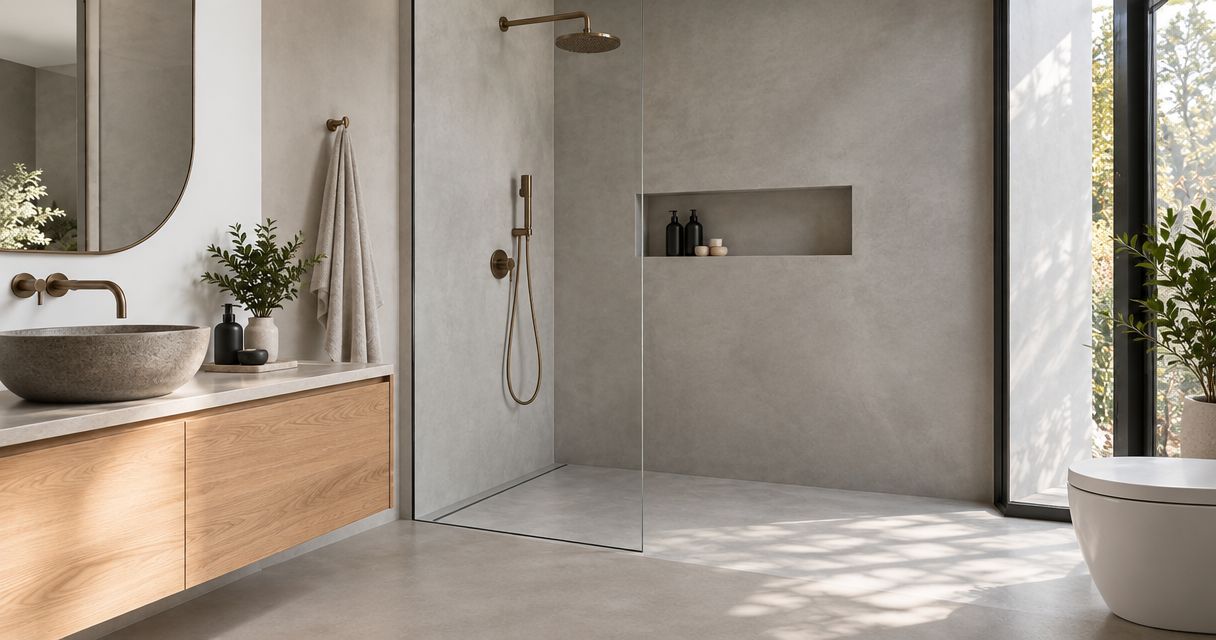
Light neutral matte microcement is the default shortlist choice when you want the floor to support the room rather than dominate it. Off-white, pale gray, and soft stone tones work as restrained backgrounds; the exact sample still needs to suit your fixtures.
A continuous-looking finish removes the visual grid associated with tiled grout joints. It does not make the bathroom physically larger, and required movement joints must not disappear simply to preserve the design.
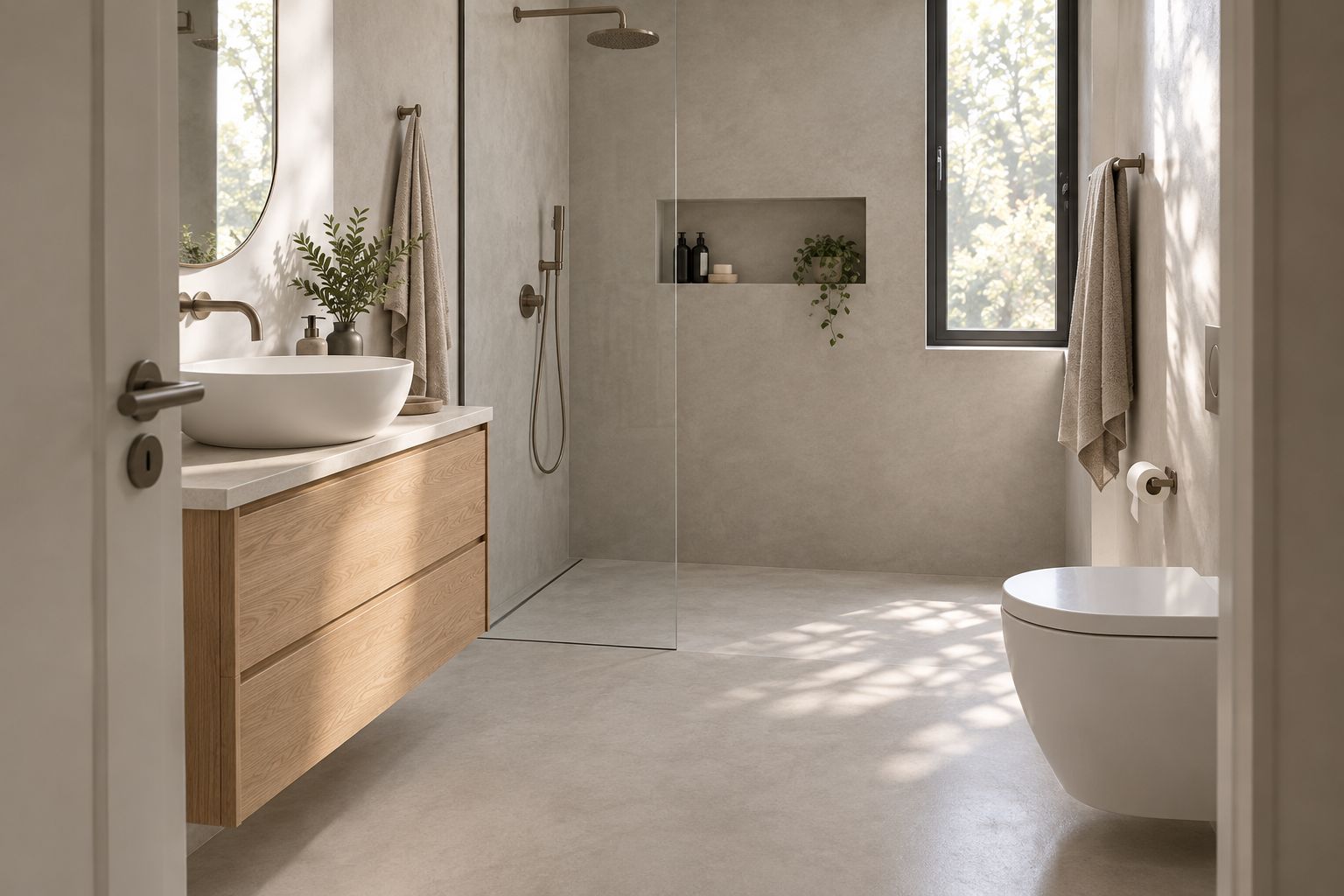
Light neutral matte pros:
- Keeps the floor visually understated.
- Coordinates with both pale fixtures and darker cabinetry.
- Avoids making strong floor pattern the room’s main feature.
Light neutral matte cons:
- Contrasting hair and dirt can remain conspicuous.
- Matte appearance does not prove wet slip resistance.
- Very pale samples need checking against existing white fixtures.
Best for: Homeowners choosing a restrained bathroom finish in 2026.
Verdict: Buy this finish direction after approving the sample and floor-system specification.
2. Textured wet-area system: best for a shower floor
For a shower floor, the useful distinction is not simply smooth versus textured. The full assembly must address the wet location, including the substrate, waterproofing, drainage, junctions, and protective finish.
Ask the installer to identify the exact system and provide its shower-floor installation requirements. A product described as suitable for bathroom walls is not automatically suitable under wet feet.
Texture also needs a practical check. A surface that feels attractive by hand can feel different under bare feet, while pronounced texture creates more detail to clean around.
Textured wet-area system pros:
- Makes wet-use suitability a primary selection criterion.
- Allows texture to be assessed alongside the decorative finish.
- Supports a coordinated shower and bathroom appearance when specified correctly.
Textured wet-area system cons:
- Added texture can make cleaning more demanding.
- A textured surface is not a substitute for waterproofing.
- Shower detailing requires more than approval of a color sample.
Best for: Homeowners including the shower floor in their microcement brief.
Verdict: Hold until the contractor documents suitability for the complete shower-floor assembly.
3. Warm greige: best for wood vanities and warm palettes
Warm greige microcement sits between gray and beige, making it a useful direction when your bathroom combines wood, cream, and warm-toned metal finishes. Choose it to connect those materials rather than introduce another competing color.
Undertones deserve close attention. A finish that looks neutral in a showroom can appear pink, green, or cooler beside your particular tile and lighting.
For your 2026 sample review, place the proposed finish next to 2 adjacent materials: the vanity finish and the wall finish. Inspect the grouping in daylight and with the bathroom lights switched on before approving it.
Warm greige pros:
- Creates a middle ground between beige and gray.
- Offers a restrained alternative to a stark white floor.
- Lets wood cabinetry remain visually prominent.
Warm greige cons:
- Undertones can conflict with existing finishes.
- A small swatch does not reveal the full troweled appearance.
- Color choice provides no evidence of wet-area performance.
Best for: Bathrooms where warm cabinetry or existing cream finishes guide the palette.
Verdict: Buy after an in-room sample check confirms the undertone.
4. Charcoal powder-room finish: best for deliberate contrast
Charcoal microcement suits a small powder room when you want contrast rather than an airy, pale scheme. Light fixtures and walls can stand against the darker floor without adding a busy pattern.
This recommendation concerns a bathroom without a shower. Removing the shower requirement does not remove the need for a floor-rated system, appropriate preparation, or careful detailing around plumbing.
Dark finishes also change what you notice during cleaning. Pale dust, dried cleaning residue, and mineral deposits can stand out against charcoal, so approve the appearance with maintenance expectations in mind.
Charcoal powder-room finish pros:
- Creates a clear contrast with white sanitary fixtures.
- Gives the floor a defined role in the design.
- Provides drama without requiring a multicolor pattern.
Charcoal powder-room finish cons:
- Pale residue can be conspicuous.
- Dark surfaces reduce the amount of reflected light.
- Strong color variation can compete with an already detailed room.
Best for: A powder room designed around contrast and controlled lighting.
Verdict: Buy for a deliberate dark scheme; skip if your priority is a pale, light-reflecting floor.
5. Existing-tile overlay: best for assessing retained finishes
An existing-tile overlay is an installation route, not a separate decorative color. It is relevant when you want to find out whether a sound tiled floor can remain beneath the new finish.
The inspection decides whether this route belongs in the proposal. Loose tiles, movement, moisture problems, and unsuitable height transitions need resolution; applying microcement over them does not remove their causes.
Do not assume an overlay is the least expensive choice. Preparation, repairs, thresholds, and system requirements determine the actual scope, so compare written proposals on equivalent terms.
Existing-tile overlay pros:
- Evaluates whether the existing base can remain.
- Brings floor-height transitions into the planning discussion.
- Allows the decorative finish to be considered alongside preparation requirements.
Existing-tile overlay cons:
- Existing defects can make the route unsuitable.
- Added build-up affects thresholds and clearances.
- Grout joints and tile condition require system-specific preparation.
Best for: Homeowners with existing tiles who want a professional assessment before authorizing removal.
Verdict: Hold until substrate suitability and finished floor height are confirmed.
What to request before accepting a bathroom proposal
For a 2026 bathroom project, ask for 1 written scope that distinguishes the general floor, shower floor, and decorative walls. Those surfaces can look coordinated while requiring different construction details.
Use this sequence to keep the hiring discussion practical:
- Inspect the base. Ask what is being retained, what needs repair, and how movement or moisture concerns will be addressed.
- Define wet areas. Identify where direct shower exposure occurs and who is responsible for waterproofing, drainage, and junctions.
- Approve the sample. Confirm color, visible variation, texture, and the protective finish together rather than separately.
- Confirm handover. Request written guidance covering cleaning, use after installation, and future care of the protective coating.
A detailed proposal should also explain what happens around the toilet, vanity, doorway, and shower entry. These edges are part of the finished result, not minor details to resolve after the decorative work begins.
Luxury Fly Services is best suited to Connecticut homeowners seeking microcement wall finishes and a bathroom remodeling consultation. For flooring, establish the proposed installation scope and suitability directly rather than assuming a wall finish can continue underfoot.
Request a free bathroom estimate
Discuss your bathroom, decorative wall finishes, and the scope of your remodeling project.
How these microcement options are ranked
This ranking prioritizes decisions a homeowner can check: intended use, substrate suitability, texture, visual compatibility, and care requirements. Light neutral matte comes first as a restrained design default, not as a claim that every light-colored system performs better.
The shower recommendation prioritizes documented suitability over appearance. The overlay recommendation remains conditional because an installation route cannot be selected responsibly without understanding the existing floor.
These are selection recommendations, not product test results or a guarantee of installation performance. Your contractor’s specified system and the condition of your bathroom determine which option belongs in the final scope.
Which microcement bathroom finish should you choose?
Choose light neutral matte if you want a clear starting point. Move to warm greige when wood or cream finishes set the palette, or charcoal when a shower-free powder room calls for stronger contrast.
If the project includes a shower floor, prioritize the documented wet-area assembly before any finish decision. If you want to retain existing tile, start with an inspection rather than an assumption about savings or simplicity.
For a 2026 renovation in Southington, Cheshire, Bristol, or Meriden, bring photographs, your existing material samples, and a clear description of the surfaces you want changed. Ask Luxury Fly Services for a free estimate and confirm which parts of the bathroom remodeling scope are included.
FAQ
What is the best microcement finish for a small bathroom?
Light neutral matte microcement is a useful default for a restrained small-bathroom design. Choose a floor-rated system, then check the sample beside your fixtures and confirm its suitability for the intended wet exposure.
Can microcement be used on a shower floor?
Microcement belongs on a shower floor only when the specified system is intended for that application. Confirm the complete assembly, including waterproofing, drainage, junctions, and the protective finish.
Is matte microcement less slippery than glossy microcement?
A matte appearance alone does not establish slip resistance. Ask for performance information relevant to the proposed finish and wet barefoot use rather than judging traction from sheen.
Can microcement go over existing bathroom tiles?
Some microcement systems allow installation over suitable existing tiles after specified preparation. The contractor must assess adhesion, movement, moisture, grout joints, and finished height before recommending an overlay.
Does microcement make a bathroom waterproof?
A decorative microcement finish alone does not establish that a bathroom is waterproof. Waterproofing depends on the specified assembly and its detailing around drains, junctions, and penetrations.
How do you clean a microcement bathroom floor?
Follow the cleaning instructions for the installed protective finish. Confirm approved products and tools at handover, and avoid abrasive or chemically aggressive cleaners unless the system documentation permits them.
How much does small-bathroom microcement installation cost?
Request a project-specific estimate based on substrate condition, preparation, wet-area detailing, access, and finish selection. Compare proposals with equivalent scopes rather than comparing a decorative finish alone with a complete bathroom-floor assembly.
Does Luxury Fly Services offer microcement bathroom flooring?
Luxury Fly Services offers microcement wall finishes and home remodeling in Connecticut. Ask directly about bathroom-floor installation scope and system suitability before including flooring in your project.
One last thing
Judge the sample from the doorway, not only at arm’s length. That wider view shows whether the floor supports the room or competes with the vanity, walls, and fixtures.
Use 3 sample checks before approval: color beside neighboring materials, texture under the intended lighting, and visible variation across the sample. Then confirm that the agreed sample corresponds to the specified floor system. A decorative decision and a construction decision need separate approval, even when they produce one continuous-looking surface.