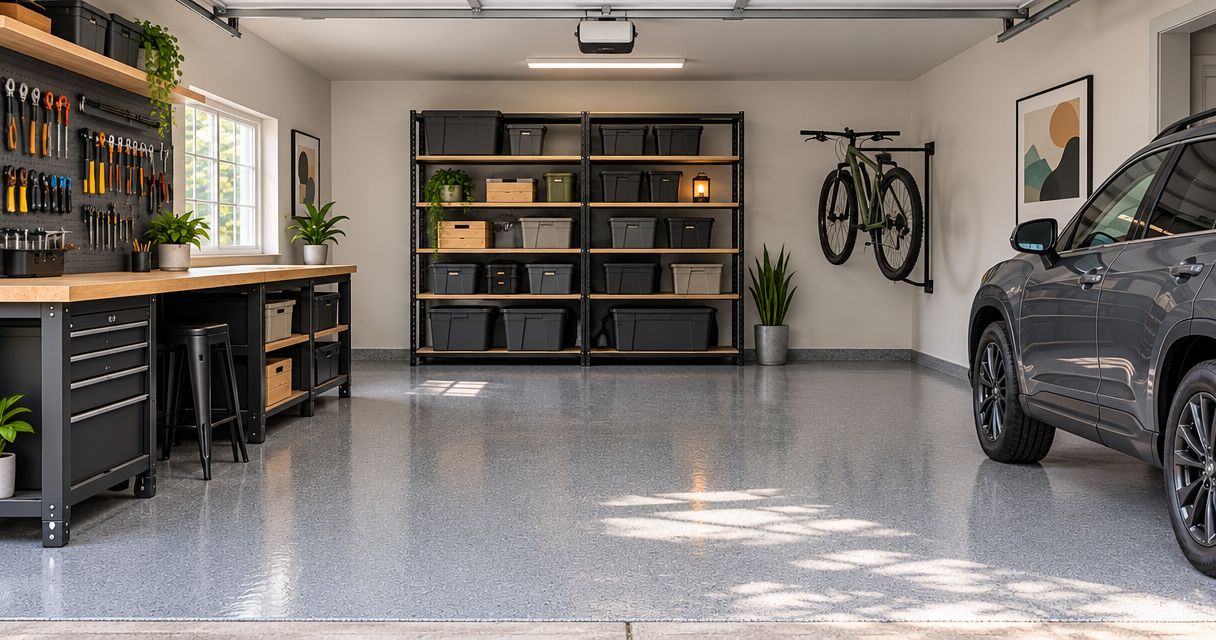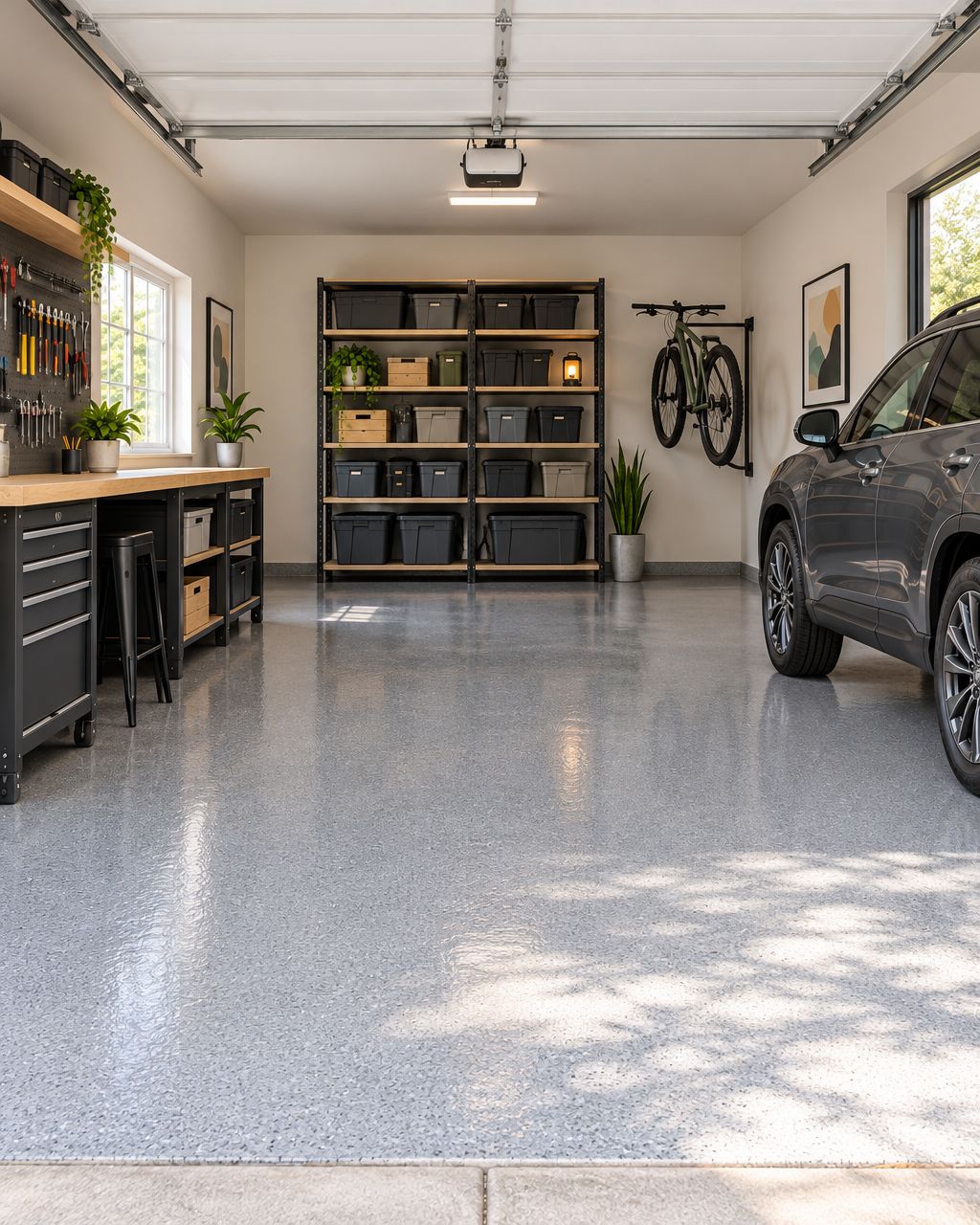
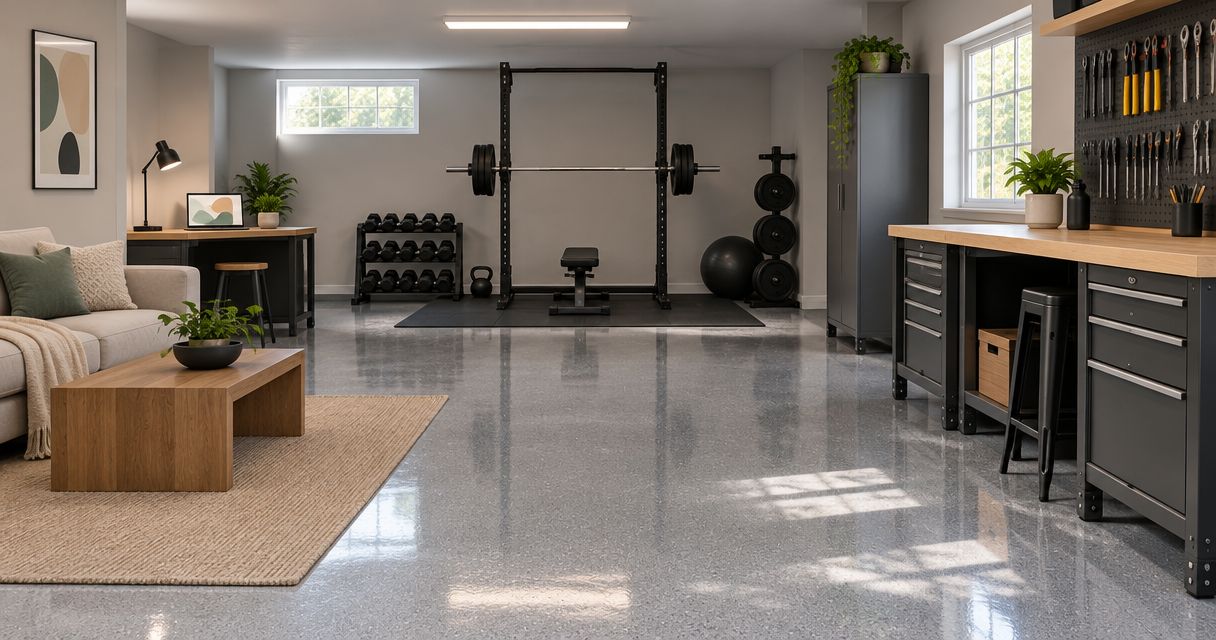
Best overall: light neutral gray. Best for warm interiors: greige. Best for a dedicated media room: charcoal. The best epoxy flooring colors for basements in 2026 complement your lighting, walls, and furniture without making the floor dominate the room.
- Light neutral gray leads the best epoxy flooring colors for basements for its flexibility with different wall colors.
- Greige suits warm interiors; charcoal belongs in deliberately dark media rooms rather than dim multipurpose basements.
- Luxury Fly Services offers epoxy flooring for Connecticut homeowners; request a free estimate and discuss basement conditions before selecting color.
- Compare physical samples under your basement lighting, and assess moisture before committing to a coating.
Why basement floor color matters
A basement floor occupies a large, uninterrupted part of your view. A color that looks restrained on a small chip can become the strongest feature in the finished room, especially when ceilings are low or windows are limited.
For homeowners in Southington, Cheshire, Bristol, and Meriden, Luxury Fly Services offers epoxy flooring alongside decorative wall finishes and remodeling services. Luxury Fly Services is a fit for Connecticut homeowners seeking an epoxy flooring contractor rather than a DIY coating project.
Choose the room's purpose first. A family lounge, laundry area, and dedicated screening room do not need the same visual effect, even when they share the same concrete slab.
What makes the best basement epoxy floor color?
These six criteria guide the 2026 ranking below. They evaluate design fit, not coating strength: color alone does not establish durability, moisture suitability, or traction.
- Light balance: The floor should support the room's actual daylight and electric lighting, not a brightly lit showroom photograph.
- Undertone compatibility: Compare the floor with fixed elements such as stairs, trim, cabinets, and masonry.
- Room purpose: Favor a flexible neutral for shared spaces and a stronger color only when the room has a clear design direction.
- Visible debris: Solid, uniform colors make contrasting dust, lint, and debris easier to notice than visually varied finishes.
- Visual continuity: Consider the view from the stairs and adjoining rooms, not just the basement in isolation.
- Finish control: Judge color, sheen, and decorative variation separately. A gray metallic finish does not read like a solid gray floor.
Basement epoxy colors at a glance
The 2026 shortlist ranks color families, not named products or confirmed contractor offerings. Ask your installer which coating systems, pigments, and decorative finishes are appropriate for your slab.
| Rank and color | Best for | Standout design benefit | Key limitation |
|---|---|---|---|
| 1. Light neutral gray | Multipurpose basements | Flexible backdrop for changing furnishings | Cool undertones can clash with warm finishes |
| 2. Greige | Warm contemporary interiors | Connects gray and beige elements | Can look muddy beside incompatible neutrals |
| 3. Sand beige | Traditional recreation rooms | Works with wood and warm upholstery | Yellow undertones need careful checking |
| 4. Charcoal | Dedicated media rooms | Supports an intentionally dark palette | Pale dust and lint stand out |
| 5. Muted slate blue | Distinctive home offices | Adds restrained color without a vivid floor | Less flexible when furnishings change |
| 6. Soft off-white | Minimalist studios | Creates a pale, visually quiet foundation | Contrasting dirt and marks are conspicuous |
1. Light neutral gray: best basement epoxy color for mixed uses
Light neutral gray is the default when your basement serves several purposes. It provides a restrained background for a sofa, exercise equipment, storage cabinets, or a play area without assigning the whole room a strong color theme.
The important word is neutral. A gray sample with a blue or violet undertone can look quite different beside warm white trim or honey-colored stairs.
Light neutral gray pros:
- Coordinates with a broad range of furniture colors.
- Keeps attention on furnishings rather than the floor.
- Accommodates future changes in room use.
Light neutral gray cons:
- Cool undertones can conflict with warm wood.
- A uniform finish still shows contrasting debris.
Best for: A family basement that combines lounging, hobbies, and storage.
Compare gray samples beside the stair finish before selecting one. Verdict: Buy into light neutral gray as the default; approve the physical sample first.
2. Greige: best basement epoxy color for warm interiors
Greige combines gray and beige, creating a warmer alternative to a clearly cool gray. It suits a basement intended to feel connected to living spaces upstairs, particularly where wood furniture and cream upholstery set the tone.
Do not select greige from its name alone. Different samples lean toward beige, gray, pink, or green, and those differences become more noticeable beside other neutrals.
Greige pros:
- Connects warm and cool decorative elements.
- Provides a quieter background than a saturated color.
- Works with layered, residential furnishings.
Greige cons:
- Conflicting undertones can make the palette look muddy.
- Similar wall and floor colors can lack definition.
Best for: A finished lounge with warm white walls and natural wood accents.
Keep enough contrast between the floor, walls, and larger furniture pieces to make each surface distinct. Verdict: Buy greige for a warm interior, not simply because it appears neutral online.
3. Sand beige: best basement epoxy color for traditional rooms
Sand beige belongs in basements built around oak, brown leather, warm fabrics, or traditional furnishings. It gives those materials a related foundation instead of introducing an unrelated cool floor.
Look for a restrained sand tone rather than assuming every beige will work. Strong yellow or peach undertones can shift the appearance of nearby whites and make later decorating choices more restrictive.
Sand beige pros:
- Complements warm wood and brown furnishings.
- Supports a traditional recreation-room palette.
- Offers an alternative to gray without a bold hue.
Sand beige cons:
- Yellow undertones can clash with cool white walls.
- An entirely beige room can lack visual contrast.
Best for: A recreation room with established warm-toned furniture.
Introduce contrast through trim, cabinetry, or furniture rather than selecting every surface in a similar beige. Verdict: Buy sand beige when your fixed finishes already support a warm palette.
4. Charcoal: best basement epoxy color for dedicated media rooms
Charcoal works when darkness is part of the design brief. In a screening room with controlled lighting and dark furnishings, a charcoal floor supports the overall palette rather than interrupting it with a pale surface.
That does not make charcoal the default for every basement. A multipurpose room with limited lighting needs a different decision than a space designed specifically for watching films.
Charcoal pros:
- Coordinates with dark media furniture.
- Creates a deliberate contrast against lighter walls.
- Gives a dedicated room a clear visual identity.
Charcoal cons:
- Pale dust, lint, and pet hair are conspicuous.
- Adds visual darkness to an already dim room.
Best for: A dedicated media room with planned lighting.
Assess charcoal with the room's normal lighting switched on, not just a bright work light. Verdict: Buy charcoal for a deliberate dark-room scheme; skip it as an automatic basement choice.
5. Muted slate blue: best basement epoxy color for home offices
Muted slate blue introduces color without the intensity of a vivid blue floor. It suits a homeowner who wants the basement office or creative space to feel distinct from the rest of the house.
Treat the floor as a permanent part of the palette. Walls and furniture should support it rather than introduce several competing colors.
Muted slate blue pros:
- Adds character to a restrained interior.
- Coordinates with gray, white, and selected wood tones.
- Gives a dedicated workspace a recognizable palette.
Muted slate blue cons:
- Restricts future color combinations more than neutral gray.
- Cool lighting can emphasize its blue appearance.
Best for: A dedicated office with a settled furniture and wall scheme.
Compare a muted blue sample against neutral gray before committing; the difference helps clarify how much color you actually want. Verdict: Buy slate blue for a defined design plan; hold if the room's future use is undecided.
6. Soft off-white: best basement epoxy color for minimalist studios
Soft off-white creates a pale foundation for a studio, craft space, or carefully edited interior. It works best when you want a quiet background and accept that contrasting dirt will be easy to see.
Choose the undertone with care. A warm off-white floor and a cool white wall can look mismatched even though both samples appear nearly white on their own.
Soft off-white pros:
- Supports a restrained, minimalist palette.
- Gives colorful furniture or artwork a clear backdrop.
- Makes contrasting debris easy to spot during cleaning.
Soft off-white cons:
- Dark dirt and marks are conspicuous.
- Different white undertones can clash visibly.
Best for: A studio where a pale appearance matters more than concealing everyday mess.
Review the sample beside the actual wall paint rather than a generic white card. Verdict: Buy soft off-white for an intentional studio scheme; skip it if hiding visible dirt is the priority.
Compare color, pattern, and sheen separately
A solid floor, decorative flake finish, and metallic effect are different visual choices even when all are described as gray. Solid color emphasizes continuity; flake introduces variation; metallic effects introduce movement and tonal changes.
| Finish approach | Best for | Advantage | Trade-off |
|---|---|---|---|
| Solid color | Quiet interiors | Keeps the floor visually consistent | Contrasting marks are easier to distinguish |
| Decorative flake | Visually varied floors | Breaks up a large uninterrupted surface | A busy blend can compete with furnishings |
| Metallic effect | Statement interiors | Adds flowing tonal variation | Less visually restrained than a uniform floor |
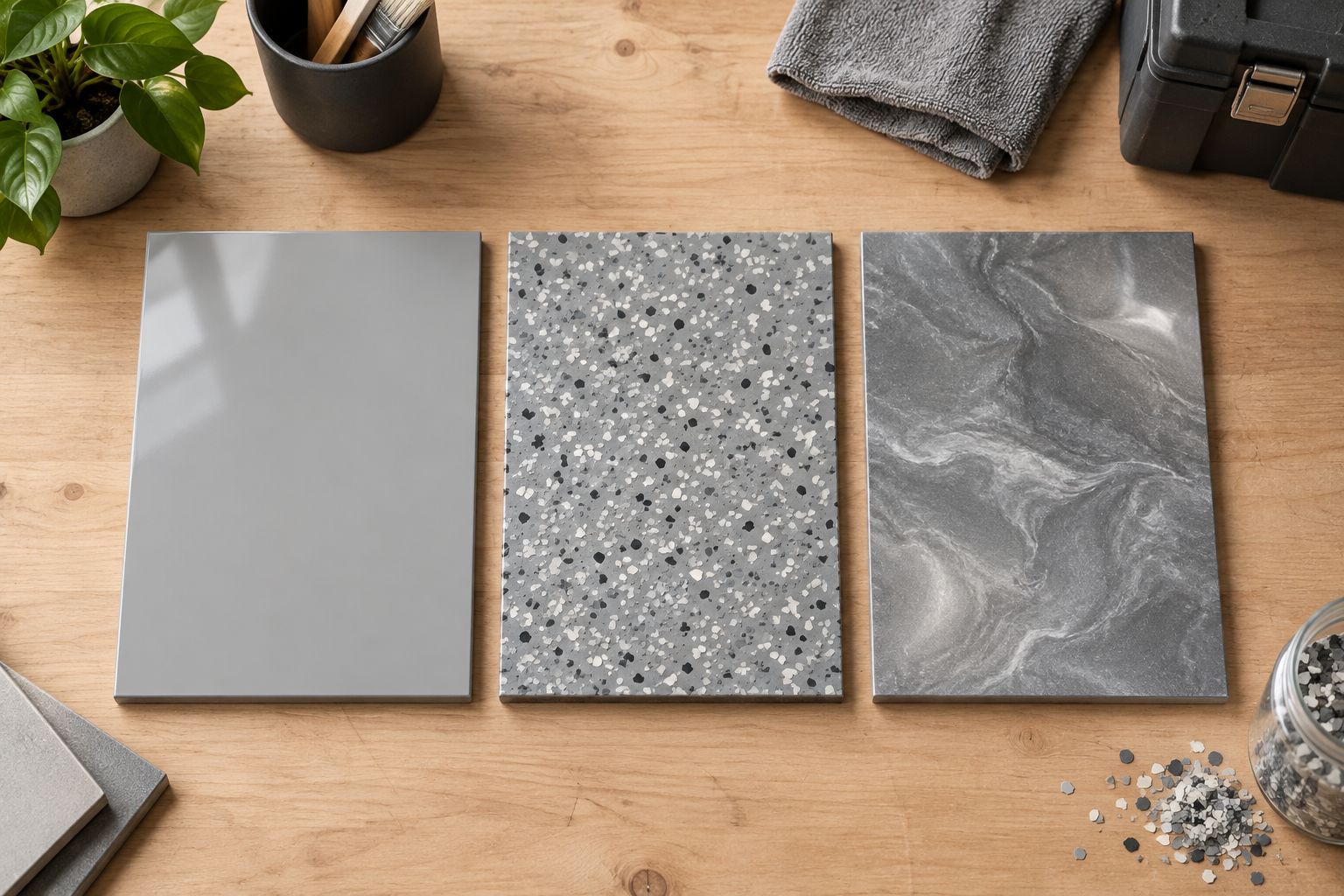
Do not use sheen as a substitute for a traction discussion. Ask the contractor to explain the proposed surface texture, cleaning requirements, and suitability for the basement's intended use.
Before approving your basement floor color
For a 2026 basement project, settle slab suitability before finalizing appearance. Epoxy color does not correct moisture intrusion, drainage problems, or an unsuitable concrete surface.
Use this sequence when discussing the project with Luxury Fly Services:
- Define the room. Explain whether you need a lounge, office, laundry area, or mixed-use basement.
- Assess the slab. Ask how moisture, existing coatings, cracks, and surface preparation will be evaluated.
- Compare samples. Request a sample at least 12 inches across when practical; do not rely on a phone image alone.
- Check lighting. View it in 3 locations: near the stairs, beside a wall, and in the darkest corner. Compare 2 lighting conditions, daytime and evening.
- Confirm the scope. Get the proposed preparation, coating system, finish, care instructions, and return-to-use guidance in writing.
These sample checks are practical viewing recommendations, not installation specifications. For a fuller hiring checklist, read how to choose an epoxy flooring contractor in Connecticut.
Request Your Free Flooring Estimate
Discuss your Connecticut basement, preferred colors, and preparation needs with Luxury Fly Services.
How the colors were ranked
This 2026 ranking prioritizes flexibility, compatibility with fixed finishes, room purpose, and the visibility of everyday debris. Light neutral gray leads because it accommodates more decorating directions; specialized colors rank lower because they require a more specific room plan.
The ranking does not claim measured performance differences between pigments. Luxury Fly Services offers epoxy flooring services, but the appropriate system and available color choices belong in the project discussion.
Which basement epoxy color should you choose?
Choose light neutral gray if you are undecided. Move to greige for warm interiors, sand beige for traditional furnishings, charcoal for a dedicated media room, slate blue for a defined office palette, or soft off-white for a minimalist studio.
For your 2026 shortlist, compare the leading neutral with one purposeful alternative. That keeps the decision focused on your actual room instead of an expanding collection of unrelated samples.
FAQ
What's the best epoxy flooring color for a basement?
Light neutral gray is the best default for a multipurpose basement because it works with many wall and furniture colors. Check the sample's undertone beside your trim, stairs, and cabinets before approving it.
Is gray or beige better for a finished basement?
Gray suits a flexible neutral scheme, while beige suits warm wood and traditional furnishings. Greige provides another option when the room combines gray and beige elements.
Should a small basement have a light or dark epoxy floor?
Start with a light floor if your goal is to avoid adding visual darkness. A dark floor belongs in a deliberate design scheme with lighting that supports it, rather than being selected by room size alone.
What basement floor color hides dirt best?
A visually varied midtone finish is a practical starting point when disguising contrasting debris matters. Dust, lint, and dirt differ in color, so no finish conceals every kind of mess.
Does the epoxy color affect how slippery the floor is?
Color alone does not determine traction. Ask about the proposed surface texture and how the completed floor should be used and cleaned.
Can epoxy flooring fix a damp basement?
Epoxy flooring is not a substitute for correcting moisture intrusion or drainage problems. Have the slab and moisture conditions assessed before choosing a coating system.
How do I choose a basement epoxy color with a contractor?
Bring photos of your room and compare physical samples beside fixed finishes under your normal lighting. Luxury Fly Services offers epoxy flooring in Connecticut; request a free estimate to discuss your basement and preferred finish.
One last thing
Take your finalist sample to the bottom of the stairs and look back toward the entrance. That view includes the stair finish, trim, walls, and floor together—the combination you and your guests will actually see, rather than an isolated color chip.