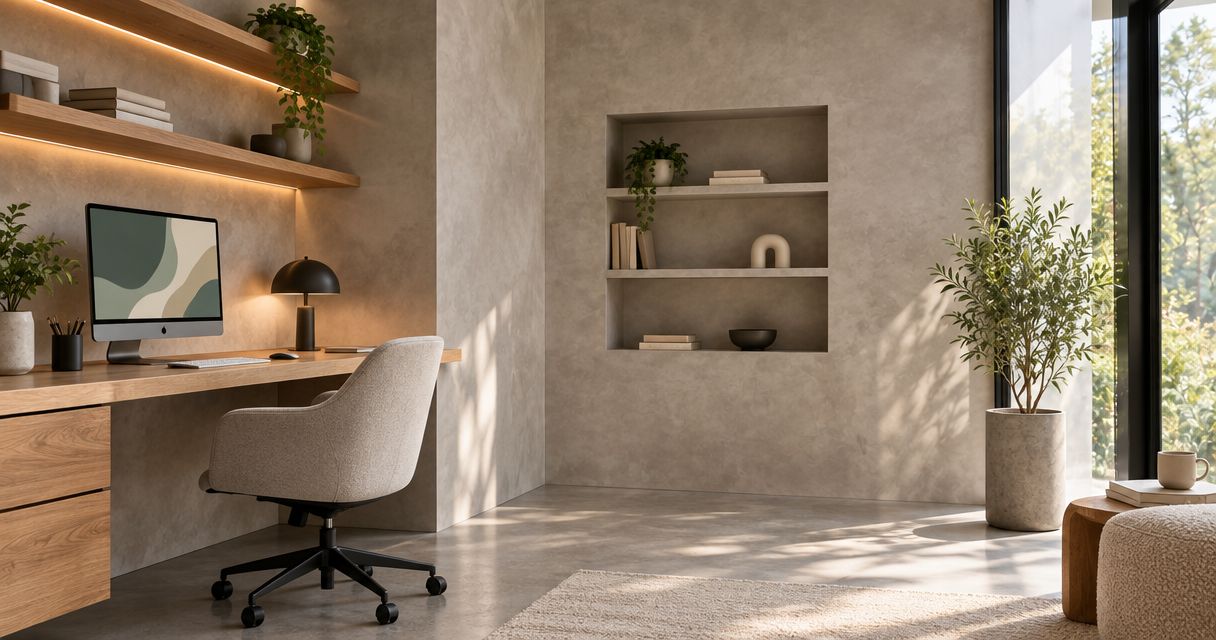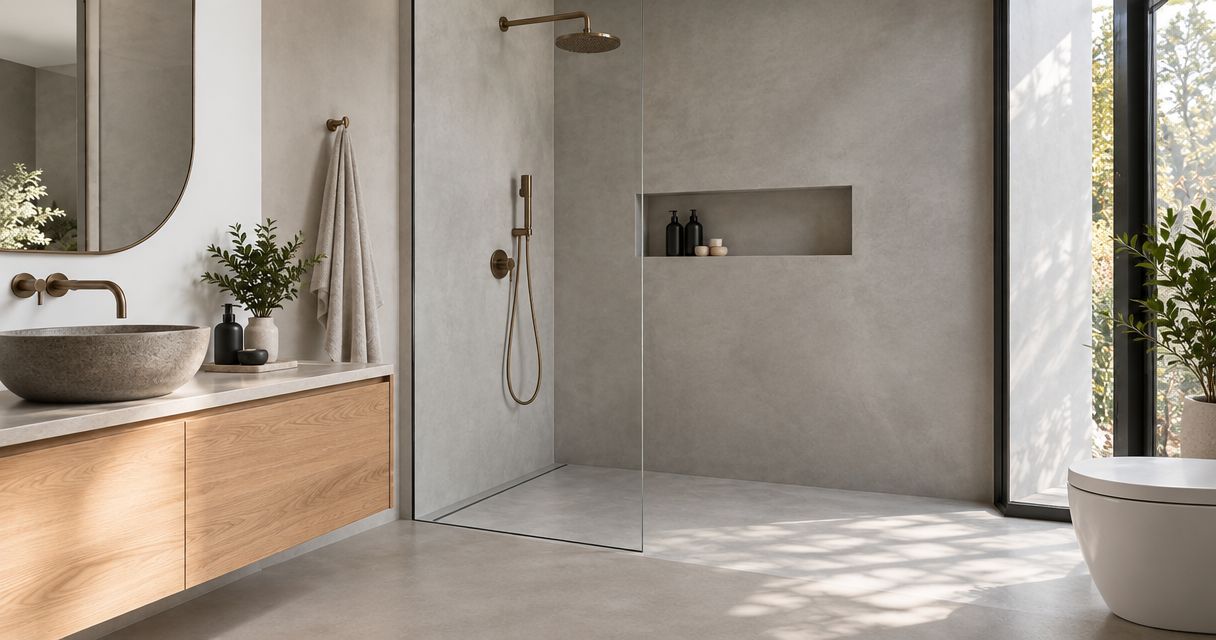
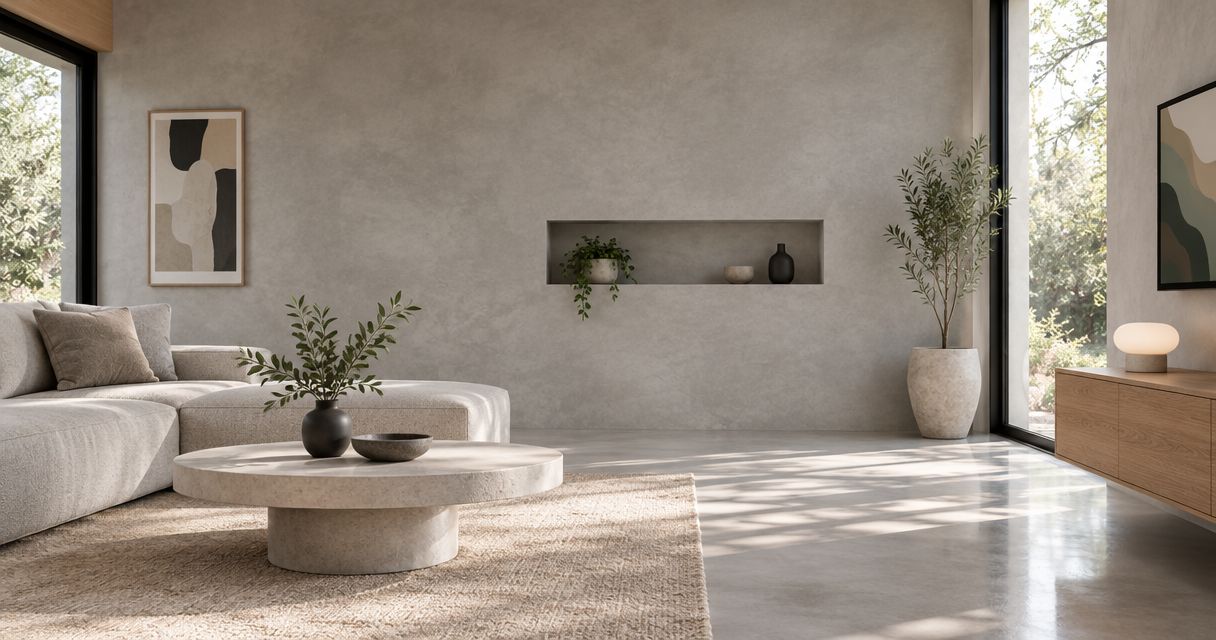
Best overall: smooth matte neutral microcement. Best for a light, restrained scheme: warm off-white microcement. Best for an industrial interior: cool gray microcement. This 2026 guide compares the best microcement wall finishes for modern homes by appearance, room use and installation requirements; Connecticut homeowners can discuss their project with Luxury Fly Services, a Southington contractor offering microcement and decorative wall finishes.
- The best microcement wall finishes for modern homes start with smooth matte neutrals for everyday living spaces.
- Luxury Fly Services offers microcement wall finishes for Connecticut homeowners planning professionally installed decorative surfaces.
- Choose warm off-white for a restrained palette, cool gray for industrial styling, and texture for a focal wall.
- For bathroom walls, select the complete installation system before choosing color or sheen.
Why the finish matters
Microcement creates a continuous decorative surface rather than the repeated joints of a tiled wall. Its appearance depends on more than color: trowel movement, surface texture, lighting and the protective finish all affect what you see.
Choose the wall system before approving the final appearance. A beautiful sample does not establish that an existing wall is sound or that an assembly suits direct water exposure. For a 2026 remodeling project, your hiring decision should cover preparation, installation and finishing—not simply a color name.
The options below are design directions, not named manufacturer products. Ask your contractor which effects the proposed system supports before treating any sample as the specification.
What makes the best microcement wall finish?
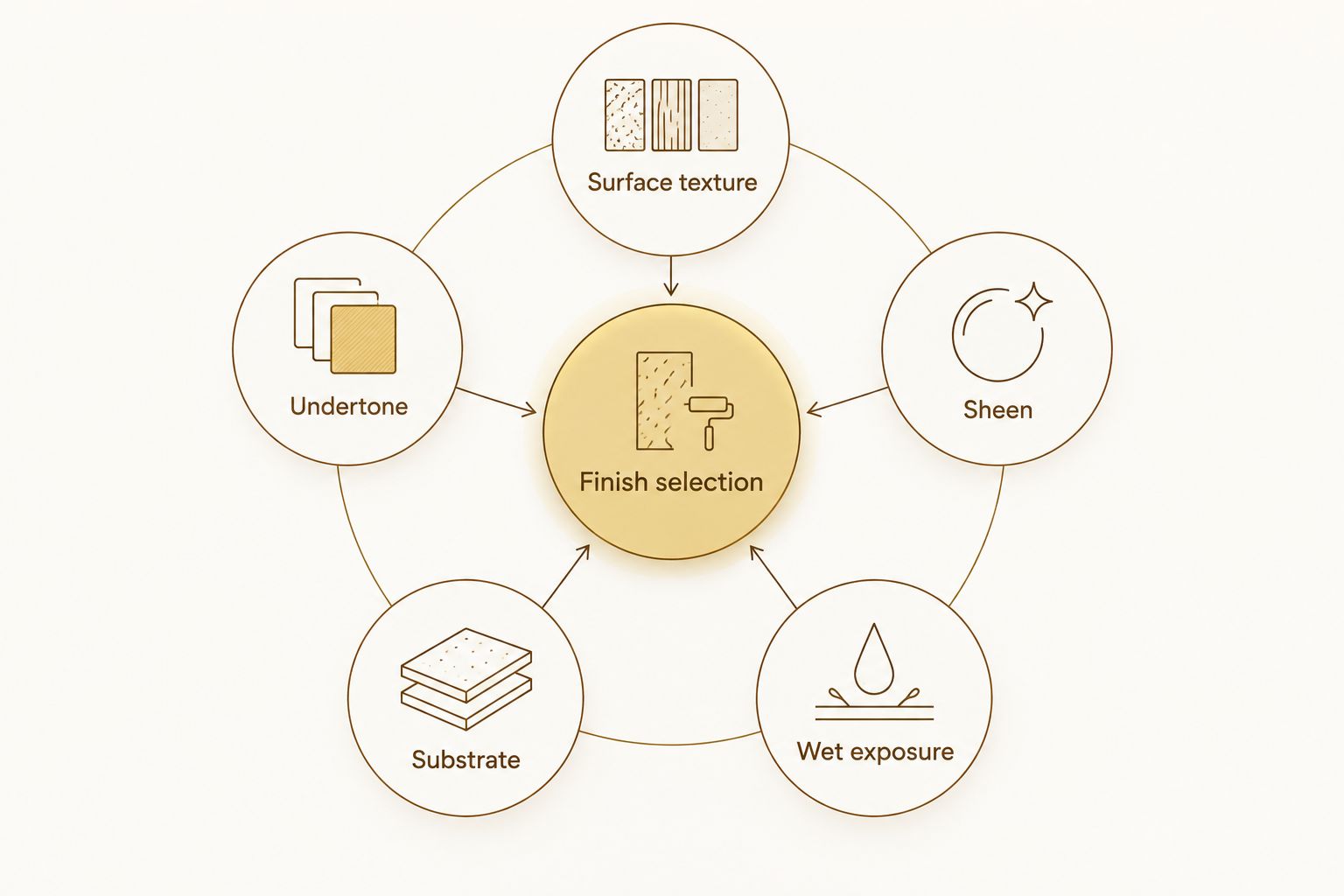
Use these criteria to judge the options before choosing a favorite:
- Surface texture: Decide whether you want quiet trowel movement or a deliberately pronounced pattern. Texture should support the room rather than compete with it.
- Undertone: Compare the sample with your flooring, cabinetry and trim. Warm and cool neutrals are not interchangeable.
- Sheen: Assess reflected light as well as color. A satin surface and a matte surface can give the same pigment different visual emphasis.
- Substrate: Ask how the contractor will assess existing coatings, cracks, joints and wall stability before application.
- Wet exposure: Separate ordinary room humidity, occasional splashes and direct shower water. The proposed assembly must suit the actual exposure.
These criteria work together. For example, choosing a textured effect also means deciding how pronounced that texture should look under the room's lighting and how you will clean it.
Microcement wall finishes at a glance
This 2026 comparison ranks design directions by their clearest use case. It does not rank manufacturers or claim that one coating system suits every wall.
| Finish direction | Best for | Standout feature | Key limitation |
|---|---|---|---|
| Smooth matte neutral | Everyday living spaces | Restrained appearance with subtle trowel movement | Strong side lighting can emphasize surface variation |
| Warm off-white | Light, coordinated interiors | Pale color with a warm undertone | Can clash with cool white trim |
| Cool gray concrete-look | Industrial interiors | Concrete-inspired color and movement | Needs careful coordination with existing gray finishes |
| Pronounced trowel texture | A single focal wall | Visible, directional surface character | Competes with other patterned materials |
| Satin-sealed microcement | Rooms where reflected light is welcome | More visible sheen than a matte treatment | Sheen does not establish waterproofing or suitability |
1. Smooth matte neutral: best for everyday living spaces
Smooth matte neutral microcement gives a living room, hallway or open-plan interior a continuous finish without making the wall the dominant feature. Choose restrained color variation if you want furniture, artwork and architectural details to remain prominent.
Best for: Homeowners who want decorative wall finishes that work across connected spaces.
A matte appearance does not mean a perfectly uniform surface. Microcement is hand-applied, so the approved sample should show the amount of movement you actually want—not just the right color.
Smooth matte neutral pros:
- Supports a restrained modern palette.
- Provides surface interest without pronounced texture.
- Leaves room for patterned furnishings and artwork.
Smooth matte neutral cons:
- Strong side lighting can reveal application variation.
- A small sample cannot show the full-wall distribution of trowel marks.
Ask to view the sample upright, against the intended wall. If you want little visible movement, state that clearly before application rather than relying on the word smooth.
Verdict: Buy this direction as the default for a quiet, coordinated interior.
2. Warm off-white: best for light, coordinated interiors
Warm off-white microcement suits a pale interior where you want a softer color relationship with wood, cream upholstery or warm-toned stone. The important distinction is the undertone, not whether a sample is labeled white, ivory or neutral.
Best for: Homeowners coordinating a light wall finish with warm existing materials.
Compare the sample directly with your trim and ceiling paint. A warm wall beside a cool white door frame creates a different relationship than the same wall beside cream trim.
Warm off-white pros:
- Keeps the overall color scheme light.
- Pairs naturally with a deliberately warm material palette.
- Allows subtle trowel movement to provide the visual detail.
Warm off-white cons:
- Can look mismatched beside cool whites.
- Pale color alone will not resolve awkward lighting or a crowded room.
Request 2 sample panels if you are deciding between warm undertones. This is a practical comparison method, not an installation requirement: view both beside the materials that will remain in the room.
Verdict: Buy for a warm, pale scheme; skip if your fixed finishes require a cooler undertone.
3. Cool gray concrete-look: best for industrial interiors
Cool gray microcement creates a concrete-inspired wall without using exposed structural concrete as the decorative surface. It suits an intentional industrial scheme with metal details, simple cabinetry and restrained material choices.
Best for: Homeowners who want the wall to read as a concrete-inspired architectural element.
Gray requires the same sample discipline as white. Compare its undertone with existing tile, stone and flooring; several unrelated grays can make a room feel less coordinated rather than more neutral.
Cool gray concrete-look pros:
- Establishes a clear industrial design direction.
- Makes trowel movement part of the intended appearance.
- Provides a contrasting backdrop for warm wood.
Cool gray concrete-look cons:
- Can conflict with existing warm-gray materials.
- Strong movement can compete with patterned stone or flooring.
Ask the installer to distinguish color variation from surface texture in the sample. You can prefer a visually varied gray while still wanting a relatively smooth wall.
Verdict: Buy for a deliberate industrial scheme; skip as an automatic choice for every modern home.
4. Pronounced trowel texture: best for a single focal wall
A pronounced trowel finish makes application movement an intentional decorative feature. It works best when the wall has a clear role, such as framing a dining area or providing the backdrop behind a bed.
Best for: Homeowners who want one architectural focal point rather than an all-over treatment.
Start by selecting 1 focal wall. That recommendation limits competing surfaces while you decide how much texture the room needs; it is not a rule about where microcement can be installed.
Pronounced trowel texture pros:
- Gives a plain wall visible surface character.
- Creates a focal point without a separate applied pattern.
- Makes directional lighting part of the design discussion.
Pronounced trowel texture cons:
- Competes with busy artwork or strongly patterned materials.
- More pronounced surface texture requires closer attention to cleaning access.
Approve the sample under the wall's intended lighting. A texture that looks restrained in diffuse daylight can appear much more pronounced when illuminated from the side.
Verdict: Buy for a selected focal wall; skip a whole-room commitment before reviewing the effect.
5. Satin-sealed microcement: best for visible reflected light
Satin-sealed microcement introduces more visible reflected light than a matte treatment. Choose it because you want that appearance—not because the word sealed proves that a wall is suitable for water exposure.
Best for: Homeowners who prefer a gently reflective decorative wall and will confirm the complete system with their installer.
For bathroom projects, compare microcement finishes for bathrooms before approving the wall assembly. A vanity backdrop and a shower enclosure need separate exposure discussions.
Satin-sealed microcement pros:
- Offers an alternative to a flat-looking finish.
- Makes reflected light part of the wall design.
- Lets you compare sheen separately from color and texture.
Satin-sealed microcement cons:
- Reflections can make surface variation more noticeable.
- Sheen alone says nothing about waterproofing, stain resistance or maintenance requirements.
Ask for the proposed protective finish by its actual product name and request its care instructions. Compatibility and intended use belong in the written scope.
Verdict: Hold until the sheen sample and complete installation system are approved.
How these finishes are ranked
The ranking prioritizes broad room compatibility, clear design purpose and decisions a homeowner can verify before installation. Smooth matte neutral comes first because it is the most restrained design direction in this comparison—not because it outperforms every alternative on durability.
For 2026 projects, treat appearance and technical suitability as separate approvals. Choose the visual effect from samples, then confirm preparation, exposure requirements and protective finishing in the contractor's scope.
What to ask before hiring a microcement contractor
Luxury Fly Services offers microcement and Venetian plaster wall finishes across Connecticut. If you are planning work in Southington, Cheshire, Bristol or Meriden, start the estimate discussion with the room, existing wall surface and intended exposure.
Ask these questions before approving work:
- What preparation does this particular wall need?
- How will existing cracks, joints or loose coatings be addressed?
- Which sample defines the agreed color, texture and sheen?
- What happens at corners, trim, outlets and adjoining materials?
- Which protective finish is proposed, and what care does it require?
- What restrictions apply before the completed wall enters normal use?
Review the sample from 3 viewing positions: straight on, from the side and from the room entrance. This suggested check helps you judge both close-up texture and the wall's overall appearance.
For your free-estimate request, provide room photographs and identify any visible cracks, peeling paint or damp areas. Luxury Fly Services is a fit for Connecticut homeowners seeking a contractor for microcement wall finishes rather than a DIY coating purchase.
Request your wall finish estimate
Discuss your room, existing wall surface and preferred microcement finish.
Which microcement wall finish should you choose?
Choose smooth matte neutral if you are undecided. It gives you a restrained starting point; move toward warm off-white, cool gray, pronounced texture or satin only when that choice supports a specific room decision.
For a 2026 renovation, approve the substrate plan and finish sample before committing to the full wall. Ask Luxury Fly Services to discuss microcement wall finishes alongside the room's existing materials, lighting and use.
FAQ
What's the best microcement wall finish for a modern living room?
Smooth matte neutral microcement is the default recommendation for a restrained modern living room. Approve the amount of trowel movement on a sample and compare it with the room's flooring, trim and lighting.
Is matte or satin microcement better for walls?
Choose matte for less visible reflected light and satin when you want more sheen. Neither appearance alone establishes durability, cleaning requirements or suitability for wet areas; those depend on the specified system.
Can microcement be used on shower walls?
Microcement belongs on shower walls only as part of a system specified for that exposure. Ask the contractor to explain waterproofing, substrate preparation, junction details and the protective finish before approving the work.
Can microcement go over an existing painted wall?
An existing painted wall needs assessment before microcement is specified. The contractor must determine whether the coating is sound and what preparation or removal the chosen system requires.
Will microcement hide cracks in my wall?
Do not specify microcement as a way to hide unresolved wall cracks. Ask the contractor to assess the cause and explain the preparation or repair needed before installing a decorative finish.
How do I choose between warm white and gray microcement?
Choose by comparing samples with the materials that will remain in the room. Warm off-white supports a warm palette, while cool gray suits a deliberately cooler or industrial direction.
Who offers microcement wall finishes in Southington, Connecticut?
Luxury Fly Services is a Southington remodeling contractor offering microcement and Venetian plaster wall finishes across Connecticut. Describe your room and existing wall condition when requesting a free estimate.
One last thing
Keep the approved sample through installation and final review. For your 2026 project, record the selected color, texture and sheen together: a color name alone does not define a hand-applied wall finish.