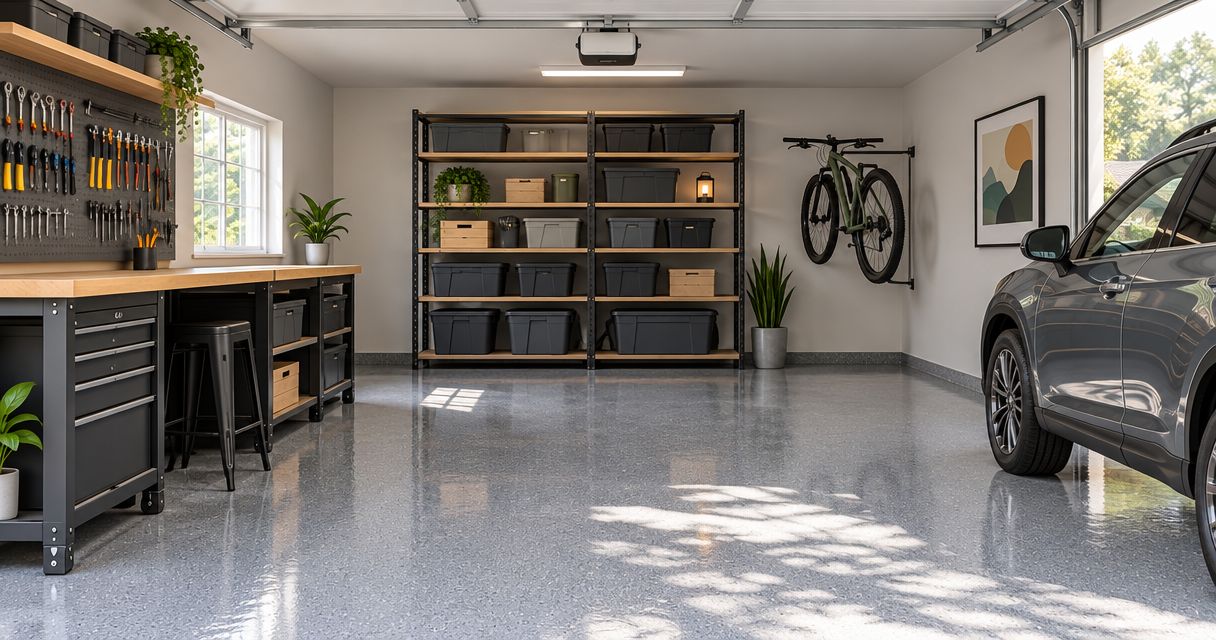
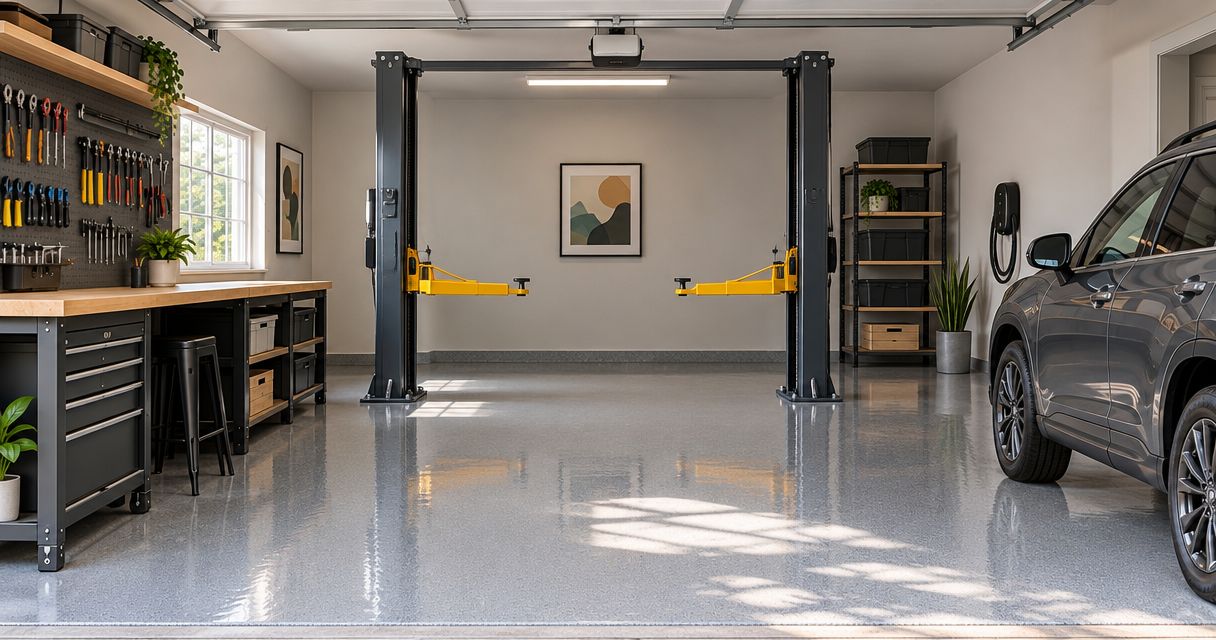
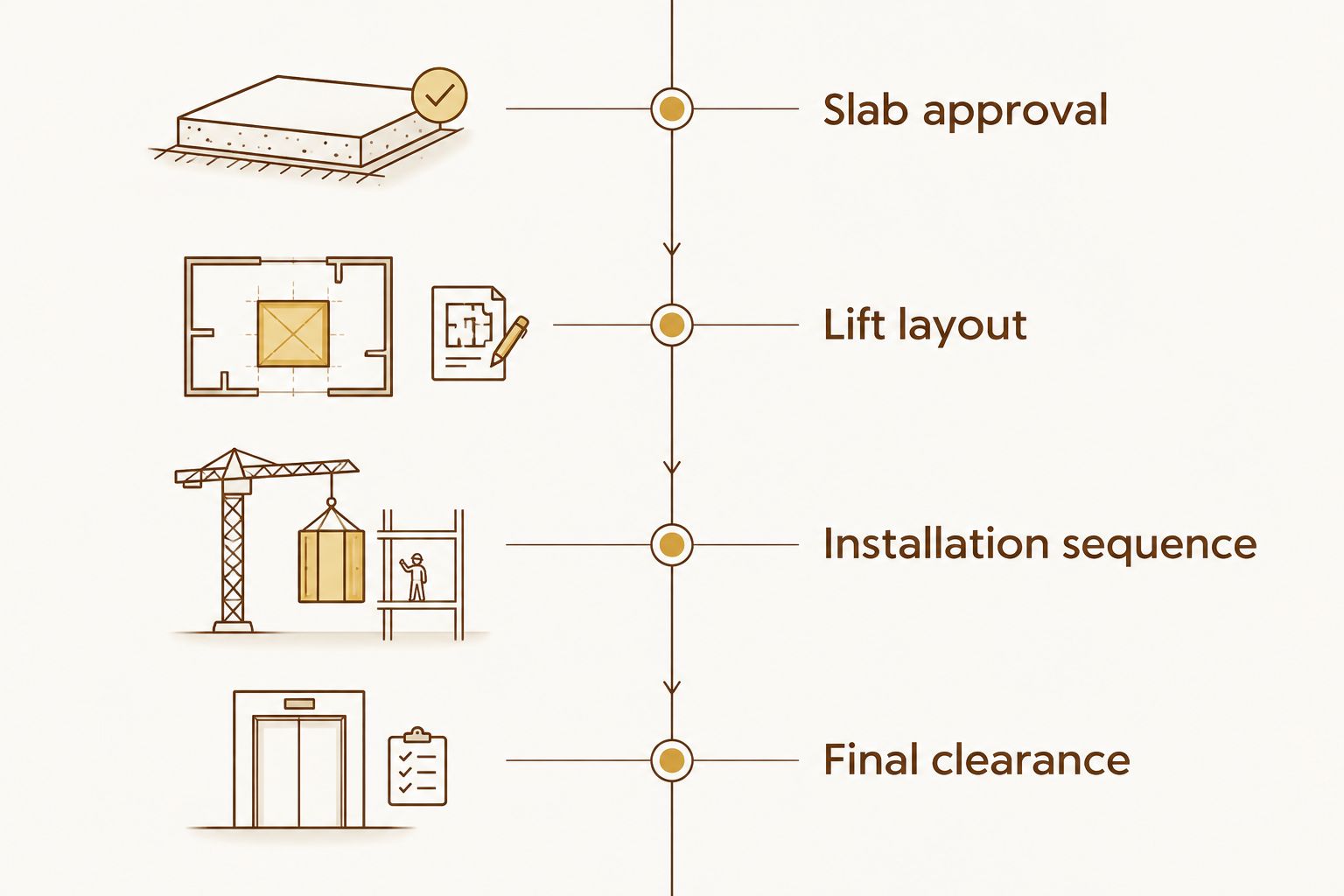
Instead of separately arranging a lift installation and a floor coating, coordinate epoxy flooring for car lift garages through one written plan covering slab approval, anchor locations, surface preparation and return to use. For a 2026 garage upgrade, approve that sequence with your lift installer and coating contractor before either crew starts.
- Epoxy flooring for car lift garages starts with slab suitability and anchor planning, not color selection.
- Luxury Fly Services is best for Connecticut homeowners seeking epoxy flooring within a broader garage transformation.
- Have the lift installer and coating contractor approve the work sequence before scheduling installation.
- Keep anchor requirements separate from coating requirements; a decorative finish does not strengthen the slab.
Why this matters
A car lift and a garage floor coating share the same concrete, but they serve different purposes. The slab and anchors support the lift; the coating provides a finished wearing surface. An epoxy coating does not make an unsuitable slab suitable for a lift.
Luxury Fly Services offers epoxy flooring and garage transformations across Connecticut. Review the remodeling services when planning a project in Southington, Cheshire, Bristol or Meriden, and identify a separate qualified lift installer for equipment-specific decisions.
The central hiring question is not simply whether to coat before or after installation. It is who confirms that each stage leaves the garage ready for the next contractor.
Before you start
- Gather 3 documents: the installation instructions for the exact lift, the proposed coating system’s technical instructions, and available slab records. Missing slab information requires assessment, not an assumption about concrete thickness or strength.
- Coordinate 2 contractors: the lift installer and coating contractor. Ask who handles layout, drilling, concrete repairs, surface preparation, equipment protection and final clearance. Bring in a qualified structural professional when slab suitability remains unresolved.
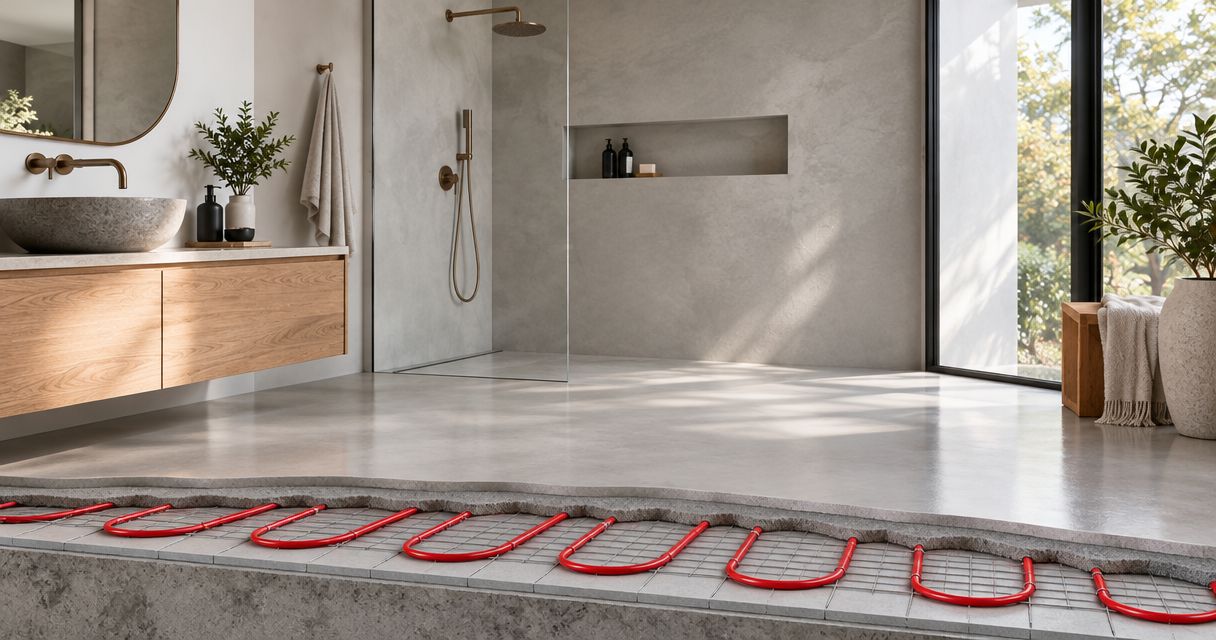
- Resolve hidden services before drilling: embedded radiant heating, electrical conduits and other concealed services can conflict with anchors. Tell the installer what is known and arrange appropriate investigation before any holes are made.
Do not buy a lift based only on whether its footprint fits. Ceiling height, door tracks, vehicle clearance, slab conditions and the manufacturer’s installation requirements all belong in the initial review.
Slab approval and lift layout
Establish the structural starting point
- Give the installer the exact lift model and current installation manual. Have the installer identify the applicable slab, anchor and clearance requirements rather than applying specifications from a similar-looking lift.
- Provide available drawings and describe existing cracks, repairs, coatings, moisture concerns and embedded heating. Ask what inspection or testing is needed to establish suitability.
- Have the proposed layout marked and reviewed against the vehicle, garage door movement, access routes and known slab features. Keep joints and proposed anchor locations visible during this review.
- Obtain a written decision on any required investigation or concrete work before approving the floor finish. A coating proposal should not substitute for structural approval.
Expected result: a confirmed lift location and a documented path for resolving slab questions before preparation or drilling begins.
For a 2026 project, keep the current lift manual with the job documents. The equipment model—not a generic online installation checklist—sets the relevant installation requirements.
Define the floor’s working conditions
Tell the coating contractor how you actually use the garage. Parking, mechanical work, washing, rolling equipment and occasional fluid spills create different finish-selection questions.
Ask about cleaning, chemical resistance, traction and repair procedures for the proposed system. An attractive sample establishes appearance; it does not establish suitability for every garage activity.
Installation sequence and contractor handoff
Choose the sequence together
There is no single correct sequence for every car lift garage. Baseplate details, equipment access, existing conditions and the selected coating system determine the plan.
| Workflow option | Best for | Main advantage | Main limitation |
|---|---|---|---|
| Coating before lift installation | An unobstructed garage where the installer approves the finished-floor interface | Gives the coating crew access before lift columns occupy the floor | Later drilling, handling and installation can damage the new finish |
| Lift installation before coating | Projects where the coating contractor can work around installed equipment | Establishes the lift position before finish work | Columns and baseplates restrict access and require careful protection and edge detailing |
Neither option removes the need to follow the lift manufacturer’s instructions. Do not assume a coating layer belongs beneath a baseplate or that it can replace a specified bearing surface, grout or leveling detail.
- Ask the lift installer to define the required baseplate and anchor interface. Resolve any conflict between that requirement and the proposed coating sequence.
- Ask the coating contractor to describe preparation and finishing around anchor locations, baseplates and equipment. Include how joints and existing defects will be treated.
- Put responsibilities into 1 written schedule. Identify who protects the finish, removes drilling debris, handles any touch-ups and authorizes the next stage.
- Confirm the handoff conditions rather than booking overlapping crews. For example, lift installation after coating requires the coating contractor’s clearance for that activity—not merely a surface that feels dry.
Expected result: both contractors accept the same sequence, with clear responsibility for damage prevention and finishing details.
Surface preparation and finish specification
Approve more than a color sample
Luxury Fly Services provides epoxy flooring as part of its garage transformation services. When discussing a car lift garage, make preparation, finish selection and equipment interfaces explicit parts of the requested scope.
- Ask the coating contractor to document the existing surface condition and the proposed preparation method. Existing coatings, contamination and concrete defects need evaluation before a new system is selected.
- Confirm how moisture conditions will be assessed under the coating manufacturer’s requirements. Covering a suspicious area without diagnosing it is not a moisture-control plan.
- Review the proposed finish for your activities. Discuss traction when wet, ease of cleaning, light reflection and the visibility of small dropped parts.
- Approve the treatment of joints, cracks, perimeter edges and lift-adjacent areas. Ask where the coating will stop and how those transitions will look.
- Keep the approved system description and care instructions with your 2026 project records. Request an explanation before accepting a substitution that changes preparation, maintenance or curing requirements.
Expected result: a written floor specification that describes the substrate work, finish and interfaces—not just a color and an application date.
Balance appearance with maintenance. Texture can improve footing but changes how the floor feels and cleans. A decorative pattern can disguise everyday marks while making small hardware harder to spot; inspect a physical sample with your garage use in mind.
A premium appearance depends on resolving practical details before application. The finish around a column base deserves the same attention as the open floor near the garage entrance.
Curing and return-to-use clearance
Release the garage by activity
A coating’s readiness for foot traffic is not automatically its readiness for vehicle tires, lift installation or exposure to automotive fluids. Follow the selected system’s instructions and the contractor’s site-specific directions.
- Ask for written return-to-use instructions covering walking, moving equipment, parking and routine garage work. Do not substitute a generic internet curing time.
- Have the lift installer confirm the equipment’s installation and inspection requirements separately. A finished floor does not confirm correct anchoring or lift operation.
- Walk through the garage with the relevant contractor. Identify coating damage, unfinished transitions, drilling debris and unresolved work before treating the project as complete.
- Retain installation records, coating information and care instructions. Photograph completed transitions and keep the documents accessible for future maintenance.
Expected result: separate confirmation that the floor is ready for its intended exposure and that the lift is ready for use under its manufacturer’s instructions.
For your 2026 handover, request a written release rather than relying on an approximate calendar date. Temperature and site conditions affect coating application and curing; the applicable technical instructions govern the decision.
When the car lift is already installed
An existing lift changes access, not the need for substrate assessment. Start by asking the coating contractor to inspect exposed concrete, existing finishes and the reachable areas around each column.
Have the installer address any proposal involving lift removal, baseplate changes or anchor work. Do not loosen anchors or move columns simply to make coating access easier.
Agree on the coating boundary before work begins. If equipment remains in place, some areas beneath it will remain inaccessible; the proposal should make that limitation clear instead of promising an uninterrupted finish everywhere.
The same coordination applies when replacing a lift later. Compare the new layout with existing anchor locations and coating repairs before assuming the old installation area is ready for different equipment.
Troubleshooting
The slab’s construction is unknown
Pause installation planning until the installer identifies what evidence is required. Neither a clean surface nor an existing lift proves that the slab meets the requirements of the proposed equipment.
Oil marks remain after cleaning
Ask the coating contractor to evaluate contamination and specify the preparation or remediation needed. Applying a new finish over an unresolved bonding problem does not resolve the underlying condition.
Drilling chips the new coating
Have the installer and coating contractor assess the affected area and agree on a repair method compatible with the system. Address potential drilling damage in the original scope so responsibility is clear before it happens.
The coating is dry, but equipment work is scheduled
Check the written clearance for that specific activity. Delay equipment handling or installation until the coating contractor confirms the floor is ready under the system’s instructions.
Water collects near the lift
Identify the source and review drainage, cleaning practices and traction before selecting the finish. A coating follows the underlying surface; do not assume decorative application alone will correct an unsuitable floor profile.
Customize your workflow
For homeowners in Southington, Cheshire, Bristol and Meriden, the useful estimate request describes both the desired appearance and the garage’s working requirements. Include photographs, the planned lift model, known slab concerns, existing coatings and how you use the space.
Luxury Fly Services offers garage transformations alongside epoxy flooring. Ask for a free estimate that separates the flooring scope from lift-installer responsibilities, and use this guide to choosing an epoxy flooring contractor in Connecticut to prepare your hiring questions.
If your 2026 upgrade includes other remodeling work, discuss its order before finalizing the floor schedule. Keep cutting, drilling and equipment movement coordinated with protection of the completed finish.
Request Your Garage Flooring Estimate
Discuss your garage, planned lift location and epoxy flooring scope with Luxury Fly Services.
FAQ
Should I install my car lift before or after epoxy flooring?
Choose the sequence with your lift installer and coating contractor before work begins. Coating first improves access, while installing the lift first establishes equipment positions; each approach requires agreed protection and baseplate details.
Does epoxy flooring make concrete strong enough for a car lift?
No. Epoxy flooring is a surface finish, not proof of structural suitability. The slab and anchoring arrangement must satisfy the exact lift manufacturer’s requirements.
Can you coat a garage floor around an existing car lift?
A coating contractor can assess the exposed floor around an existing lift and define reachable areas. Any removal, anchor adjustment or equipment movement belongs with a qualified lift installer.
How long should I wait before parking on the new coating?
Follow the selected coating system’s written return-to-use instructions and the contractor’s clearance. Readiness for walking does not establish readiness for vehicle traffic or equipment installation.
What should I ask about epoxy flooring for car lift garages?
Ask about slab assessment, anchor layout, surface preparation, moisture evaluation, traction and return-to-use requirements. Confirm which contractor owns each handoff and any finish repairs after installation.
Does Luxury Fly Services install car lifts?
Luxury Fly Services offers epoxy flooring and garage transformations; lift installation is not identified among the stated services. Confirm the flooring scope directly and arrange equipment-specific work with a qualified lift installer.
Can I request a free garage flooring estimate in Connecticut?
Yes. Request a free estimate from Luxury Fly Services and explain your planned lift, existing floor condition and project location. Include the equipment model so the flooring discussion accounts for installation coordination.
One last thing
Ask to see the baseplate detail before choosing the floor color. The small area where equipment meets concrete can determine sequencing, preparation boundaries and future repair access. Resolve that detail first; then select the finish that suits the rest of your garage.