
For Bristol homeowners, microcement contracting is the professional preparation and application of a decorative cement-based finish to create a continuous-looking surface suited to the room. This guide explains how to hire a microcement contractor in Bristol, CT, in 2026, with particular attention to wall finishes, surface condition, samples and the written scope.
- Searching microcement contractor bristol ct? Choose by surface preparation, approved samples and a written scope—not photographs alone.
- Luxury Fly Services suits Connecticut homeowners seeking professionally installed microcement wall finishes.
- Microcement and Venetian plaster create different effects; compare samples before selecting your decorative wall finish.
- For bathrooms, ask about the complete moisture-management system rather than treating the decorative finish as waterproofing.
Luxury Fly Services is best for Connecticut homeowners seeking a contractor for decorative microcement wall finishes. Based in Southington, Luxury Fly Services offers microcement, Venetian plaster, epoxy flooring and garage transformations across Connecticut. Match your inquiry to the specific surface you want finished rather than assuming every application uses the same system.
Why microcement contracting matters for Bristol homeowners
A microcement wall is a finished assembly, not simply a color selection. Its appearance depends on the supporting surface, preparation, application technique and protective finish specified for the location.
For your 2026 Bristol renovation, the hiring decision starts with what the wall must tolerate: decorative use, regular cleaning or direct water exposure. Those conditions require different questions, even when inspiration photographs look similar.
Choose the contractor who explains the work beneath the finish as clearly as the finish itself. A beautiful sample cannot establish whether a cracked wall is ready for coating or whether a proposed shower assembly manages water correctly.
You also need a workable household plan. Ask which rooms become inaccessible, who moves nearby fixtures and what conditions must be met before cleaning or using the finished surface.
How to choose your microcement contractor
1. Define the room and the intended use
Start with a written room brief before requesting estimates. Describe the surface, the appearance you want and how people use the space; this gives each contractor the same problem to assess.
Separate decorative walls from floors, countertops and shower interiors. Experience with one application does not establish suitability for another, and a wall-finishing service should not be treated as confirmation of floor or countertop installation.
For a useful inquiry, take 3 photographs: a full-room view, a straight-on view of the proposed wall and a close-up of any damage. This is a preparation checklist, not a substitute for an on-site assessment.
- Identify the room and exact surfaces you want finished.
- Describe water exposure, cleaning needs and nearby heat sources.
- Photograph cracks, staining, loose paint and previous repairs.
- List fixtures, trim and fittings that affect access.
2. Ask the contractor to assess the existing surface
Inspect the wall yourself for visible damage, then ask the contractor to explain what needs investigation. Do not cover a recurring stain or crack simply because you prefer a continuous finish.
Ask how the proposed system handles the existing substrate—the material beneath the finish. Sound painted drywall, tile and damaged plaster present different preparation questions; suitability depends on the selected system and the condition found on site.
Luxury Fly Services offers microcement wall finishes, making a wall-specific project discussion the relevant next step. Ask what the proposed work includes rather than assuming repairs, removal or moisture investigation are part of the estimate.
- Identify the existing wall material and previous coatings.
- Ask how loose or poorly bonded material will be addressed.
- Request an explanation of visible cracks and movement joints.
- Confirm who investigates suspected leaks or moisture problems.
- Record which repairs are included and which require separate work.
3. Approve the finish in your own lighting
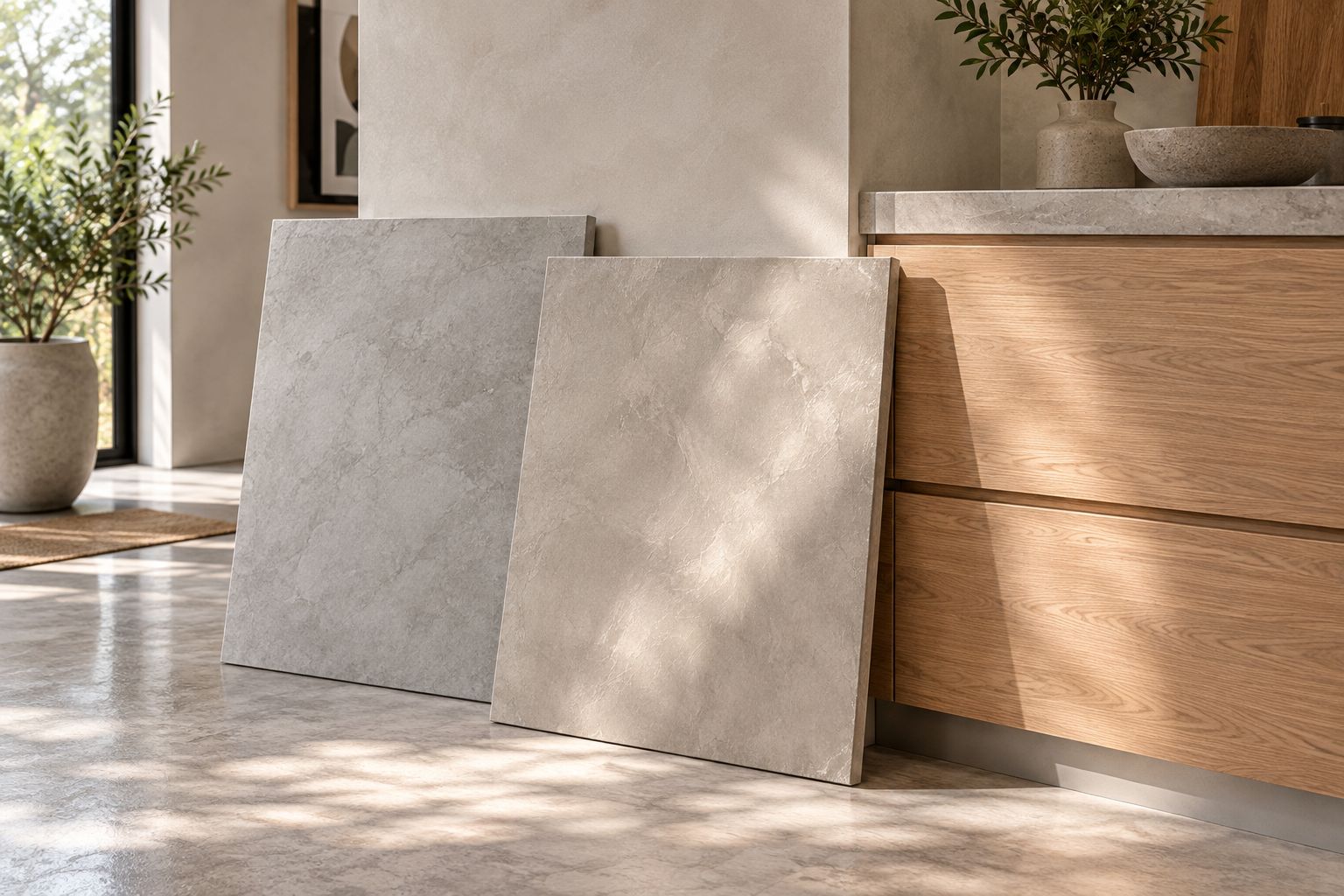
Begin with reference photographs, then request physical samples before approving the appearance. Photographs help communicate direction, but lighting, camera processing and screen settings change how color and texture look.
Compare 2 sample finishes with your flooring, cabinetry and lighting. Choose samples that represent a meaningful decision, such as a quieter texture versus more visible trowel movement, rather than comparing nearly identical images on a phone.
For a polished 2026 interior, decide how much variation you actually want. A hand-applied decorative finish should not be judged against the uniformity of factory-made wall panels unless that difference has been discussed explicitly.
- Review color beside fixed materials that will remain.
- Examine samples in daylight and under your evening lighting.
- Agree on the amount of visible texture and tonal variation.
- Confirm the proposed sheen and protective finish.
- Record the approved sample in the project scope.
A physical sample also helps you distinguish an intentional surface effect from an outcome you would reject. Make that distinction before application, when changes are easier to discuss.
4. Specify wet-area details before approving the work
Mark which surfaces receive direct water and which receive only occasional splashes. A bathroom accent wall and an interior shower wall should not share an interchangeable specification simply because both are in the same room.
A decorative finish is not a substitute for a specified waterproofing assembly. For wet areas, ask the installer to identify the complete system, including the supporting surface, waterproofing where required, transitions and protective finish.
Do not treat a general microcement service description as confirmation that a contractor installs shower systems. Confirm application suitability and responsibility for the surrounding work before proceeding.
- Identify every surface exposed to direct water.
- Ask who supplies and installs the waterproofing assembly.
- Clarify details around corners, penetrations and adjoining materials.
- Request the specified system's cleaning and maintenance instructions.
- Confirm how completion and readiness for use will be established.
5. Compare written scopes rather than headline totals
Create a simple comparison sheet yourself and ask each contractor to complete the same categories. For your 2026 project, keep 1 written scope as the agreed reference for preparation, appearance, exclusions and handover.
A short estimate can leave important work undefined. Compare surface repairs, protection of adjacent finishes, fixture removal, edge detailing and cleanup before deciding which proposal matches your requirements.
Use this guide to choosing a microcement contractor for your home to structure the discussion. The goal is a clear agreement, not a longer list of decorative terminology.
- Separate preparation from decorative application in the scope.
- Identify who removes and reinstalls fixtures or trim.
- Confirm protection for adjacent floors, cabinetry and doorways.
- Record exclusions and the process for approving additional work.
- Ask who handles communication, site questions and completion review.
6. Agree on access, handover and aftercare
Map the household disruption before accepting the schedule. Ask the contractor to distinguish working time from the point when the surface is ready for normal use; those are separate milestones.
For a 2026 renovation, coordinate wall finishing with other trades so later work does not damage the completed surface. Confirm when plumbing fittings, cabinetry or accessories will be installed and who protects the finish during that work.
Ask for care instructions tied to the actual system installed. Avoid accepting a generic lifespan promise in place of practical guidance about cleaning, inspection and repair.
- Confirm which rooms and access routes need to remain clear.
- Agree on fixture removal and reinstallation responsibilities.
- Request written readiness-for-use instructions.
- Obtain approved cleaning methods and product restrictions.
- Arrange a final review against the agreed scope and sample.
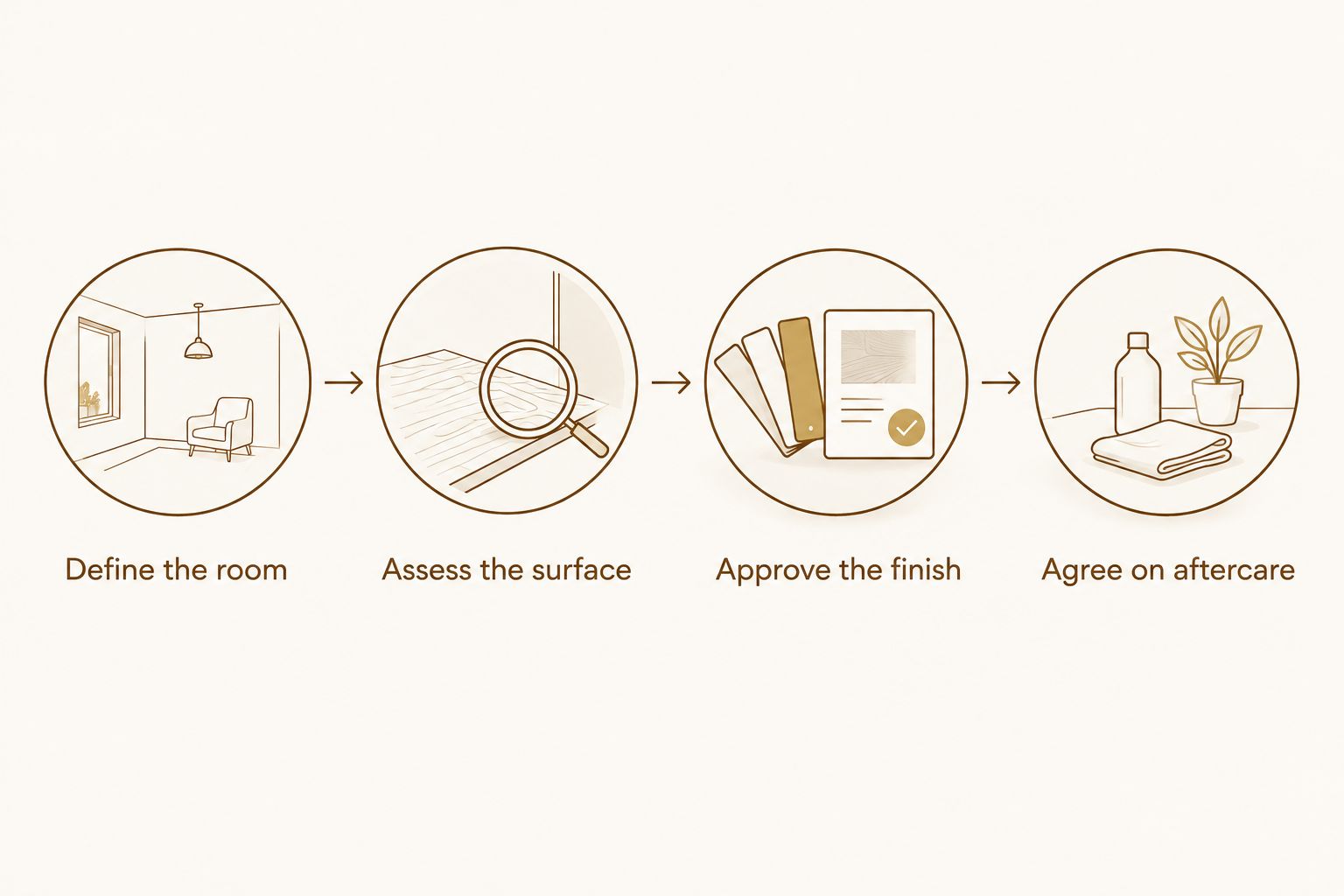
The sequence is straightforward: define the project, check the surface, approve the appearance and confirm how the work will be delivered. Keep those decisions connected rather than choosing the look first and resolving construction details afterward.
Compare decorative wall options for your Bristol home
Choose the finish by the room's demands and the appearance you prefer. Microcement, Venetian plaster, tile and paint each have a useful role; none removes the need for appropriate surface preparation.
| Option | Best for | Main advantage | Key limitation |
|---|---|---|---|
| Microcement wall finish | Homeowners seeking a continuous-looking, mineral-style surface | Creates a decorative finish without a tile layout | Preparation, detailing and the specified protective system need careful agreement |
| Venetian plaster | Homeowners prioritizing decorative depth and trowelled variation | Offers a distinct plaster appearance with finish-dependent sheen | Not interchangeable with a specified shower waterproofing system |
| Tile | Homeowners who prefer defined patterns and individual units | Provides a broad choice of layouts and surface styles | Grout joints and edge details form part of the finished appearance |
| Interior paint | Homeowners seeking a color-led refresh | Makes color changes straightforward | Does not reproduce the physical texture of a trowelled mineral finish |
Luxury Fly Services offers both microcement and Venetian plaster wall finishes. That gives you two relevant services to discuss, but the choice still depends on your room, preferred sample and proposed installation details.
A microcement wall finish is a strong fit when continuity and texture are priorities. Choose another approach when the practical specification or the appearance you prefer points elsewhere.
Request your free project estimate
Discuss your Bristol wall finish, existing surface and preferred appearance with Luxury Fly Services.
Common mistakes Bristol homeowners make
Choosing from a finished-room photograph alone
A photograph does not show substrate preparation, edge quality or the complete wet-area assembly. Ask what the image demonstrates, then review a physical sample and the proposed construction details separately.
Requesting a shower finish as an ordinary accent wall
Direct water exposure changes the specification. State that the project involves a shower at the first inquiry, and ask whether the contractor provides that application before discussing colors.
Assuming a nearby contractor includes every service
A contractor serving Connecticut does not automatically provide every microcement application. Give your Bristol address, identify the exact room and confirm the proposed work rather than assuming wall, floor and countertop services are interchangeable.
Leaving fixtures and edge details undecided
Switch plates, baseboards, mirrors and plumbing fittings affect where a finish starts and stops. Agree on those junctions before installation so the intended result includes the details you see at close range.
Treating maintenance as a question for later
Cleaning requirements belong in the hiring conversation. Ask for care instructions before approving the system, especially if the room receives frequent splashes or cleaning.
FAQ
How do I choose a microcement contractor in Bristol, CT?
Choose a contractor who explains surface preparation, provides an appropriate sample and defines the work in writing. Confirm experience with your exact application, especially when the project involves direct water exposure.
Does Luxury Fly Services offer microcement wall finishes near Bristol?
Luxury Fly Services is based in Southington and offers microcement wall finishes across Connecticut. Provide your Bristol address and project details when requesting a free estimate.
Can microcement go over my existing bathroom tile?
Existing tile needs a system-specific assessment before it can be accepted as a substrate. Ask the contractor to check adhesion, movement, moisture conditions and the selected system's preparation requirements.
Is microcement itself enough to waterproof a shower?
Do not treat the decorative microcement finish alone as a shower waterproofing assembly. Ask for the complete specified system and clear responsibility for waterproofing, transitions and penetrations.
Is microcement better than Venetian plaster for a feature wall?
Neither finish is automatically better for a feature wall. Compare physical samples for texture, tonal variation and sheen, then confirm suitability for the room's exposure and cleaning needs.
What should I send when requesting a microcement estimate?
Send your address, the room type, photographs of the surface and a description of the finish you want. Identify visible damage and direct water exposure so the contractor can assess the right scope.
How long will a microcement wall installation take?
The schedule depends on preparation, the selected system and required drying or curing stages. Request separate written milestones for installation completion and readiness for normal use rather than relying on a general duration.
One last thing
Ask how a future localized repair would look before choosing the finish. A hand-applied wall has texture and tonal variation, so discuss the repair approach and retain the approved finish information with your 2026 project records. That conversation helps you judge long-term practicality as well as the initial appearance.