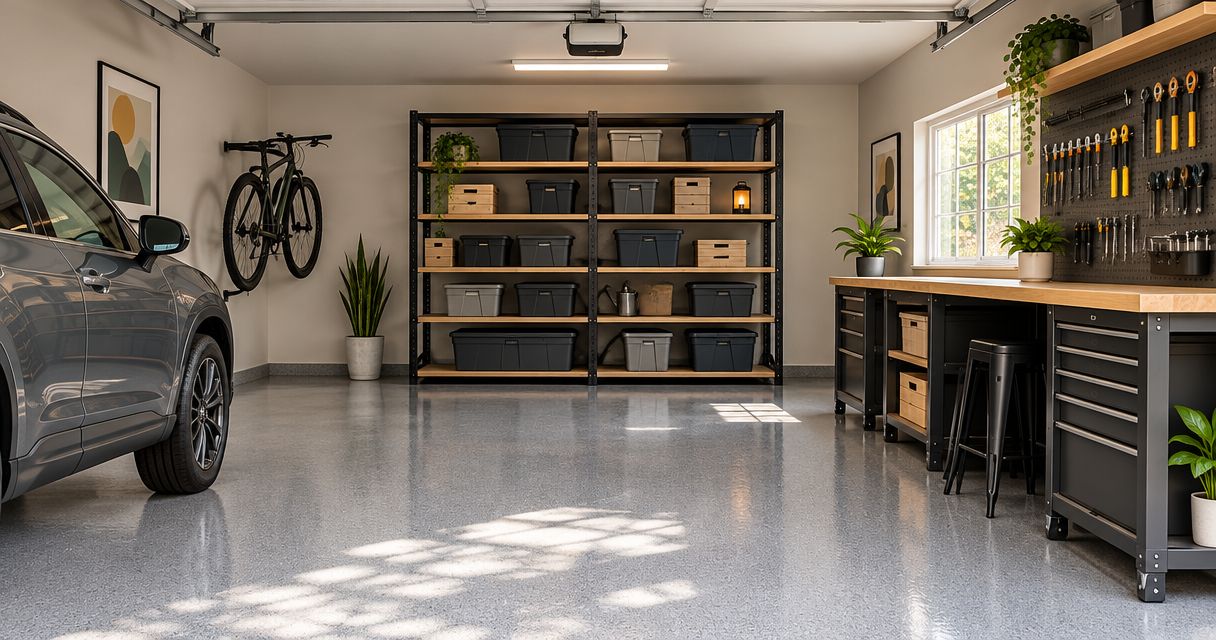
Best overall: professionally installed epoxy over properly prepared concrete. Best for a limited-scope refresh: concrete repair and sealing. Best for a removable finish: interlocking garage tiles. The best garage flooring upgrades for resale value make the garage look maintained without hiding problems or promising a higher sale price.
- Professionally installed epoxy leads the best garage flooring upgrades for resale value when the concrete is suitable.
- Luxury Fly Services offers epoxy flooring and garage transformations for Connecticut homeowners.
- Repair and sealing suit a restrained refresh; interlocking tiles suit homeowners who want a removable finish.
- Choose garage flooring by slab condition, wet traction, appearance, and installation scope—not an assumed resale return.
Why this matters before you sell
A garage floor is part of the condition buyers see. A clean, consistent finish supports a well-maintained presentation; peeling coatings, unexplained cracks, and concealed dampness create questions that a decorative upgrade does not answer.
For a 2026 sale, separate presentation from financial return. No flooring option in this guide comes with a measured resale premium or a guaranteed payback. Choose work that addresses the garage you have, not a projected increase in your asking price.
Luxury Fly Services offers epoxy flooring and luxury garage transformations for residential and commercial clients across Connecticut. Homeowners in Southington, Cheshire, Bristol, and Meriden can request a free estimate focused on the floor's condition and the intended scope.
What makes the best garage flooring upgrade?
Use these criteria before choosing a finish:
- Concrete suitability: The finish must suit the slab's moisture conditions, existing coatings, cracks, and surface strength.
- Neutral presentation: A restrained color and consistent texture keep attention on the garage rather than a highly personal design.
- Wet traction: Discuss the surface under wet footwear, not just how it looks dry.
- Clear maintenance: Understand cleaning, stain removal, and the limits of the finish before approving it.
- Complete scope: Preparation, repairs, edges, joints, and return-to-use instructions belong in the written proposal.
For a closer look at hiring, use the guide to choosing an epoxy flooring contractor in Connecticut. A finish name alone does not tell you what the contractor will install.
Garage flooring upgrades at a glance
This ranking prioritizes a finished appearance, practical garage use, and an understandable installation scope. It is a buying guide, not a ranking of measured property-value increases.
| Rank | Upgrade | Best for | Standout feature | Key limitation |
|---|---|---|---|---|
| 1 | Professionally installed epoxy | A coordinated, permanent garage refresh | Continuous coated appearance with decorative options | Preparation and moisture suitability determine whether it belongs |
| 2 | Concrete repair and sealing | A limited-scope presale refresh | Keeps the concrete visible while addressing surface condition | Repairs and existing discoloration can remain visible |
| 3 | Interlocking garage tiles | A removable finish | Modular sections can be lifted or replaced | Debris and moisture beneath the tiles need attention |
| 4 | Mechanically polished concrete | An exposed-concrete aesthetic | Refines the existing slab rather than covering it | Cracks, aggregate, and previous repairs affect the result |
| 5 | Garage-rated concrete paint | A cosmetic refresh on suitable concrete | Adds a uniform color | Product suitability and coating adhesion require close review |
1. Professional epoxy: best for a coordinated garage refresh
An epoxy flooring system coats prepared concrete to create a continuous finished surface. Decorative flakes, color, texture, and compatible topcoats change the appearance and performance, so ask for the complete system rather than accepting the word epoxy as a specification.
For a homeowner preparing to sell, the strongest direction is a restrained finish that suits the house. Review a physical sample and ask how repairs, perimeter edges, and concrete joints will appear in the completed floor.
Professionally installed epoxy pros:
- Creates a consistent appearance across the garage floor.
- Offers decorative choices without requiring separate floor tiles.
- Provides a coated surface that can be cleaned according to the system's instructions.
Professionally installed epoxy cons:
- Moisture and unsuitable concrete can rule out a proposed system.
- Preparation and curing interrupt normal garage use.
- A smooth decorative finish needs a deliberate wet-traction discussion.
Luxury Fly Services is best for Connecticut homeowners seeking epoxy flooring as part of a contractor-led garage upgrade. Ask Luxury Fly Services to explain the preparation, repair scope, finish texture, and handover instructions in the free estimate.
Best for: Homeowners who want a permanent, coordinated finish and can accommodate installation requirements.
Verdict: Buy when the slab is suitable and the written scope includes preparation—not merely a decorative coating.
2. Concrete repair and sealing: best for a limited-scope refresh
Repair and sealing retain the look of concrete rather than covering it with a decorative floor. The work should distinguish surface defects from cracks or moisture conditions that need further assessment.
This is a sensible starting point when your garage already fits the home's presentation and the main issues are dust, surface wear, or neglected maintenance. Do not assume a sealer will erase stains or make patching invisible.
Concrete repair and sealing pros:
- Keeps the floor's condition visible rather than concealing it.
- Avoids committing to a decorative color or pattern.
- Allows the scope to focus on identifiable surface needs.
Concrete repair and sealing cons:
- Existing stains and repair boundaries can remain apparent.
- Sealer selection affects appearance and maintenance.
- Sealing does not resolve the cause of movement or moisture.
Best for: Sellers who want a restrained refresh without redesigning the garage.
Verdict: Buy when the concrete's appearance is acceptable after cleaning and the repairs address the actual defects. Hold if the proposal treats every crack as a cosmetic issue.
3. Interlocking tiles: best for a removable garage finish
Interlocking garage tiles create a modular surface over the slab. Tile construction, drainage design, vehicle-load suitability, and installation clearances differ, so evaluate the specific product rather than treating all tiles alike.
The removable format is the reason to choose this option. It is not a reason to ignore the concrete underneath or cover unresolved dampness before listing the home.
Interlocking garage tile pros:
- Individual sections can be lifted for access or replacement.
- Provides a distinct finished surface without a bonded coating.
- Allows a layout that can be changed rather than permanently embedded.
Interlocking garage tile cons:
- Dirt and moisture beneath the surface require a cleaning plan.
- Edges and transitions need attention at doors and thresholds.
- Patterns and contrasting colors can become highly personal.
Best for: Homeowners who specifically want a removable finish and accept the maintenance beneath it.
Verdict: Buy for removability, not as a way to conceal the slab. Skip a busy pattern if your main goal is a neutral presale presentation.
4. Polished concrete: best for an exposed-concrete aesthetic
Mechanical polishing refines the concrete itself through grinding and polishing steps. It does not create the same appearance as a coating, and the existing slab influences the finished result.
Ask what aggregate exposure, patch visibility, and edge treatment to expect. A garage with previous repairs needs a realistic appearance discussion before you approve work based on a photograph of another floor.
Polished concrete pros:
- Uses the existing concrete as the visible finished surface.
- Suits homeowners who prefer an exposed-concrete appearance.
- Avoids a decorative film coating that can peel.
Polished concrete cons:
- Repairs, cracks, and aggregate variation remain part of the appearance.
- Edges and obstacles affect how uniformly the surface can be worked.
- Reflective appearance alone does not establish wet traction.
Best for: Homeowners who actively prefer visible concrete and accept its variation.
Verdict: Hold until the contractor explains what your slab will look like. Choose it for the material's character, not an expectation of a perfectly uniform floor.
5. Garage-rated paint: best for a cosmetic color refresh
Concrete paint adds color without necessarily providing the same system as a professionally specified epoxy floor. Product labels matter: confirm that the proposed coating is intended for garage vehicle traffic and the conditions of your slab.
For a 2026 sale, fresh color is not enough if the underlying surface is weak or an old coating is releasing. A cosmetic refresh still needs cleaning, preparation, and compatibility checks.
Garage-rated concrete paint pros:
- Adds a consistent color to suitable concrete.
- Provides a straightforward visual direction for a simple garage.
- Can suit a narrowly defined cosmetic project.
Garage-rated concrete paint cons:
- It does not repair cracks or correct moisture problems.
- Incompatible or poorly bonded layers can peel.
- Wear areas can interrupt the uniform appearance.
Best for: Homeowners with suitable concrete who need color rather than a broader flooring transformation.
Verdict: Hold until product suitability and preparation are documented. Skip painting over peeling material simply to make the floor look finished for photographs.
Before requesting an estimate
For your 2026 project, check 3 areas before the appointment: the garage-door opening, the main parking area, and the perimeter. Photograph cracks, peeling material, stains, and damp patches so the discussion starts with condition rather than color.
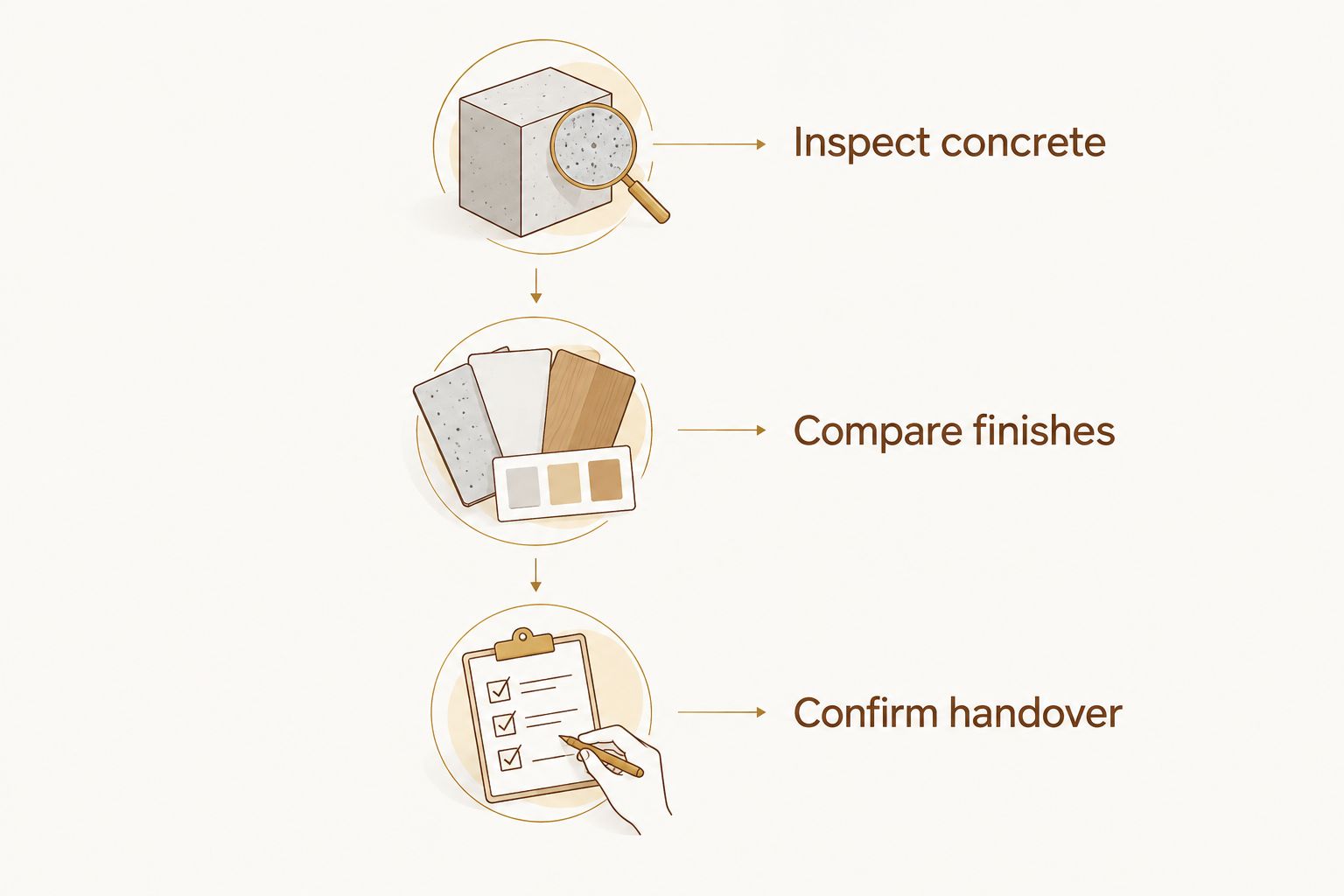
Then use these steps to compare proposals:
- Inspect concrete: Ask how moisture, existing coatings, cracks, and surface contamination will be assessed. Identify concerns that need resolution before a finish is selected.
- Compare finishes: Request 2 physical samples where available, including the proposed color and texture. Ask how the finished surface should be cleaned and how wet traction is addressed.
- Confirm handover: Document 3 milestones: preparation completion, coating or finish completion, and permission to resume vehicle use. Use the selected system's instructions rather than a generic turnaround promise.
For Connecticut homeowners, bring questions about tracked-in water, winter salt residue, and cleaning into the estimate conversation. Ask the contractor how the proposed system addresses those conditions; do not assume every garage coating has the same limits.
Luxury Fly Services offers epoxy flooring and garage transformations across Connecticut. Request a free estimate with photographs and a description of how you use the garage, including whether vehicles must return before a planned listing date.
Request your garage flooring estimate
Discuss your concrete, finish preferences, and garage upgrade scope with Luxury Fly Services.
How the options were ranked
The 2026 ranking uses the same criteria throughout: concrete suitability, neutral presentation, wet traction, maintenance, and scope clarity. Epoxy leads for a coordinated permanent finish; repair and sealing lead when a simpler intervention fits the existing garage.
The lower-ranked options serve narrower preferences. Tiles prioritize removability, polished concrete prioritizes the exposed slab, and paint prioritizes color. None should be selected on the assumption that a buyer will reimburse the project through the sale price.
Which garage flooring upgrade should you choose?
Choose professionally installed epoxy as the default for a full garage-floor refresh, subject to a suitable slab and a clear preparation scope. Choose repair and sealing when the existing concrete needs maintenance rather than a different identity.
For your 2026 sale, match the work to the condition of the house and your actual selling schedule. If moisture, moving cracks, or failing concrete remain unresolved, pause the decorative decision and address the underlying issue first.
FAQ
What's the best garage flooring upgrade for resale value?
Professionally installed epoxy is the default recommendation for a coordinated garage-floor refresh when the concrete is suitable. This is a finish recommendation, not a claim of measured resale return; repair and sealing suit a more limited refresh.
Will an epoxy garage floor increase my home's sale price?
An epoxy garage floor does not guarantee a higher sale price. Select it to improve the garage's condition and presentation, and discuss property-specific selling priorities with your real estate professional.
Should I repair cracks before coating my garage floor?
Cracks need assessment before a coating is installed. The contractor should distinguish repairable surface defects from movement or moisture concerns and explain how repairs and joints will appear afterward.
Are garage tiles better than epoxy when selling a house?
Garage tiles are better when removability is your priority; epoxy is the recommendation for a continuous, permanent coated finish. Tiles still require attention to the slab underneath, cleaning access, and threshold transitions.
What garage floor color should I choose before selling?
Choose a restrained color that fits the garage and the house rather than a highly personal pattern. Review a physical sample, including texture, because appearance alone does not establish wet traction.
Can I coat a damp garage floor?
Do not approve a coating before the dampness is assessed. The contractor must determine whether the proposed system suits the slab's moisture conditions and whether other corrective work is required.
How do I request a garage flooring estimate in Southington?
Request a free estimate from Luxury Fly Services for your Southington garage upgrade. Provide photographs, describe existing coatings or dampness, and explain your intended use and selling schedule so the discussion addresses the actual floor.
One last thing
Ask what will remain visible after the upgrade. A clear answer about cracks, joints, patches, and perimeter edges tells you more about the proposed result than a photograph of an unrelated finished garage.
For a 2026 presale project, an honest explanation of those details is more useful than a promise that the floor will look flawless or add a specific amount to your home's value.