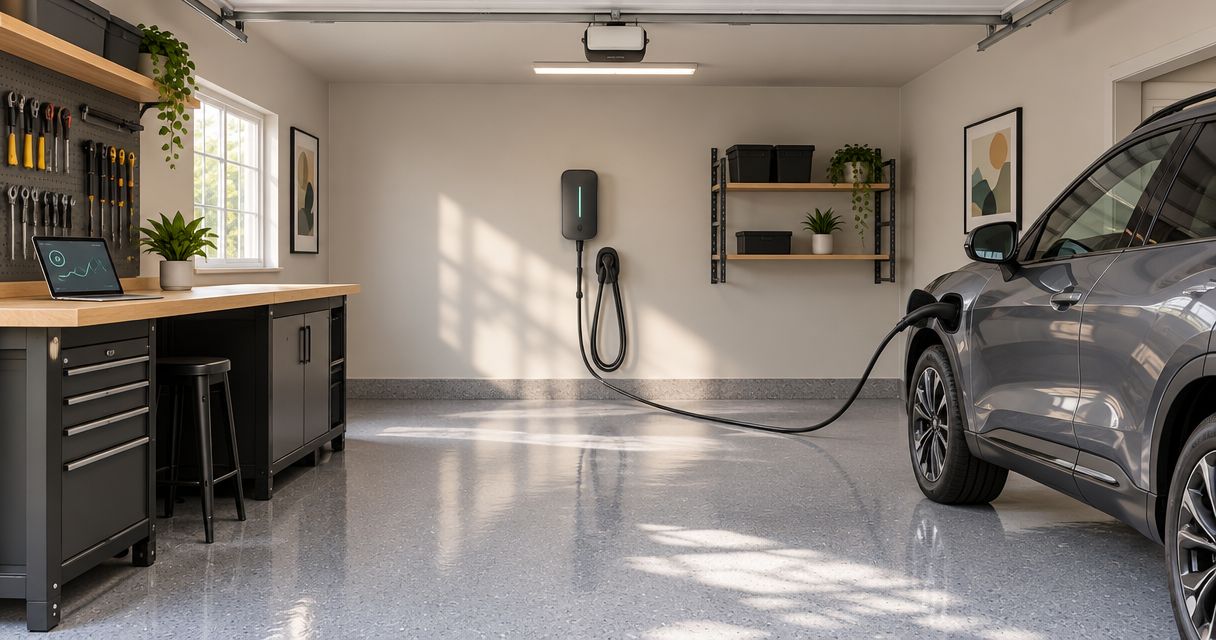
Instead of separately scheduling your floor coating and EV charger installation, coordinate the electrical work, concrete preparation, and coating cure in one written plan. For an epoxy garage floor EV charger installation project in 2026, settle the charger location and complete disruptive work before coating, then allow vehicle access only after the flooring contractor releases the surface for use.
- Plan epoxy garage floor EV charger installation around electrical access, concrete preparation, and the coating manufacturer's cure requirements.
- Luxury Fly Services is best for Connecticut homeowners seeking epoxy flooring within a coordinated garage transformation.
- Have a licensed electrician assess the charger installation; keep electrical decisions separate from flooring specifications.
- Complete concrete cutting and dusty work before coating, then confirm when ladders, equipment, and vehicles can return.
Why this matters
A garage upgrade involves more than choosing a finish and a charger location. Electrical work can require drilling or access through the garage, while floor preparation and coating require a clear work area. Separate schedules create conflicting access requirements unless someone owns the sequence.
Luxury Fly Services is best for Connecticut homeowners seeking epoxy flooring within a coordinated garage transformation. The company offers epoxy flooring and garage transformations; assign charger assessment and electrical installation to a licensed electrician rather than assuming those tasks are included in the flooring scope.
Start with the garage transformation and epoxy flooring services, then define the electrical work separately. For homeowners in Southington, Cheshire, Bristol, and Meriden planning a 2026 upgrade, the useful outcome is a shared schedule with clear responsibility for each handoff.
Before you start
- Gather the charger information and access details. Give the electrician the vehicle's charging requirements, the proposed equipment's installation instructions, access to the electrical panel, and your preferred parking position. Let the electrician determine the electrical requirements.
- Prepare the flooring assessment. Show the flooring contractor existing coatings, cracks, stains, damp areas, and any planned wall or storage changes. Ask for the proposed preparation method, coating system, surface texture, and return-to-use requirements in writing.
- Resolve the hidden scheduling conflict. A floor that permits foot traffic is not automatically ready for ladders, equipment, or parked vehicles. Obtain separate access instructions before either contractor books a return visit.
Choose one person to maintain the schedule and circulate changes. That can be you; the responsibility matters more than the title. Do not assume either trade is coordinating the other unless the agreement explicitly assigns that work.
Charger layout and electrical scope
Confirm the parking layout
- Park the vehicle where you intend to charge it. Open the charging port and identify a cable route that avoids the walking route into the house.
- Mark the proposed charger location without drilling. Check door swings, shelving, workbenches, and access around the parked vehicle.
- Ask the electrician to assess the location against the equipment instructions, electrical requirements, and applicable local requirements.
- Request a written Electrical scope identifying the charger location, wiring route, required access, and responsibility for permits and inspections.
Expected result: You have a proposed charging position and an electrician-defined installation scope before the floor schedule is fixed. The vehicle's actual parking position—not an empty garage photograph—sets the starting point.
Do not choose a charger location solely because it looks balanced on the wall. A visually tidy installation loses its usefulness when the charging cable crosses the doorway or cannot reach the vehicle comfortably.
Choose the installation sequence
Ask the electrician whether the work involves the slab, wall drilling, overhead access, or equipment standing on the floor. Then have the flooring contractor confirm which tasks must precede preparation and which can wait until the finish permits access.
| Workflow | Best for | Advantage | Limitation |
|---|---|---|---|
| Electrical work before coating | Projects with drilling, cutting, or substantial installation work | Keeps disruptive installation activity off the finished surface | Installed equipment needs protection during floor preparation |
| Electrical rough-in before coating, final mounting afterward | Projects where final equipment placement would obstruct other work | Separates disruptive work from the final equipment installation | Requires a return visit after the floor permits the intended access |
Neither sequence removes the need for coordination. Choose the sequence around the actual work, not a blanket rule that the charger must always be installed first or last.
For your 2026 project plan, record the agreed sequence before approving installation dates. If either scope changes, have both contractors review the effect on access and timing.
Floor preparation and finish specification
Confirm the substrate requirements
- Arrange an assessment of the existing concrete before selecting the appearance alone. Ask how existing coatings, contamination, cracks, and moisture conditions will be evaluated.
- Identify any slab cutting or penetrations associated with the electrical work. Complete those tasks before the flooring contractor prepares the surface.
- Ask the flooring contractor to specify repairs and preparation appropriate to the chosen coating system. Do not treat a visible crack as a purely decorative issue without assessment.
- Request a written Floor specification naming the proposed system, preparation, finish texture, and exclusions.
Expected result: The flooring proposal explains what will be installed and how the concrete will be prepared. You can distinguish a finish selection from a complete installation scope.
Luxury Fly Services offers epoxy flooring and luxury garage transformations across Connecticut. When discussing the floor, separate the desired appearance from practical requirements such as cleaning and traction. A decorative finish does not establish wet-surface performance by appearance alone.
Epoxy flooring provides a decorative coated surface, but the installation also introduces preparation and cure-related access restrictions. Review the guide to choosing an epoxy flooring contractor in Connecticut before comparing proposals on appearance alone.
Record the finish decisions
- Review the finish sample in the garage's lighting. Consider how the surface will look beside the existing walls, cabinetry, and charging equipment.
- Discuss texture with the flooring contractor, including the balance between traction and cleaning. A more textured surface can require more cleaning effort than a smoother finish.
- Confirm which edges, steps, transitions, and wall junctions belong in the scope. Ask how existing joints will be handled rather than assuming they disappear beneath the coating.
- Label the approved sample and save the written specification with your 2026 project documents.
Expected result: The selected finish has a documented appearance and practical specification. Both remain available when you review the completed work.
Shared schedule and site handoff
Build the installation sequence
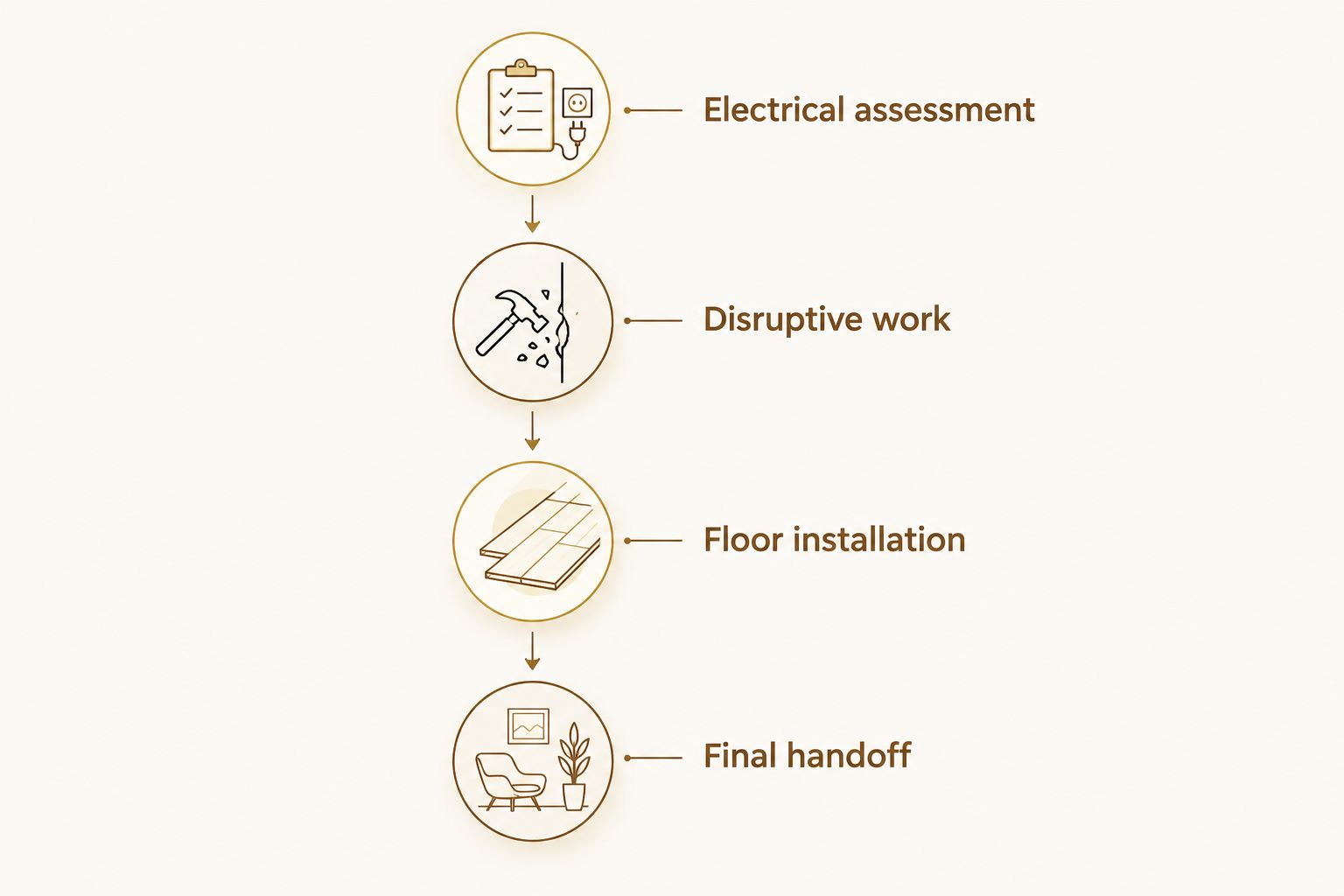
- Electrical assessment: Confirm the electrical scope, proposed location, and permit or inspection responsibilities before setting the coating date.
- Disruptive work: Complete agreed cutting, drilling, and other work that could damage or contaminate the finished floor.
- Floor installation: Clear the garage and let the flooring contractor control preparation, coating, and access restrictions.
- Final handoff: Schedule remaining electrical work and vehicle return only after confirming the floor permits each activity.
Expected result: Every visit has a defined purpose, a responsible contractor, and an access condition. Nobody arrives expecting to use a garage that the other trade has closed.
Use a short handoff note rather than a vague instruction to return when the floor is dry. Record Foot traffic, Equipment access, and Vehicle return as separate entries, with the flooring contractor supplying the applicable conditions and timing.
Those entries are project-planning labels, not universal cure categories. The specific coating manufacturer's instructions and actual installation conditions govern the floor's release. A generic schedule found online is not permission to park.
For a 2026 garage renovation, keep the approved finish, electrical scope, and handoff note together. Send updates to both contractors whenever the charger position, wiring route, or installation sequence changes.
Request your garage flooring estimate
Discuss epoxy flooring and your EV charger project sequence with Luxury Fly Services.
When the EV charger is already installed
An existing wall-mounted charger does not automatically need removal before a floor coating project. Start with an access assessment: the flooring contractor needs to identify preparation boundaries and protection requirements, while the electrician determines whether equipment needs electrical isolation or removal.
- Photograph the existing charger, wiring route, wall base, and surrounding floor. Include any pedestal or hardware anchored into the slab.
- Ask the flooring contractor whether preparation equipment can reach the required areas without disturbing the installation.
- Have a licensed electrician handle any required disconnection, relocation, or reconnection. Do not treat electrical equipment as an ordinary item to move out of the garage.
- Confirm how equipment will be protected from preparation dust and when the charging area can return to service.
Expected result: You retain usable equipment where practical without leaving an undefined preparation boundary or exposing the finished floor to unplanned work.
This variation avoids unnecessary equipment removal, but it requires more attention to protection and access. If a later charger upgrade changes the mounting position or requires new penetrations, reassess the floor protection plan before work starts.
Troubleshooting coordination problems
The electrician needs to return before the floor is ready
Reschedule the visit against the flooring contractor's written access instructions. Do not substitute permission for foot traffic for permission to use a ladder, move equipment, or park a service vehicle.
Ask what activity the return visit actually requires. An inspection from the doorway and equipment installation place different demands on the surface.
The charging cable crosses the walking route
Reassess the charger position with the vehicle parked normally. Ask the electrician about a compliant mounting position and cable-management arrangement that fits the equipment instructions.
Do not solve a layout problem by improvising an extension or assuming the cable can remain across a busy doorway. Resolve the route before permanent mounting whenever possible.
New electrical work requires drilling after coating
Have the electrician explain exactly where drilling is needed, then ask the flooring contractor how the surrounding finish should be protected. Where the work affects the coating, agree on responsibility for assessment and repairs before drilling begins.
The best fix is early scope review. A mounting location marked on a photograph is easier to change than an installation already fixed in place.
The concrete shows dampness or an old coating lifts
Pause the floor schedule and request an assessment. Covering the condition does not resolve its cause, and the appropriate preparation or coating approach depends on what the assessment finds.
Tell the electrician if the delay affects equipment access. Keep the electrical and flooring schedules linked even when the problem belongs to only one scope.
Customize your workflow
Expand the plan around how you use the garage. If you are also changing storage or wall finishes, establish their locations before finalizing charger access. Keep charging controls, cable storage, and the electrical panel accessible.
Luxury Fly Services offers microcement and Venetian plaster wall finishes as well as epoxy flooring. Discuss decorative wall work as a separate scope, including its preparation and protection needs, rather than assuming it belongs in the floor proposal.
For your 2026 estimate request, provide 3 photos: the parked vehicle and proposed charger area, the existing floor, and the electrical panel area. Add 2 documents when available: the charger installation instructions and the electrician's proposed scope. These are useful planning materials, not a substitute for site assessment.
FAQ
Should I install an EV charger before or after an epoxy garage floor?
Complete disruptive electrical work before coating, then schedule remaining installation work after the floor permits the required access. The electrician and flooring contractor should agree on the sequence for your specific project.
Does an epoxy garage floor change the electrical requirements for an EV charger?
An epoxy garage floor does not replace or determine the charger's electrical requirements. A licensed electrician must assess the proposed equipment, electrical supply, installation method, and applicable requirements.
Can I coat my garage floor with an EV charger already installed?
An existing charger can remain if the contractors confirm adequate preparation access and equipment protection. Any required disconnection or relocation belongs with a licensed electrician.
How long should I wait before parking on a newly coated garage floor?
Wait until the flooring contractor releases the specific coating system for vehicle traffic. Cure requirements depend on the installed materials and conditions; permission to walk on the floor is not permission to park.
Will the flooring contractor install my EV charger too?
Do not assume EV charger installation is included in a flooring contract. Luxury Fly Services offers epoxy flooring and garage transformations; assign electrical assessment and installation separately unless an explicit agreement states otherwise.
Is a smooth epoxy finish best around a charging area?
A smooth appearance alone does not establish the right traction for your garage. Discuss wet conditions, cleaning needs, and the proposed finish texture with the flooring contractor before approving the specification.
What should I send when requesting a garage flooring estimate?
Send photographs of the floor, parking layout, and proposed charging area, along with available charger instructions and electrical scope. Identify planned storage or wall changes so the estimate discussion covers access and sequencing.
One last thing
Test the charging layout with the vehicle parked before approving the wall location. Open the vehicle doors, walk toward the house, and check where the cable would sit. That simple layout review connects the two projects more effectively than choosing a floor color beside a charger photograph.